RSS

Tag Archives: nutrition month

Daily Inspirational Sip

Daily Inspirational Sip

10 Proven Benefits of Kale (No. 1 is Very Impressive)

Of all the super healthy greens, kale is the king.

It is definitely one of the healthiest and most nutritious plant foods in existence.

Kale is loaded with all sorts of beneficial compounds… some of which have powerful medicinal properties.

Here are 10 health benefits of kale, that are supported by science.

1. Kale is among the most nutrient dense foods on the planet.

2. Kale is Loaded With Powerful Antioxidants Like Quercetin and Kaempferol

3. It is an Excellent Source of Vitamin C

4. Kale Can Help Lower Cholesterol, Which May Reduce The Risk of Heart Disease

5. Kale is One of The World’s Best Sources of Vitamin K

6. There Are Numerous Cancer-Fighting Substances in Kale

7. Kale is Very High in Beta-Carotene

8. Kale is a Good Source of Minerals That Most People Don’t Get Enough of

9. Kale is High in Lutein and Zeaxanthin, Powerful Nutrients That Protect the Eyes

10. Kale Should be Able to Help You Lose Weight

For complete information, please visit:
http://authoritynutrition.com/10-proven-benefits-of-kale/


Tags: ,

Daily Inspirational Sip

Daily Inspirational Sip

The 11 Most Nutrient Dense Foods on The Planet

There is only a limited amount of food you can eat in a single day.

In order to maximize the amount of nutrients you take in, it makes sense to spend your “calorie budget” wisely.

The best way to do that is to simply eat the foods that carry the greatest amount and variety of nutrients.

1. Salmon
2. Kale
3. Seaweed
4. Garlic
5. Shellfish
6. Potatoes
7. Liver
8. Sardines
9. Blueberries
10. Egg yolks
11. Dark Chocolate

For complete information, please visit:
http://authoritynutrition.com/11-most-nutrient-dense-foods-on-the-planet/


Tags: ,

Daily Inspirational Sip

Daily Inspirational Sip

The 10 Best Nutrition Tips Ever

Eat This, Not That!
November 10, 2014

Diet advice is a lot like fashion. Trends come—wedge sneakers, drop-crotch pants, those skirts that are short in the front and long in the back—and a year or two later they seem hopelessly out of date. But the truly stylish always look smart; you’ll never see a photo of Pharrell Williams wearing crocs or Victoria Beckham in a meat dress. Here at Eat This, Not That! we see the same thing with the lean and fit: Those who stay slim don’t follow diets or nutrition trends. They follow common sense eating strategies that keep them looking fit for life.

Giving up gluten, throwing back shots of apple cider vinegar, juicing everything in sight—try them if you think they make sense. (And if you need a little boost to get you back on track, try our Ultimate One Day Detox.) But when those of-the-moment diet fads are gathering dust in the back of your metaphorical closet, the simple, smart, sensible approaches will be there like a favorite pair of jeans or a perfect little black dress—look-great staples guaranteed to never go out of style.

NUTRITION TIP #1. Hide your weakness.

If you see it, you’ll eat it. If you don’t see it, you’ll still eat it—but not so much. That’s what a study at Google’s New York office, dubbed “Project M&M” found. Office managers discovered that placing the chocolate candies in opaque containers as opposed to glass ones, and giving healthier snacks like nuts and figs more prominent shelf space, curbed M&M intake by 3.1 million calories in just seven weeks. A similar study published in the Journal of Marketing found that people are more likely to overeat small treats from transparent packages than from opaque ones. Out of sight, out of mind, out of mouth.

NUTRITION TIP #2. Use the 1 in 10 rule.

For every 10 grams of carbohydrate listed on the label, look for at least one gram of fiber. Why 10:1? That’s the ratio of carbohydrate to fiber in a genuine, unprocessed whole grain. The recommendation comes from a study published in the journal Public Health Nutrition that evaluated hundreds of grain products; foods that met the 10:1 ratio had have less sugar, sodium, and trans fats than those that didn’t. Getting your fiber-rich whole grains is one of these indispensible 5 Daily Habits That Blast Belly Fat.

NUTRITION TIP #3. Boost flavor to cut calories.

Ever notice how everything inside a McDonald’s—the burgers, the fries, the shakes—smells exactly the same? That sameness of scent is actually a tactic that can inspire you to consume more calories. A study in the journal Flavour found that the less distinctive the scent of a particular food, the more you’ll eat of it. Adding herbs and sodium-free spice blends is an easy take advantage of sensory illusion that you’re indulging in something rich—without adding any fat or calories to your plate. Furthermore, a recent behavioral study that taught adults to spruce up meals with herbs instead of salt led to a decrease in sodium consumption by nearly 1000 mg a day (that’s more salt than you’ll find in 5 bags of Doritos!). Double down on the delicious health benefits by using The 5 Best Spices for Weight Loss.

NUTRITION TIP #4. Chill pasta to melt fat.

You can gain less weight from a serving of pasta simply by putting it in the fridge. The drop in temperature changes the nature of the noodles into something called “resistant starch,” meaning your body has to work harder to digest it. Cold pasta is closer in structure to natural resistant starches like lentils, peas, beans, and oatmeal, which pass through the small intestine intact and are digested in the large intestine, where—well, it gets kinda gross from there on out. A study in the journal Nutrition & Metabolism found that adding resistant starch to a meal may also promote fat oxidation. Suffice it say, colder noodles = hotter you. But you’ve got to eat it cold: Once you heat the pasta up again, you destroy the resistant starch.

NUTRITION TIP #5. Dim the lights to get lighter.

A study of fast food restaurants published in the journal Psychological Reports found that customers who dined in a relaxed environment with dimmed lights and mellow music ate 175 fewer calories per meal than if they were in a more typical restaurant environment. That may not sound like a dramatic savings, but cutting 175 calories from dinner every night could save you more than 18 pounds in a year!

NUTRITION TIP #6. Eat, Don’t Drink, Your Fruit

Juicing may be the rage, but like a certain Mr. Simpson, some juice can do more harm than good—including OJ. Researchers at the Harvard School of Public Health found that people who consumed one or more servings of fruit juice each day increased their risk of developing type 2 diabetes by as much as 21 percent. Conversely, those who ate at least two servings each week of certain whole fruits— particularly blueberries, grapes, and apples—reduced their risk for type 2 diabetes by as much as 23 percent. So stock up on the Best Fruits for Fat Loss and eat them whole.

NUTRITION TIP #7. Eat before you eat.

Eating an appetizer of a broth-based soup or even an apple can reduce total calorie intake over the course of the meal by up to 20 percent, according to a series of “Volumetrics” studies at Penn State. Consider that, according to the Journal of the American Medical Association, the average restaurant meal contains 1,128 calories. A 20 percent savings, just once a day, is enough to help you shed more than 23 pounds in a year.

NUTRITION TIP #8. Choose paper, not plastic.

Here’s a simple way to improve the health of your shopping cart: A series of experiments by Cornell University looked at the effects of payment method on food choice. When shoppers used credit cards, they bought more unhealthful “vice” foods than they did “virtue” foods. Researchers suggest that you’re less likely to impulsively buy junk food if it means parting with a hundred dollar bill than swiping plastic.

NUTRITION TIP #9. Water down the calories.

You’ve been told to drink 8 glasses of water a day, but why bother? Well, what if staying hydrated could strip pounds off your body? According to a study in the Journal of Clinical Endocrinology and Metabolism, after drinking approximately 17 ounces of water (about 2 tall glasses), participants’ metabolic rates increased by 30 percent. The researchers estimate that increasing water intake by 1.5 liters a day (about 6 cups) would burn an extra 17,400 calories over the course of the year—a weight loss of approximately five pounds! Fill up at the tap and read about the 4 Surprising Secrets of Bottled Water so you stay hydrated the healthy way.

NUTRITION TIP #10. Remind yourself to lose weight.

A recent study published online in Health Promotion Practice found that people who received weekly text reminders of their daily “calorie budget” and motivational emails made healthier meal and snack choices. A simple hack to help you slim down: set up reminders on your smartphone, so when 6 a.m. rolls around, it’s: You make 1200 calories-a-day look so good! And at lunchtime: Salad for the six-pack, baby!


Tags: ,

Daily Inspirational Sip

Daily Inspirational Sip

‘Bite into a Healthy Lifestyle’ during National Nutrition Month® by including Physical Activity in Your Daily Routine, says Academy of Nutrition and Dietetics

February 10, 2015

CHICAGO – Make physical activity a part of your daily routine as you “Bite into a Healthy Lifestyle” during National Nutrition Month®.

Each March and throughout the year, the Academy of Nutrition and Dietetics encourages everyone to return to the basics of healthy eating by adopting a healthy lifestyle focused on consuming fewer calories, making informed food choices and getting daily exercise. The goal is to achieve and maintain a healthy weight, reduce the risk of chronic disease and promote overall health.

“Daily physical activity is a crucial part of everyone’s healthy lifestyle, but unfortunately most of us don’t include enough movement in our daily routines,” says registered dietitian nutritionist and Academy Spokesperson Jennifer McDaniel. “Regular physical activity strengthens bones and muscles, reduces the risk of chronic illness and fosters overall well-being.”

Regular Physical Activity is a Must

Most health benefits come from at least 150 minutes a week of moderately intense physical activity, with added advantages from increased exercise and intensity. Endurance and muscle-strengthening activities like lifting weights, working with a resistance band or doing pushups are also beneficial.

“A physically active lifestyle offers you many rewards, from a slimmer body to a healthy heart,” says McDaniel, who is also a board certified sports dietitian. “And these physical benefits are only the beginning. Additional advantages include stress relief, better sleep and even a more positive mental outlook.”

Everyday Ways to get Moving

Physical activity is important for everyone at every age. “The key is to find activities that are both sustainable and enjoyable. For some, this may mean a light yoga class, while for others it may mean training for a marathon. Bottom line: Find manageable ways to move more,” McDaniel says.

McDaniel offers ways to get moving:

Use the buddy system: Join a walking group or attend fitness classes.
Participate in social and competitive sports like soccer or flag football.
Plan a hiking or canoeing trip instead of a beach vacation.
Sign up for a 5k run/walk with friends or family.
Sneak in exercise at your desk like leg lifts and calf raises – or even buy a desk that allows you to stand while working.
Take a 15-minute walk on your lunch break (or walk up and down the stairs when weather’s bad).
Find an activity monitor to assess movement through the day – gadgets are very motivating for some!
Food is Vital for Energy

To maintain a physically active and healthy lifestyle, stay nourished before, during and after exercise. “Before exercise, look for foods high in carbohydrates, adequate in protein and moderate in fat and fiber, like oatmeal with bananas, almonds and fat-free milk,” McDaniel says.

“Drink water before, during and after physical activity since dehydration can cause fatigue and impair performance,” McDaniel says.

http://www.eatrightpro.org/resource/media/press-releases/national-nutrition-month/bite-into-a-healthy-lifestyle-during-national-nutrition-month-by-including-physical-activity


Tags: ,

Daily Inspirational Sip

Daily Inspirational Sip

20 Ways to Enjoy More Fruits, Vegetables, Whole Grains & Dairy

To get the most nutrition out of your calories, choose foods packed with vitamins, minerals, fiber and other nutrients—and lower in calories. Pick fruits, vegetables, whole grains and fat-free or low-fat dairy more often. Be aware of portion sizes. Even low-calorie foods can add up when portions are larger than you need.

1. Shish KebabVariety abounds when using vegetables as pizza topping. Try broccoli, spinach, green peppers, tomatoes, mushrooms and zucchini.

2. Get saucy with fruit: Puree berries, apples, peaches or pears for a thick, sweet sauce on grilled or broiled seafood or poultry, or on pancakes, French toast or waffles.

3. Mix up a breakfast smoothie made with low-fat milk, frozen strawberries and a banana.

4. Heat leftover whole-grain rice with chopped apple, nuts and cinnamon.

5. Make a veggie wrap with roasted vegetables and low-fat cheese rolled in a whole-wheat tortilla.

6. Try crunchy vegetables instead of chips with your favorite dip or low-fat salad dressing.

7. Grill colorful vegetable kabobs packed with tomatoes, green and red peppers, mushrooms and onions.

8. Banana split: Top a sliced banana with a scoop of low-fat frozen yogurt. Sprinkle with a tablespoon of chopped nuts.

9. Add color to salads with baby carrots, grape tomatoes, spinach leaves or mandarin oranges.

10. Prepare instant oatmeal with low-fat or fat-free milk in place of water. Top with dried cranberries and almonds.

11. Stuff an omelet with vegetables. Turn any omelet into a hearty meal with broccoli, squash, carrots, peppers, tomatoes or onions with low-fat sharp cheddar cheese.

12. “Sandwich” in fruits and vegetables. Add pizzazz to sandwiches with sliced pineapple, apple, peppers, cucumbers and tomato as fillings.

13. Wake up to fruit! Make a habit of adding fruit to your morning oatmeal, ready-to-eat cereal, yogurt or toaster waffle.

14. Stock up: Fill your fridge with raw vegetables and fruits —“nature’s fast food”—cleaned, fresh and ready to eat.

15. Top a baked potato with beans and salsa or broccoli and low-fat cheese.

16. Microwave a cup of tomato or vegetable soup for a quick afternoon snack.

17. “Grate” complement: Add grated, shredded or chopped vegetables such as zucchini, spinach and carrots to lasagna, meat loaf, mashed potatoes, pasta sauce and rice dishes.

18. Stuff a whole grain pita with ricotta cheese and Granny Smith apple slices. Add a dash of cinnamon.

19. Make your main dish a salad of dark, leafy greens and other colorful vegetables. Add chickpeas or edamame (fresh soybeans). Top with a low-fat dressing.

20. Try this recipe for an easy, healthy snack. Surprise! Popcorn is a whole grain.

Popcorn Delight
Makes 1 serving

3 cups popped fat-free unsalted popcorn
1 tablespoon sliced almonds
2 tablespoons raisins or other dried fruit such as cranberries, apricots or dates
½ teaspoon ground cinnamon
1 teaspoon sugar

In a medium bowl, combine the ingredients and toss well.

Nutrition Facts per Serving:
Calories: 230
Fat: 7 g
Saturated fat: 1 g
Carbohydrates: 39 g
Fiber: 6 g
Protein: 6 g
Sodium: 274 mg

Recipe provided courtesy of John Wiley & Sons, from Expect the Best: Your Guide to Healthy Eating Before, During & After Pregnancy by American Dietetic Association ©2009, John Wiley & Sons.

image

The American Dietetic Association is the world’s largest organization of food and nutrition professionals.

ADA is committed to improving the nation’s health and advancing the profession of dietetics through research, education and advocacy.

Authored by American Dietetic Association staff registered dietitians.

 
Leave a comment

Posted by on March 5, 2015 in Inspirational Sips


Tags: ,

Daily Inspirational Sip

Daily Inspirational Sip

11 Proven Health Benefits of Chia Seeds (No. 3 is Best)
By Kris Gunnars |

Chia seeds are among the healthiest foods on the planet.

They are loaded with nutrients that can have important benefits for your body and brain.

Here are 11 health benefits of chia seeds that are supported by human studies.

1. Chia Seeds Deliver a Massive Amount of Nutrients With Very Few Calories

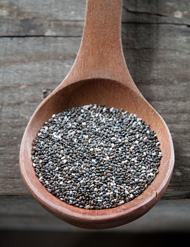
Chia seeds are tiny black seeds from the plant Salvia Hispanica, which is related to the mint.

This plant grows natively in South America.

Chia seeds were an important food for the Aztecs and Mayans back in the day.

They prized them for their ability to provide sustainable energy… in fact, “chia” is the ancient Mayan word for “strength.”

Despite their ancient history as a dietary staple, only recently did chia seeds become recognized as a modern day superfood.

In the past few years, they have exploded in popularity and are now consumed by health conscious people all over the world.

This is what chia seeds look like:

Don’t be fooled by the size… these tiny seeds pack a powerful nutritional punch.

A 1 ounce (28 grams) serving of chia seeds contains (1, 2):

Fiber: 11 grams.
Protein: 4 grams.
Fat: 9 grams (5 of which are Omega-3s).
Calcium: 18% of the RDA.
Manganese: 30% of the RDA.
Magnesium: 30% of the RDA.
Phosphorus: 27% of the RDA.
They also contain a decent amount of Zinc, Vitamin B3 (Niacin), Potassium, Vitamin B1 (Thiamine) and Vitamin B2.
This is particularly impressive when you consider that this is just a single ounce, which supplies only 137 calories and one gram of digestible carbohydrate!

Just so that we’re all on the same page, 1 ounce equals 28 grams, or about 2 tablespoons.

Interestingly… if you subtract the fiber, which may not end up as usable calories for the body, chia seeds only contain 101 calories per ounce.

This makes them one of the world’s best sources of several important nutrients, calorie for calorie.

To top things off, chia seeds are a “whole grain” food, are usually grown organically, are non-GMO and naturally free of gluten.

Bottom Line: Despite their tiny size, chia seeds are among the most nutritious foods on the planet. They are loaded with fiber, protein, Omega-3 fatty acids and various micronutrients.

2. Chia Seeds Are Loaded With Antioxidants

Another area where chia seeds shine is in their high amount of antioxidants (3, 4).

These antioxidants protect the sensitive fats in the seeds from going rancid (5).

Although antioxidant supplements are not very effective, getting antioxidants from foods can have positive effects on health (6).

Most importantly, antioxidants fight the production of free radicals, which can damage molecules in cells and contribute to ageing and diseases like cancer (7, 8).

There are some claims online about chia seeds having more antioxidants than blueberries, but I was unable find a study to verify this claim.

Bottom Line: Chia seeds are high in antioxidants that help to protect the delicate fats in the seeds. They also have various benefits for health.

3. Almost All The Carbs in Them Are Fiber

Looking at the nutrition profile of chia seeds, you see that an ounce has 12 grams of “carbohydrate.”

However… 11 of those grams are fiber, which isn’t digested by the body.

Fiber doesn’t raise blood sugar, doesn’t require insulin to be disposed of and therefore shouldn’t count as a carb.

The true carb content is only 1 gram per ounce, which is very low. This makes chia a low-carb friendly food.

Because of all the fiber, chia seeds can absorb up to 10-12 times their weight in water, becoming gel-like and expanding in your stomach (9).

Theoretically, this should increase fullness, slow absorption of your food and help you automatically eat fewer calories.

Fiber also feeds the friendly bacteria in the intestine, which is important because keeping your gut bugs well fed is absolutely crucial for health (10).

Chia seeds are 40% fiber, by weight. This makes them one of the best sources of fiber in the world.

Bottom Line: Almost all of the carbohydrates in chia seeds are fiber. This gives them the ability to absorb 10-12 times their weight in water. Fiber also has various beneficial effects on health.

4. Chia Seeds Are High in Quality Protein

Chia seeds contain a decent amount of protein.

By weight, they are about 14% protein, which is very high compared to most plants.

They also contain a good balance of essential amino acids, so our bodies should be able to make use of the protein in them (11, 12).

Protein has all sorts of benefits for health. It is also the most weight loss friendly nutrient in the diet, by far.

A high protein intake reduces appetite and has been shown to reduce obsessive thoughts about food by 60% and the desire for night time snacking by 50% (13, 14).

Chia seeds really are an excellent protein source, especially for people who eat little or no animal products.

Bottom Line: Chia seeds are high in quality protein, much higher than most plant foods. Protein is the most weight loss friendly macronutrient and can drastically reduce appetite and cravings.

5. Due to The High Fiber and Protein Content, Chia Seeds Should be Able to Help You Lose Weight

Many health experts believe that chia seeds can help with weight loss.

The fiber absorbs large amounts of water and expands in the stomach, which should increase fullness and slow the absorption of food (15).

There have been several studies on glucomannan, a fiber that works in a similar way, showing that it can lead to weight loss (16, 17).

Then the protein in chia seeds could help to reduce appetite and food intake.

Unfortunately, when the effects of chia seeds on weight loss have been studied, the results have been rather disappointing.

Although one study showed that chia seeds can reduce appetite, there was no significant effect on body weight (18).

In a study on 90 overweight people, 50 grams of chia seeds per day for 12 weeks had no effect on body weight or health markers (19).

In another 10 week study of 62 women, chia seeds had no effect on bodyweight but did increase the amount of Omega-3s in the blood (20).

Although just adding chia seeds to your diet is unlikely to affect your weight, I personally believe that they can be a useful addition.

A weight loss diet is about more than just adding or subtracting single foods. The entire diet counts, as well as other lifestyle behaviors like sleep and exercise.

When combined with a real food based diet and a healthy lifestyle, I can definitely see how chia seeds could help with weight loss.

Bottom Line: Chia seeds are high in protein and fiber, both of which have been shown to aid weight loss. However, the studies on chia seeds have not noted any effects on weight.

6. Chia Seeds Are High in Omega-3 Fatty Acids

Like flax seeds, chia seeds are very high in Omega-3 fatty acids.

In fact, chia seeds contain more Omega-3s than salmon, gram for gram.

However… it’s important to keep in mind that the Omega-3s in them are mostly ALA (Alpha Linolenic Acid), which is not as beneficial as you may think.

ALA needs to converted into the “active” forms, EPA and DHA, before it can be used by the body.

Unfortunately, humans are inefficient at converting ALA into the active forms. Therefore, plant Omega-3s tend to be vastly inferior to animal sources like fish (21).

Studies have shown that chia seeds (especially if they are milled) can increase blood levels of ALA and EPA, but not DHA… which is a problem (20, 22)

Because they don’t supply any DHA (the most important Omega-3 fat), I think chia seeds are overrated as an Omega-3 source.

In order to get the DHA your body and brain desperately need… either eat fatty fish regularly, take fish oil, or take a DHA supplement if you are vegan or vegetarian.

Bottom Line: Chia seeds are very high in the Omega-3 fatty acid ALA. However, humans are not good at converting this into DHA, the most important Omega-3 fatty acid.
image

7. Chia Seeds May Improve Certain Blood Markers, Which Should Lower The Risk of Heart Disease and Type 2 Diabetes

Given that chia seeds are high in fiber, protein and Omega-3s, they should be able to improve metabolic health.

This has been tested in several studies, but the results have been inconclusive.

In two studies, a diet with chia seeds, soy protein, oats and nopal, has been shown to lower LDL cholesterol and triglycerides, increase HDL cholesterol and reduce inflammation (23, 24).

Because these studies also used other ingredients, nothing can be concluded about the chia seeds themselves.

Rat studies have also shown that chia seeds can lower triglycerides, raise HDL (the “good”) cholesterol and reduce inflammation, insulin resistance and belly fat (25, 26).

However, a study that looked at just chia seeds did not note any improvements (20).

Overall… it is possible that chia seeds can improve these risk factors, but probably won’t have a major effect unless followed by other beneficial changes in the diet.

Bottom Line: The effects on cholesterol levels and other risk factors is inconclusive. Some studies show an effect, others do not.

8. They Are High in Many Important Bone Nutrients

Chia seeds are high in several nutrients that are important for bone health.

This includes calcium, phosphorus, magnesium and protein.

The calcium content is particularly impressive… 18% of the RDA in a single ounce.

Gram for gram, this is higher than most dairy products.

Chia seeds may be considered an excellent source of calcium for people who don’t eat dairy.

Bottom Line: Chia seeds are high in calcium, magnesium, phosphorus and protein. All of these nutrients are essential for bone health.

9. Chia Seeds Can Cause Major Improvements in Type 2 Diabetics

The most successful application of chia seeds to date was in a study on type 2 diabetic patients

In this study, 20 diabetic patients received either 37 grams of chia seeds, or 37 grams of wheat bran, for 12 weeks (27).

When they got the chia seeds, they saw improvements in several important health markers.

Blood pressure went down by 3-6 mm/Hg and an inflammatory marker called hs-CRP went down by 40%. A risk factor called vWF also decreased by 21%.

There was also a small drop in blood sugar, but it wasn’t statistically significant.

Given that chia seeds are high in fiber, it does seem plausible that they could help reduce blood sugar spikes after meals, but this needs to be confirmed in studies.

Bottom Line: A study in type 2 diabetics showed that chia seeds can significantly lower blood pressure and a marker for inflammation.

10. Chia Seeds Can Improve Exercise Performance as Much as a Sports Drink

Legend has it that the Aztecs and Mayans used chia seeds to fuel performance back in the day.

There is one recent study suggesting that this may be effective…

In this study, 6 participants “carb loaded” with either gatorade, or a mix of half gatorade/half chia seeds (28).

Then they ran for an hour on a treadmill, followed by a timed 10 kilometer long run.

There was no difference between the two groups.

In other words, replacing half of the gatorade with chia seeds did not reduce the performance of the athletes, indicating that chia seeds were of some use.

According to this study, chia seeds can help athletes “carb load” for endurance events, while increasing their intake of nutrients and decreasing their intake of sugar.

However, I’d personally like to see some larger studies on this. Given that most of the carbs in chia seeds are fiber, it doesn’t make much sense that they could be used for carb loading.

Bottom Line: One small study shows that chia seeds can partly replace gatorade as a way of carb loading for endurance athletes, but this needs to be studied more.

11. Chia Seeds Are Easy to Incorporate Into Your Diet

Okay, this last one is not a health benefit, but important nonetheless.

Chia seeds are incredibly easy to incorporate into your diet.

The seeds themselves taste rather bland, so you can add them to pretty much anything.

They also don’t need to be ground like flax seeds, which makes them much easier to prepare.

They can be eaten raw, soaked in juice, added to porridges and puddings, or added to baked goods.

You can also sprinkle them on top of cereal, yogurt, vegetables or rice dishes.

Because of their ability to absorb both water and fat, they can be used to thicken sauces and even used as egg substitutes in recipes.

They can also be mixed with water and turned into a gel.

Adding chia seeds to recipes will dramatically boost the nutritional value.

If you want to buy chia seeds, then there is an excellent selection on Amazon with thousands of customer reviews.

They do seem to be well tolerated… but if you’re not used to eating a lot of fiber, then there is a possibility of digestive side effects if you eat too much of them at a time.

A common dosage recommendation is 20 grams (about 1.5 tablespoons) of chia seeds, twice per day.

12. Anything Else?

Chia seeds are among the few trendy “superfoods” that are actually worthy of that term.

This story and photos were found at http://authoritynutrition.com/11-proven-health-benefits-of-chia-seeds/


 
Leave a comment

Posted by on March 4, 2015 in Inspirational Sips


Tags: ,

Daily Inspirational Sip

Daily Inspirational Sip

I know this appeals to more than just me. It’s chocolate.  And it’s GOOD for you!   Yummy. If we must eat chocolate,  let it be nutritious.

😍 KT

The Health Benefits of Cacao
Posted on November 2, 2014 by Nise

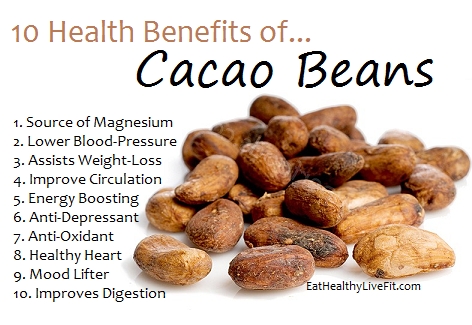
Cacao beans are what chocolate dreams are made of! Cacao beans are exotic, unusual type of beans that grows in tropical, moist regions with warm climate and this little discovery is responsible for our most beloved chocolate. Cacao beans contain more than three hundred healthy nutrients, especially flavonoids, minerals, vitamins, antioxidants etc. 100 grams of Cacao beans contain 408 calories which is high, because of the fats and carbs they contain. However, these are healthy ingredients and make Cacao beans a powerhouse of nutrients.

Cacao beans are rich in everything! Have you ever wondered why chocolate can lift up your mood almost instantly? It’s because Cacao beans contain serotonin and dopamine – two good mood hormones which have positive effects on the entire body and mind. Cacao beans can directly fight depression due to these properties. Besides giving you happiness, Cacao beans can also give you lots of protein. They’re an excellent source of antioxidants. Forget about simple numbers – Cacao beans have 621 antioxidant compound. They can battle free radicals that cause damage in the body and diseases like cancer, degenerative diseases, heart conditions and premature aging.

Cacao beans are good for the heart as well. They contain polyphenols that are able to reduce blood pressure and their magnesium content makes them excellent for the heart. Magnesium can increase the overall heart health and blood will pump more efficiently through the body carrying all the necessary nutrients.

image

There is a specific nutrient in Cacao beans that is amazingly rich in health benefits. It’s called epicatechin. It has similar effects like penicillin and anesthesia and it can reduce the risk of cancer, diabetes, strokes and heart diseases. This compound gives Cacao beans their bitter flavor and is often removed during the processing of the beans. In order to gain the most benefits from Cacao beans, consume them whole.

Cacao beans can help you lose weight due to the polyphenols present it in. All of the nutrients and health benefits help your body maintain its balance and this in return helps you eat less and be in a better mood so that you won’t try to find comfort in food. Also, for best results, always consume either raw Cacao beans or products with 70% raw Cacao in them.

Cacao beans can be found in health food stores or online. Store in accordance with the supplier’s advice.

The nutritive value for 100 grams of Cacao beans is as follows:

408 kcal

Dietary fiber: 32.7 grams

Protein: 19.8 grams

Carbohydrates: 10.8 grams

Total fat: 24.5 grams

Cholesterol: 0 mg

Serving suggestions:

Raw Cacao beans can be consumed for full health benefits as a snack

Cacao is used for cooking, making chocolate, hot drinks, added in cereal, in desserts, with dried fruits etc.

Cacao beans are best consumed without milk because milk can inhibit the body’s ability to absorb antioxidants.

This story was found here: http://eathealthylivefit.com/2014/11/the-health-benefits-of-cacao/


Tags: , ,

Daily Inspirational Sip

Daily Inspirational Sip


Tags: ,