RSS

Category Archives: Inspirational Sips

Pieces by Tamar Braxton

Pieces by Tamar Braxton

Since I missed this Wednesdays Jam, I decided to sprinkle a little music happiness on you with one of my favs from my girl Tamar Braxton.

Whoever said that music wasn’t made from truth was a lie.  Most of the songs written were from someone’s experience.  I think a lot of us can relate to what Tamar’s singing about in this song.  Don’t take pieces of someone Cocoa Drops, demand the whole dayum thing cause you deserve it!!!!!!!!!!

🙂 Phee

Video from YouTube.com posted by Dt Royster.

Pic from thatgrapejuice.net.

 
2 Comments

Posted by on February 22, 2015 in Inspirational Sips, Music Sips


Daily Inspirational Sip formerly Morning Inspiration

Daily Inspirational Sip formerly Morning Inspiration

Biography courtesy of biography.yourdictionary.com

One of the fiercest competitors of any era in baseball, St. Louis Cardinals pitcher Bob Gibson (born 1935) dominated the National League in the 1960s and early 1970s. The hard-throwing Hall of Fame right-hander was at his best when the pressure was most intense, winning seven of his nine World Series starts, eight of them complete games. Gibson was the first pitcher in almost 50 years to finish his career with more than 3,000 strikeouts.

Batters feared to step up to the plate against the scowling, intimidating Bob Gibson. Like the pitchers of an earlier era, he wasn’t afraid to throw inside, sometimes knocking down hitters. Gibson’s will to win was unquenchable. He led the Cardinals to three league championships and two World Series titles. His pitching performance in 1968 is among the very best in baseball history.

Beat the Odds
Bob Gibson was born and raised in poverty during the years of the Great Depression and World War II. He was the youngest of seven children, and he never knew his father, who died of tuberculosis before he was born. His mother, Victoria, supported her large family by working in a laundry. They lived in an inner-city slum in Omaha, Nebraska.

As a child, Gibson’s own health was problematic. He suffered from asthma and hay fever. He had a heart murmur. While very young, he contracted rickets and almost died of pneumonia. Yet he overcame his maladies to become a star athlete at Omaha Technical High School, excelling in track and basketball as well as baseball, where he was primarily a catcher.

Gibson applied to the University of Indiana, but that school turned him down because in those days it had a quota on black athletes. Instead, he went to Creighton University in Omaha on a basketball scholarship. At Creighton, he also played baseball, starring as a shortstop and outfielder.

In 1957, the St. Louis Cardinals gave Gibson a small bonus and signed him to a professional baseball contract. They decided he was best suited to be a pitcher. Yet Gibson was still undecided about which sport to pursue, and he played one season of basketball with the barnstorming Harlem Globetrotters before casting his lot with baseball.

Gibson spent parts of three seasons in the minor leagues, refining his pitching skills, before earning a spot on the Cardinals roster in 1959. He was unimpressive in his first two seasons, winning six games and losing 11, and was twice sent down to the minors. Thirteen consecutive winning seasons in the major leagues would follow.

Pitched with Heart
Gibson threw the ball hard, but he had trouble throwing it over the plate with any consistency at the beginning of his career. His walk totals were unacceptably high: 69 free passes in 87 innings in 1960, and a league-high 119 in 211 innings in 1961, his first year as a regular member of the Cardinals’ starting rotation. But even while he struggled with his control, his opponents were struggling to get hits off him, and his strikeout totals kept rising. In 1962, when he won 15 games, Gibson struck out 208 batters and allowed only 174 hits in 234 innings. He would strike out more than 200 batters in eight of the next ten seasons.

When he perfected a devastating slider to go with his intimidating fastball, Gibson became a complete pitcher. In 1964, Gibson pitched 287 innings and won 19 games, despite battling arthritis in the elbow of his throwing arm most of the season. St. Louis won the National League pennant, thanks largely to Gibson’s great stretch run: he won 9 of his final 11 decisions. The Cardinals edged out two other teams as Gibson won the deciding game on the last day of the season with a gutsy performance in relief.

In the second game of the World Series, Gibson pitched eight strong innings but was pulled for a pinch-hitter with his team trailing, 4-3. Never again would he be removed from a World Series game. The series was tied at two games apiece when Gibson took the mound for Game Five. He dominated for ten innings, striking out 13 and allowing only two runs, and the Cardinals won. Three days later, a weary Gibson gutted out nine more innings in the decisive Game Seven. He allowed three home runs, but the Cardinals hung on for a 7-5 victory and a world championship.

The next season was the first of five in which Gibson would win at least 20 games. He was also establishing his reputation as an intimidator. He believed that the inside part of the plate belonged to him, and batters who would dare to lean in close could expect a fastball up and in.

“Actually, I didn’t drill many guys,” Gibson told the Sporting News long after his career ended. “You thought you might get it.” The inside pitch was a key part of Gibson’s psychological arsenal. “People don’t really understand about pitching inside,” he explained. “They think when you throw inside, you are trying to intimidate somebody, you are trying to knock them down, you are trying to hit them. It’s none of the above. You pitch inside to make them think inside.”

Gibson said that when he did hit a batter, often it was a mistake. But he wouldn’t acknowledge it was unintentional. “I wasn’t throwing at them and they didn’t know it, because they expected me to throw at somebody,” he recalled. “So I never apologized. That’s the worst thing in the world to do. You just stand out there like you did it on purpose.”

His catcher, Tim McCarver, knew how tough Gibson could be. Often, when McCarver went to the mound to settle him down, Gibson would scowl and wave him away. “The only thing you know about pitching is how hard it is to hit,” Gibson once told McCarver as he approached the mound.

Gibson’s athleticism helped him be an all-around contributor to his team. He was one of the smoothest-fielding pitchers of any era, jumping on bunts and grounders like a cat. He was awarded the league’s Gold Glove as the best fielder at his position for nine consecutive years, from 1965 through 1973. He also was a formidable hitter, batting a respectable .206 for his career and clouting 24 home runs.

Big Game Pitcher
In 1967, Gibson’s leg was fractured by Roberto Clemente’s hard line drive. He was out eight weeks, but returned in time to pitch the Cardinals to another league championship, winning the pennant-clinching game against Philadelphia. Back in the World Series, he dominated the Boston Red Sox in his three starts, allowing only three runs, 14 hits and five walks while striking out 26 in 27 innings. He won the opener, 2-1, shut out Boston in Game Four, and was again the winning pitcher in the decisive seventh game. For the second time, he was named the Most Valuable Player of the World Series.

image

No longer was control a problem for Gibson. In his peak years, he struck out three or four times as many batters as he walked. Recognized as the most dominant pitcher in the game, Gibson in 1968 became almost impossible to score runs against. That season was widely regarded as “the year of the pitcher,” with defensive play dominating so much that baseball officials responded after the season by lowering the height of the pitching mound. But even though batting averages were depressed throughout major league baseball, Gibson’s performance still was astounding. He completed 28 of his 34 starts, hurled 305 innings, gave up only 198 hits and 62 walks, and struck out a league-high 268 batters. He led the league with 13 shutouts and compiled a microscopic 1.12 earned run average, meaning that opponents averaged barely one run a game against him. He won 22 games and lost nine, but the losses were due mainly to poor run support from the light-hitting Cardinals.

Many baseball experts consider Gibson’s 1968 season as the greatest pitching achievement since the pre-1920 “dead ball” era. His 1.12 ERA was the fourth-best all-time and by far the lowest since the 1910s. During one stretch of the season, he gave up only two runs over 95 consecutive innings. “That season was different because of my control,” Gibson later told the Sporting News . “I really didn’t have to think about where I wanted to throw the ball … all I had to do was throw it and it got there.”

In the World Series, the Cardinals were heavily favored to beat the Detroit Tigers. The Opening Game pitted Gibson against Denny McLain, who had won 31 games for Detroit, the most by any pitcher after 1934. Gibson set a new World Series record by striking out 17 Tigers, shutting out Detroit on six hits. In Game Four, Gibson again easily beat McLain and even added a home run in the Cards’ 10-1 rout.

Gibson now had won seven consecutive World Series games, finishing all of them, and for the third time he took the mound for a decisive Game Seven. This time he faced Mickey Lolich, who also had two complete-game victories in the series. The two battled in a tense scoreless pitching duel through six innings. Then, in the seventh inning, the usually reliable Curt Flood misread a line drive by Jim Northrup and fell down while trying to reverse course. The drive went over his head for a triple and the Tigers won the game, 4-1. Gibson had struck out a record 35 batters in the series, but the Cardinals lost despite his heroic efforts.

It was the last World Series for Gibson, but he continued to be a major star and a big-game pitcher. He won a second Cy Young Award in 1970 when he won 23 games, lost only seven, and struck out 274 batters. The next season, he pitched a no-hitter against Pittsburgh. Battling arthritis and injuries into his late 30s, he continued to be a workhorse on the mound. Finally, his pain-racked body gave way, and in 1975, at age 40, he fell to a 3-10 record and was forced to retire. He finished his career with 56 shutouts. Walter Johnson was the only player of the time able to surpass his 3,117 strikeouts. Gibson was inducted into base-ball’s Hall of Fame in 1981.

A Winning Reputation
After his playing career ended, Gibson served as a coach with the New York Mets in 1981 and with the Atlanta Braves from 1982 to 1984. He also spent several seasons as a television broadcaster. For awhile he served as a special advisor to American League President Gene Budig. In 1995 he returned to the Cardinals as a bullpen coach and, starting in 1996, became a special instructor for St. Louis during spring training. He became very active in raising money for charities, and continued to be outspoken about racial barriers in baseball that he claimed kept qualified African Americans like himself from advancing in management ranks.

Gibson even complained that his reputation as a “headhunter”—a pitcher who throws bean balls—was the byproduct of racial prejudice. “I resent the fact that the only thing I get credit for is being a headhunter,” he told the Sporting News in 1998. “I suspect [it was] because I was one of the first black pitchers that was relatively successful. I pitched just like everybody else, but when I did it, it was three times worse.”

Gibson is best remembered as a competitor who used his heart and brains and guts to win. “We were taught from the time we were kids to kill, to take no prisoners—as far as winning,” he said in the same interview. “And that doesn’t change. We get a little bit older, but you go out to win at all costs.”

 
Leave a comment

Posted by on February 21, 2015 in Inspirational Sips


Tags: ,

Image

Speak Life…

Speak Life…

image

 
Leave a comment

Posted by on February 20, 2015 in Inspirational Sips, Random Sips


Tags: ,

Morning Inspiration

Morning Inspiration

Bio courtesy of brittanica.com

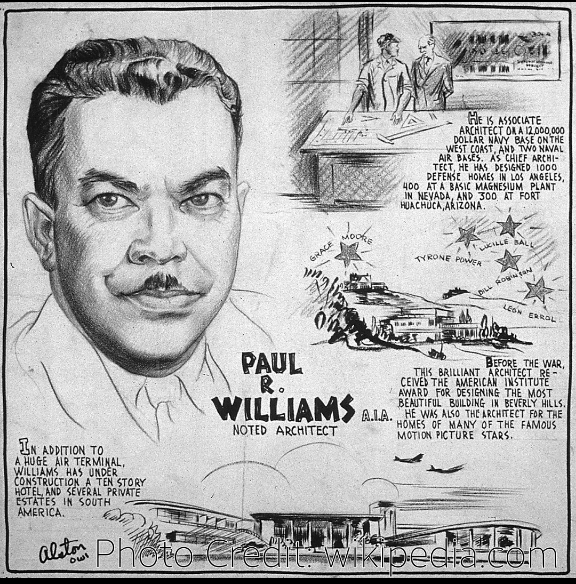
Paul R. Williams, in full Paul Revere Williams   (born February 18, 1894, Los Angeles, California, U.S.—died January 23, 1980, Los Angeles), American architect noted for his mastery of a variety of styles and building types and for his influence on the architectural landscape of southern California. In more than 3,000 buildings over the course of five decades, mostly in and around Los Angeles, he introduced a sense of casual elegance that came to define the region’s architecture. His work became so popular with Hollywood royalty that he was known as the “architect to the stars.”

Williams, the second of two children, was born shortly after his parents moved to Los Angeles from Memphis, Tennessee. Both his parents died by the time he was four years old, and Williams was reared by a family friend; his brother lived with a different family. Because his foster mother quickly recognized his talent, Williams received a solid education and followed his dream to become an architect, though there were few African American architects at the time.

His architectural aspirations remained uppermost in his thoughts. He attended the Los Angeles atelier of the Beaux-Arts Institute of Design (1913–16) and was certified as an architect in 1915. While attending (1916–19) a program for architectural engineering at the University of Southern California, he took a series of low-paying jobs at several architectural firms to learn as much as he could. He learned about landscape architecture while working with Wilbur D. Cook and got his first taste of designing on a palatial scale at the firm of Reginald D. Johnson. From 1920 to 1922 he worked for John C. Austin (with whom he later collaborated), turning his attention to designs for large public buildings.

In 1921 Williams received a license to practice architecture in California and accepted his first commission—from a white former high-school classmate, Louis Cass. A year later, at age 28, Williams founded his own business, Paul R. Williams and Associates, and in 1923 he became the first African American member of the American Institute of Architects. He later was licensed to practice in Washington, D.C. (1936), New York (1948), Tennessee (1960), and Nevada (1964). His designs for suburban and country estates incorporated Mediterranean, Spanish Revival, and English Tudor themes, a blend of styles that strongly appealed to California residents at mid-century. No matter what their stylistic elements, his houses were impeccably designed down to the smallest detail, and they were airy, sun-filled, and graceful.

As Williams’s reputation grew, he received commissions to design houses for such Hollywood stars as Lon Chaney, Lucille Ball, Frank Sinatra, Bill (“Bojangles”) Robinson, Barbara Stanwyck, Cary Grant, Humphrey Bogart and Lauren Bacall, and Anthony Quinn. Among his many remarkable buildings are the opulent Saks Fifth Avenue building in Beverly Hills and the flying saucer–shaped Theme Building at the Los Angeles International Airport (as codesigner). He also oversaw additions to the Beverly Hills Hotel in the 1950s. In addition to stores, public housing, hotels, and restaurants, he designed showrooms, churches, and schools.

image

After 1950, when Modernism and its most-predominant architectural manifestation, the International Style, began to hold sway, Williams was seen as an architect of traditional (that is, old-fashioned) designs. His gift for accommodating eclectic tastes while obeying sound design principles was seen as a drawback. But public taste eventually came full circle, and Williams-designed homes, especially, were again in demand in the early 21st century.

Williams wrote a number of articles, notably “I Am a Negro” (1937) for The American Magazine, and two books, The Small Home of Tomorrow (1945) and New Homes for Today (1946). In 1953 he was awarded the National Association for the Advancement of Colored People’s Spingarn Medal. Many awards and honours followed, both during and after his lifetime.

 
Leave a comment

Posted by on February 20, 2015 in Inspirational Sips


Tags: ,

Morning Inspiration

Morning Inspiration

Bio courtesy of legendsofamerica.com

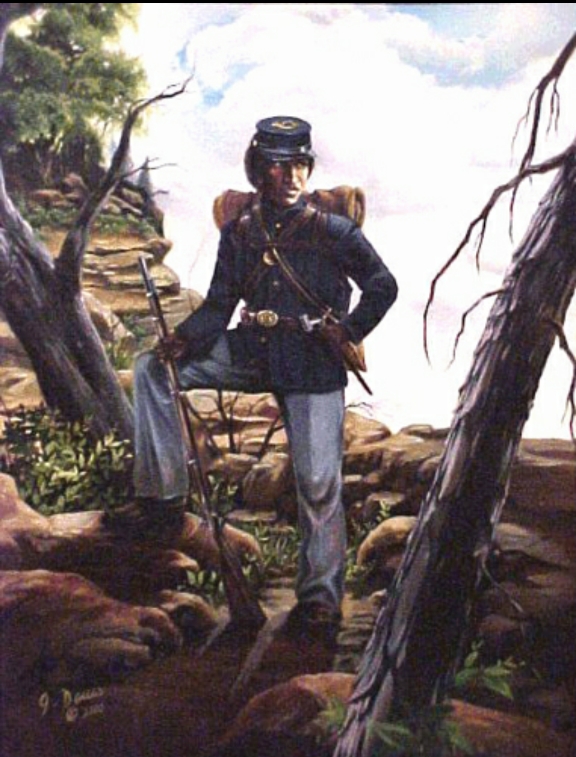
When Congress passed an act authorizing the establishment of the first all Black units of the military, later to become known as “Buffalo Soldiers,” Cathay Williams, a former slave, joined the Army. At that time, women were not allowed to serve as soldiers so Williams posed as a man, calling herself William Cathay.

Williams was born into slavery in Independence, Missouri in 1842. She worked as a house slave for William Johnson, a wealthy planter in Jefferson City, Missouri until his death. Shortly after the Civil War broke out she was freed by Union soldiers and soon went to work for the Federal Army as a paid servant. While working in this capacity, she served Colonel Thomas Hart Benton while he was in Little Rock, Arkansas as well as General Philip Sheridan and his staff, experiencing military life first hand. Sheridan brought her with him to Washington to serve as a cook and laundress.

While traveling with them, she witnessed the Shenandoah Valley raids in Virginia, and afterwards continued to travel with them to Iowa, St. Louis, New Orleans, Savannah, and Macon.

When the war was over, Williams wanted to maintain her financial independence and in November 1866, she enlisted as William Cathay in the 38th U.S. Infantry, Company A in St. Louis, Missouri. At that time, only a cursory medical examination was required and she was quickly found to be fit for duty. There were only two people that knew her true identify – a cousin and a friend, who faithfully kept her secret. She informed her recruiting officer that she was a 22-year-old cook. He described her as 5′ 9″, with black eyes, black hair and black complexion.

On February 13, 1867, Williams was sent to Jefferson Barracks, Missouri and a few months later, in April, the troops marched to Fort Riley, Kansas. By June, they were on the march again, this time to Fort Harker, Kansas, and the next month, on to Fort Union, New Mexico, more than 500 miles away. On September 7, the regiment moved on to Fort Cummings, New Mexico, arriving on October 1st. They were stationed there for eight months, protecting miners and traveling immigrants from Apache attack. While she was there, a brief mutiny broke out in December, 1867 when a camp follower was expelled for stealing money. Several men were brought up on charges or jailed, but Williams was not among them.

It did however, take a toll on her and seemingly her health was suffering, as she was recorded as being in four different hospitals on five separate occasions. Amazingly, during these various hospitalizations, it was never discovered that she was female.

image

legendsofamerica.com

Fort Bayard, New MexicoOn June 6, 1868 the company marched once again, this time to Fort Bayard, New Mexico. By this time Williams longed to be quit of the army and, on July 13, she was admitted into Fort Bayard hospital, this time diagnosed with neuralgia – a catch-all term for any acute, intermittent pain caused by a nerve.

It was during this hospitalization that it was finally discovered that she was a woman. On October 14, 1868, William Cathey and was discharged at Fort Bayard with a certificate of disability, which included statements from the captain of her company and the post’s assistant surgeon. The captain stated that Williams had been under his command since May 20, 1867 “… and has been since feeble both physically and mentally, and much of the time quite unfit for duty. The origin of his infirmities is unknown to me.” The surgeon stated that Cathey was of “…a feeble habit. He is continually on sick report without benefit. He is unable to do military duty…. This condition dates prior to enlistment.”

Over her two year stint Williams participated in regular garrison duties but there is no record that she ever saw direct combat while she was enlisted. Though seemingly not well regarded by her commanding officer, she was honorably discharged with the legacy of being the first and only female Buffalo Soldier to serve.

Afterwards, she worked as a cook for a colonel at Fort Union, New Mexico in 1869 and 1870. She then moved on to Pueblo, Colorado, where she worked as a laundress before permanently settling in Trinidad, Colorado in 1872. There, she made her living as a laundress and part-time nurse. Some years later, her failing health arose again when she was hospitalized in early 1890, for nearly a year and a half. By the time she left the hospital, she was completely without funds and in June, 1891 filed for a pension from the U.S. Army. Her application claimed that she was suffering deafness, rheumatism and neuralgia, all of which she had contracted while in the army.

However, after various doctor’s exams and investigation, the Pension Bureau rejected her claim on medical grounds, stating that no disability existed. Further, they found that her discharge certificate indicated her feeble condition pre-dated enlistment and was not due to service. Lastly, and most obviously, her service in the Army was not legal, and any type of pension, disability or otherwise, was denied.

What happened to Cathay Williams afterwards is unknown, but it appears that she may have died sometime between 1892 and 1900 as her name no longer appeared on Census rolls from 1900.

 
Leave a comment

Posted by on February 19, 2015 in Inspirational Sips


Tags: ,

Late Morning Inspiration

Late Morning Inspiration

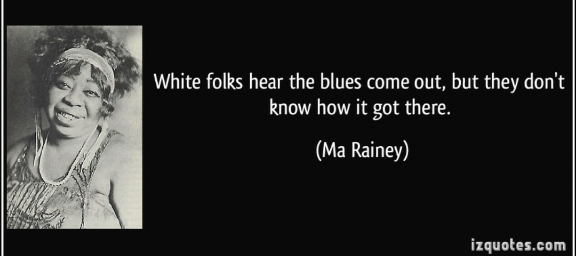
Styled as the “Mother of the Blues,” Gertrude Pridgett Rainey, better known as “Ma” Rainey, was one of the most important of the early blues singers. In her thirty-five years of touring and recordings she made with Paramount, the Georgia native did much to establish the “classic” blues in American musical life.

She played a central role in connecting the less polished, male-dominated country blues and the smoother, female-centered urban blues of the 1920s. Walking on stage, she made an incredible impression before she even began singing, with her thick straightened hair sticking out all over, her huge teeth capped in gold, an ostrich plume in her hand, and a long triple necklace of shining gold coins sparkling against her sequined dress. The gravelly timbre of her contralto voice, with its range of only about an octave, enraptured audiences wherever she went. She generally sang without melodic embellishment, in a raspy, deep voice that had an emotional appeal for listeners.

Rainey was born on April 26, 1886. She grew up in a poor family in Columbus, an important river port and a stop on the minstrel circuit. Her grandmother and both her parents were singers. She showed musical talent early on, beginning her career at age fourteen in a local talent show, “Bunch of Blackberries,” at the Springer Opera House in Columbus. She soon began traveling in vaudeville and minstrel shows, where in 1904 she met and married her husband, William “Pa” Rainey, who was a minstrel show manager. She toured with him in F. S. Wolcott’s Rabbit Foot Minstrels and later with Tolliver’s Circus and Musical Extravaganza and other tent-show groups. For more than three decades the Raineys toured the South, the Midwest, and Mexico.

Ma Rainey was one of the first women to incorporate blues into minstrel and vaudeville stage shows, blending styles from country blues, early jazz, and her own personal musical idiom. By the time she began recording with Paramount Records in 1923 she had toured extensively as “Madame,” earning an enduring reputation as a key figure among the early female blues singers. In 1912 the young Bessie Smith joined her troupe in Chattanooga, Tennessee. While Rainey’s influence on Smith’s style has been exaggerated, her uniquely penetrating voice did help shape the young singer’s development, something clearly audible in Smith’s early recordings. Though they sang together for only a short time, they were two of the most important figures in the development of what later came to be called classical blues, a musical style widely popularized by Bessie Smith, who came to be known as the “Empress of the Blues.”

image

In December 1923 Rainey began a five-year association with Paramount, becoming one of the first women to record the blues professionally, eventually producing more than 100 recordings of her own compositions with some of the finest musicians of the day. Her early discs—Bo-weavil Blues (1923) and Moonshine Blues (1923)—soon spread her reputation outside the South. Louis Armstrong accompanied her in Jelly Bean Blues (1924), and later her Georgia Jazz Band included at different times Tommy Ladnier, Joe Smith, and Coleman Hawkins. One of the few times her flair for comedy comes through is in her widely popular Ma Rainey’s Black Bottom (1927). Although these recordings scarcely do her vocal style justice, they do give a sense of her raw, “moaning” style and her exquisite phrasing. Her songs and vocal style reveal her deep connection with the pain of jealousy, poverty, sexual abuse, and loneliness of sharecroppers and southern blacks.

Changing urban musical tastes began diminishing her appeal, and in 1928 Paramount dropped her, claiming that her “down-home material has gone out of fashion.” The Great Depression further eroded her audiences, and she retired in 1933 to Columbus and Rome, where she managed two theaters she had bought with her earnings. She died of heart disease in 1939, at age fifty-three, and was buried in Porterdale Cemetery in Columbus.

Rainey’s death came just as her work began gaining serious attention among collectors and critics. She was inducted into the Blues Foundation’s Blues Hall of Fame in 1983, the Rock and Roll Hall of Fame in 1990, the Georgia Music Hall of Fame in 1992, and Georgia Women of Achievement in 1993. In 1994 the U.S. Postal Service issued a stamp in her honor.

 
Leave a comment

Posted by on February 18, 2015 in Inspirational Sips


Tags: ,

Give It Up

Give It Up
image

Jenell B. Stewart on FB

 
Leave a comment

Posted by on February 17, 2015 in Inspirational Sips, Random Sips


Tags: ,

Morning Inspiration

Morning Inspiration

Bio courtesy of notablebiographies.com

Bessie Coleman was the first African American to earn an international pilot’s license. She dazzled crowds with her stunts at air shows and refused to be slowed by racism (a dislike or disrespect of a person based on their race).

Early life

Bessie Coleman was born on January 26, 1892, in a one-room, dirt-floored cabin in Atlanta, Texas, to George and Susan Coleman, the illiterate (unable to read and write) children of slaves. When Bessie was two years old, her father, a day laborer, moved his family to Waxahachie, Texas, where he bought a quarter-acre of land and built a three-room house in which two more daughters were born. In 1901 George Coleman left his family. Bessie’s mother and two older brothers went to work and Bessie was left as caretaker of her two younger sisters.

Education for Coleman was limited to eight grades in a one-room schoolhouse that closed whenever the students were needed in the fields to help their families harvest cotton. Coleman easily established her position as family leader, reading aloud to her siblings and her mother at night. She often assured her ambitious church-going mother that she intended to “amount to something.” After completing school she worked as a laundress and saved her pay until 1910 when she left for Oklahoma to attend Langston University. She left after one year when she ran out of money.

Back in Waxahachie Coleman again worked as a laundress until 1915, when she moved to Chicago, Illinois, to live with her older brother, Walter. Within months she became a manicurist and moved to a place of her own while continuing to seek—and finally, in 1920, to find—a goal for her life: to become a pilot.

Learning to fly

After befriending several leaders in South Side Chicago’s African American community, Coleman found a sponsor in Robert Abbott (1868–1940), publisher of the nation’s largest African American weekly, the Chicago Defender. There were no African American aviators (pilots) in the area and, when no white pilot was willing to teach her to fly, Coleman turned to Abbott, who suggested that she go to France. The French, he insisted, were not racists and were the world’s leaders in aviation.

Coleman left for France late in 1920. There she completed flight training at the best school in France and was awarded her Fédération Aéronautique Internationale (F.A.I.; international pilot’s license) license on June 15, 1921. She traveled Europe, gaining further flying experience so that she could perform in air shows.

Her mission

Back in New York in August 1922, Coleman outlined the goals for the remainder of her life to reporters. She would be a leader, she said, in introducing aviation to her race. She would found a school for aviators of any race, and she would appear before audiences in churches, schools, and theaters to spark the interest of African Americans in the new, expanding technology of flight.
Intelligent, beautiful, and well spoken, Coleman often exaggerated her already remarkable accomplishments in the interest of better publicity and bigger audiences. As a result, the African American press of the country, primarily weekly newspapers, quickly proclaimed her “Queen Bess.”

In 1923 Coleman purchased a small plane but crashed on the way to her first scheduled West Coast air show. The plane was destroyed and Coleman suffered injuries that hospitalized her for three months. Returning to Chicago to recover, it took her another eighteen months to find financial backers for a series of shows in Texas. Her flights and theater appearances there during the summer of 1925 were highly successful, earning her enough to make a down payment on another plane. Her new fame was also bringing in steady work. At last, she wrote to one of her sisters, she was going to be able to earn enough money to open her school for fliers.

image

quoteimg.com

A tragic ending

Coleman left Orlando, Florida, by train to give a benefit exhibition for the Jacksonville Negro Welfare League, scheduled for May 1, 1926. Her pilot, William D. Wills, flew her plane into Orlando, but had to make three forced landings because the plane was so worn and poorly maintained. On April 30, 1926, Wills piloted the plane on a trial flight while Coleman sat in the other cockpit to survey the area over which she was to fly and parachute jump the next day. Her seat belt was unattached because she had to lean out over the edge of the plane while picking the best sites for her program. At an altitude of 1,000 feet, the plane dived, then flipped over, throwing Coleman out. Moments later Wills crashed. Both were killed.

Coleman had three memorial services—in Jacksonville, Orlando, and Chicago, the last attended by thousands. She was buried at Chicago’s Lincoln Cemetery and gradually, over the years following her death, achieved recognition at last as a hero of early aviation.

 
Leave a comment

Posted by on February 17, 2015 in Inspirational Sips


Tags: ,

Morning Inspiration

Morning Inspiration

Bio courtesy of notablebiographies.com

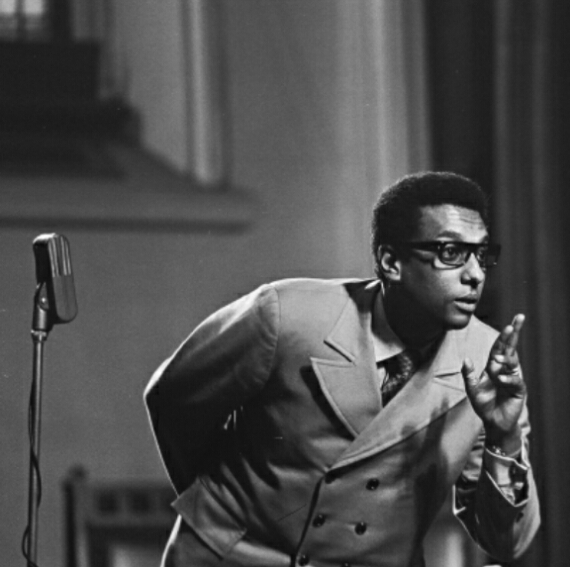
Stokely Carmichael was a civil rights activist during the turbulent 1960s. He soared to fame by popularizing the phrase “Black Power.” Carmichael championed civil rights for African Americans in a rapidly changing world.

Inspiration in New York

Stokely Carmichael was born in Port of Spain, Trinidad, on June 29, 1941. His father moved his family to the United States when Stokely was only two years old. In New York City’s Harlem neighborhood, Carmichael’s self-described “hip” presence quickly made him popular among his white, upper-class schoolmates. Later his family moved to the Bronx, where Carmichael soon discovered the lure of intellectual life after being admitted to the Bronx High School of Science, a school for gifted students.

Carmichael’s political interests began with the work of African American civil rights activist Bayard Rustin (1910–1987), whom he heard speak many times. At one point Carmichael volunteered to help Rustin organize African American workers in a paint factory. But the radical and unfriendly views of Rustin and other similar African American activists would eventually push Carmichael away from the movement.

The civil rights movement

While Carmichael was in school in the Bronx in the early 1960s, the civil rights movement exploded into the forefront of American culture. The Supreme Court declared that school segregation (separating people based on their race) was illegal. African Americans in Montgomery, Alabama, successfully ended segregation on the city’s buses through a yearlong boycott. During the boycott, they recruited others to stop using the buses until the companies changed their policies. During Carmichael’s senior year in high school, four African American freshmen from a school in North Carolina staged a famous sit-in, or peaceful protest, at the white-only lunch counter in a department store.

The action of these students captured the imagination of young Carmichael. He soon began participating in the movements around New York City. Carmichael also traveled to Virginia and South Carolina to join sit-ins protesting discrimination (treating people differently based solely on their race).

Joining the movement

Carmichael refused offers to attend white colleges and decided to study at the historically black Howard University in Washington, D.C. At Howard, Carmichael majored in philosophy and became more and more involved in the civil rights movement.

Carmichael joined a local organization called the Nonviolent Action Group. This group was connected with an Atlanta-based civil rights organization, the Student Nonviolent Coordinating Committee (SNCC). Whenever he had free time, Carmichael traveled south to join the “freedom riders,” an activist group that rode interstate buses in an attempt to end segregation on buses and in bus terminals.

Although the “freedom riders” gained support in some parts of the country, they met resistance in other areas, especially the South. Some of the freedom rider buses were bombed or burned. The riders themselves were often beaten and jailed. In the spring of 1961, when Carmichael was twenty, he spent forty-nine days in a Jackson, Mississippi, jail. One observer said that Carmichael was so rebellious during this period that the sheriff and prison guards were relieved when he was released.

After graduating in 1964 with a bachelor’s degree in philosophy, Carmichael stayed in the South. He constantly participated in sit-ins, picketing, and voter registration drives (organized gatherings to help people register to vote). He was especially active in Lowndes County, Alabama, where he helped found the Lowndes County Freedom Party, a political party that chose a black panther as its symbol. The symbol was a perfect choice to oppose the white rooster that symbolized the Alabama Democratic Party.

image

Quotessays.com

Turning from nonviolence

The turning point in Carmichael’s experience came as he watched when African American demonstrators were beaten and shocked with cattle prods by police. With his activism deepening and as he saw the violence toward both violent and nonviolent protesters, he began to distance himself from nonviolent methods, including those of Martin Luther King Jr. (1929–1968).

In 1965 Carmichael replaced the moderate John Lewis (1940–) as the president of the SNCC. He then joined Martin Luther King Jr. in his now famous “Freedom March.” King led thousands from Selma to Montgomery, Alabama, to register black voters. But Carmichael had trouble agreeing with King that the march should be nonviolent and that people from all races should participate. During this march Carmichael began to express his views about “Black Power” to the media. Many Americans reacted strongly to this slogan that some people believed was antiwhite and promoted violence.

“Black Power” and backlash

Carmichael’s ideas of “Black Power,” which he turned into the book Black Power (coauthored by Charles V. Hamilton), and his article “What We Want,” advanced the idea that racial equality was not the only answer to racism in America. Carmichael and Hamilton linked the struggle for African American empowerment, or the process of gaining political power, in America to the end of imperialism worldwide (or the end of powerful countries forcing their authority on weaker countries, especially those in Africa).

With racial tensions at an all-time high, journalists demanded that Carmichael define the phrase “Black Power.” Soon Carmichael began to believe that no matter what his explanation, the American public would interpret it negatively. In one interview, Carmichael spoke of rallying African Americans to elect officials who would help the black community. However, Carmichael sometimes explained the term “Black Power” in a different way when he spoke to African American audiences. As James Haskins recorded in his book, Profiles in Black Power (1972), Carmichael explained to one crowd, “When you talk of ‘Black Power,’ you talk of building a movement that will smash everything Western civilization has created.” Carmichael and his movement continued to be seen by many in America as a movement that could spark a “Race War.”

With the civil rights movement in full swing, the SNCC became more of a way to spread Carmichael’s “Black Power” movement. When Carmichael declined to run for reelection as leader of the SNCC, however, the organization soon dissolved.

An international focus

By this time, Carmichael’s political attention had shifted as well. He began speaking out against what he called U.S. imperialism (domination of other nations) worldwide. Reports told of Carmichael traveling the world making statements against American policies in other countries, especially America’s involvement in the Vietnam War (1955–75), a war fought in Vietnam in which the United States supported South Vietnam in its fight against a takeover by Communist North Vietnam. These reports only fueled dislike and fear of Carmichael in the United States.

In 1968, the radical and violent Oakland, California-based Black Panther Party made Carmichael their honorary prime minister. He resigned from that post the following year, rejecting Panther loyalty to white activists.

Carmichael then based himself in Washington, D.C., and continued to speak around the country. In May 1968 he married South African singer-activist Miriam Makeba.

Leaving America behind

In 1969 Carmichael left the United States for Conakry, Republic of Guinea, in West Africa. While in Guinea, Carmichael took the name Kwame Ture. Over the next decades, he founded the All-African Revolutionary Party.

Unlike many of his peers who emerged from the civil rights movement, Carmichael’s passion and beliefs always remained strong. He continued to support a revolution as the answer to the problems of racism and unfairness until his death from prostate cancer on November 15, 1998, in Conakry, Guinea.

 
Leave a comment

Posted by on February 16, 2015 in Inspirational Sips


Tags: , ,

Morning Inspiration

Morning Inspiration

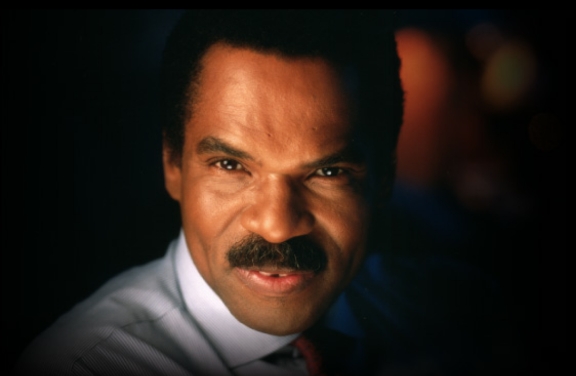
Reginald F. Lewis was born on December 7, 1942, in a Baltimore, Maryland, neighborhood he later described as “semi-tough.” Strongly influenced by his family, he began his career at the age of ten by delivering the local Afro-American newspaper. Fortune Magazine reported that “as a child, Lewis kept his earnings in a tin can known as ‘Reggie’s Hidden Treasure.’” The tin can had been given to him by his grandmother, who taught him the importance of saving some of everything he earned. Reginald later sold his newspaper business at a profit.
During his high school years at Dunbar, Reginald excelled in both his studies and sports. As quarterback of the football team, shortstop on the baseball team, and a forward on the basketball team, he served as captain for all three teams. Reginald was also elected vice-president of the student body; his friend and classmate, Robert M. Bell (current Chief Judge of Maryland), was elected president. In addition, Reginald worked nights and weekends at jobs with his grandfather, a head waiter and maitre’d.

In 1961, Reginald entered Virginia State University on a football scholarship, majoring in economics. He graduated on the Dean’s List despite having a rough first year academically as well as losing his scholarship due to an injury. After losing his scholarship, he worked in a bowling alley and as a photographer’s assistant to help pay his expenses. In his senior year, the Rockefeller Foundation funded a program at Harvard Law School to select a few black students to attend summer school at Harvard to introduce them to legal studies in general.
At the end of the program, Reginald was invited to attend Harvard Law School—the only person in the 148-year history of Harvard Law to be admitted before applying to the school. He arrived at Harvard with $50 in his pocket. During his third year at Harvard, he discovered the direction for his future career in a course on securities law. He wrote his third-year paper on takeovers. He graduated from Harvard Law School in 1968 and went to work for a prestigious New York law firm (Paul, Weiss.)

Within two years of graduation, Reginald established his own law firm, the first African American law firm on Wall Street. He focused on corporate law, and he also helped many minority-owned businesses secure badly needed capital using Minority Enterprise Small Business Investment Companies (venture capital firms formed by corporations or foundations, operating under the aegis of the Small Business Administration).  A desire to “do the deals myself” led him to establish the TLC Group L.P. in 1983. His first major deal involved the $22.5-million leveraged buyout of the McCall Pattern Company. Reginald nursed the struggling company back to health and, despite a declining market, led the company to enjoy the two most profitable years in its 113-year history. In the summer of 1987, he sold it for $90 million, making $50 million in profit.

In October 1987, Reginald purchased the international division of Beatrice Foods, with holdings in 31 countries, which became known as TLC Beatrice International. At $985 million, the deal was the largest leveraged buyout at the time of overseas assets by an American company. As Chairman and CEO, he moved quickly to reposition the company, pay down the debt, and vastly increase the company’s worth. By 1992, the company had sales of over $1.6 billion annually, and Reginald was sharing his time between his company’s offices in New York and an office in Paris (most of the company’s businesses were in Europe).

With all of his success, Reginald did not forget others; giving back was part of his life. In 1987 he established The Reginald F. Lewis Foundation, which funded grants of approximately $10 million to various non-profit programs and organizations while Reginald was alive. His first major grant was an unsolicited $1 million to Howard University—a school he never attended—in 1988; the federal government matched the grant, making the gift to Howard University $2 million, which was used to fund an endowment. Interest from this endowment is used for scholarships, fellowships, and faculty sabbaticals. In 1992, Reginald donated $3 million to Harvard Law School—the largest grant in the history of the school at the time. In gratitude, the school renamed its International Law Center the Reginald F. Lewis International Law Center. Among other programs, the grant supports a fellowship to teach minority lawyers how to be law professors. In January 1993, Reginald’s remarkable career was cut short by his untimely death at the age of 50 after a short illness. At his funeral, a letter from his longtime friend, David N. Dinkins, former mayor of New York, was read. In the letter, Dinkins wrote “Reginald Lewis accomplished more in half a century than most of us could ever deem imaginable. And his brilliant career was matched always by a warm and generous heart.” Dinkins added, “It is said that service to others is the rent we pay on earth. Reg Lewis departed us paid in full.”

Even after his death, Reginald’s philanthropic endeavors continue. During his illness, he made known his desire to support a museum of African American culture. In 2002, the Vice President of the foundation read an article in the Baltimore Sun describing a museum of Maryland African American History and Culture slated to be built near Baltimore’s Inner Harbor.
After further research and discussion, especially relative to the partnership between the museum and the Maryland State Department of Education to develop an African American curriculum to be taught in all public schools in the state of Maryland, the foundation made its largest grant to date to the proposed museum; $5 million dollars. The money is an endowment with the interest to be used for educational purposes.

image

Reginaldflewis.com

Lawyer, entrepreneur, philanthropist, Chairman, CEO, husband, father, son, brother, nephew, cousin, friend—Reginald F. Lewis lived his life according to the words he often quoted to audiences around the country:
“Keep going, no matter what.”

 
Leave a comment

Posted by on February 15, 2015 in Inspirational Sips


Tags: , ,