RSS

Tag Archives: inspiration

Morning Inspiration

Morning Inspiration

Bio courtesy of legendsofamerica.com

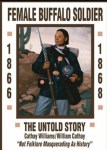
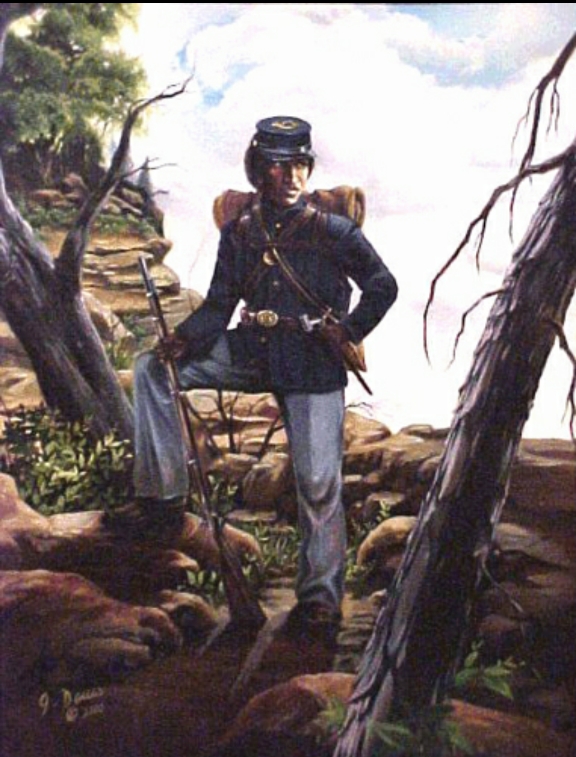
When Congress passed an act authorizing the establishment of the first all Black units of the military, later to become known as “Buffalo Soldiers,” Cathay Williams, a former slave, joined the Army. At that time, women were not allowed to serve as soldiers so Williams posed as a man, calling herself William Cathay.

Williams was born into slavery in Independence, Missouri in 1842. She worked as a house slave for William Johnson, a wealthy planter in Jefferson City, Missouri until his death. Shortly after the Civil War broke out she was freed by Union soldiers and soon went to work for the Federal Army as a paid servant. While working in this capacity, she served Colonel Thomas Hart Benton while he was in Little Rock, Arkansas as well as General Philip Sheridan and his staff, experiencing military life first hand. Sheridan brought her with him to Washington to serve as a cook and laundress.

While traveling with them, she witnessed the Shenandoah Valley raids in Virginia, and afterwards continued to travel with them to Iowa, St. Louis, New Orleans, Savannah, and Macon.

When the war was over, Williams wanted to maintain her financial independence and in November 1866, she enlisted as William Cathay in the 38th U.S. Infantry, Company A in St. Louis, Missouri. At that time, only a cursory medical examination was required and she was quickly found to be fit for duty. There were only two people that knew her true identify – a cousin and a friend, who faithfully kept her secret. She informed her recruiting officer that she was a 22-year-old cook. He described her as 5′ 9″, with black eyes, black hair and black complexion.

On February 13, 1867, Williams was sent to Jefferson Barracks, Missouri and a few months later, in April, the troops marched to Fort Riley, Kansas. By June, they were on the march again, this time to Fort Harker, Kansas, and the next month, on to Fort Union, New Mexico, more than 500 miles away. On September 7, the regiment moved on to Fort Cummings, New Mexico, arriving on October 1st. They were stationed there for eight months, protecting miners and traveling immigrants from Apache attack. While she was there, a brief mutiny broke out in December, 1867 when a camp follower was expelled for stealing money. Several men were brought up on charges or jailed, but Williams was not among them.

It did however, take a toll on her and seemingly her health was suffering, as she was recorded as being in four different hospitals on five separate occasions. Amazingly, during these various hospitalizations, it was never discovered that she was female.
image

legendsofamerica.com

Fort Bayard, New MexicoOn June 6, 1868 the company marched once again, this time to Fort Bayard, New Mexico. By this time Williams longed to be quit of the army and, on July 13, she was admitted into Fort Bayard hospital, this time diagnosed with neuralgia – a catch-all term for any acute, intermittent pain caused by a nerve.

It was during this hospitalization that it was finally discovered that she was a woman. On October 14, 1868, William Cathey and was discharged at Fort Bayard with a certificate of disability, which included statements from the captain of her company and the post’s assistant surgeon. The captain stated that Williams had been under his command since May 20, 1867 “… and has been since feeble both physically and mentally, and much of the time quite unfit for duty. The origin of his infirmities is unknown to me.” The surgeon stated that Cathey was of “…a feeble habit. He is continually on sick report without benefit. He is unable to do military duty…. This condition dates prior to enlistment.”

Over her two year stint Williams participated in regular garrison duties but there is no record that she ever saw direct combat while she was enlisted. Though seemingly not well regarded by her commanding officer, she was honorably discharged with the legacy of being the first and only female Buffalo Soldier to serve.

Afterwards, she worked as a cook for a colonel at Fort Union, New Mexico in 1869 and 1870. She then moved on to Pueblo, Colorado, where she worked as a laundress before permanently settling in Trinidad, Colorado in 1872. There, she made her living as a laundress and part-time nurse. Some years later, her failing health arose again when she was hospitalized in early 1890, for nearly a year and a half. By the time she left the hospital, she was completely without funds and in June, 1891 filed for a pension from the U.S. Army. Her application claimed that she was suffering deafness, rheumatism and neuralgia, all of which she had contracted while in the army.

However, after various doctor’s exams and investigation, the Pension Bureau rejected her claim on medical grounds, stating that no disability existed. Further, they found that her discharge certificate indicated her feeble condition pre-dated enlistment and was not due to service. Lastly, and most obviously, her service in the Army was not legal, and any type of pension, disability or otherwise, was denied.

What happened to Cathay Williams afterwards is unknown, but it appears that she may have died sometime between 1892 and 1900 as her name no longer appeared on Census rolls from 1900.
 
Leave a comment

Posted by on February 19, 2015 in Inspirational Sips


Tags: ,

Late Morning Inspiration

Late Morning Inspiration

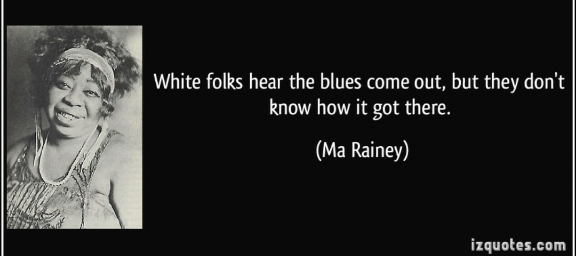
Styled as the “Mother of the Blues,” Gertrude Pridgett Rainey, better known as “Ma” Rainey, was one of the most important of the early blues singers. In her thirty-five years of touring and recordings she made with Paramount, the Georgia native did much to establish the “classic” blues in American musical life.

She played a central role in connecting the less polished, male-dominated country blues and the smoother, female-centered urban blues of the 1920s. Walking on stage, she made an incredible impression before she even began singing, with her thick straightened hair sticking out all over, her huge teeth capped in gold, an ostrich plume in her hand, and a long triple necklace of shining gold coins sparkling against her sequined dress. The gravelly timbre of her contralto voice, with its range of only about an octave, enraptured audiences wherever she went. She generally sang without melodic embellishment, in a raspy, deep voice that had an emotional appeal for listeners.

Rainey was born on April 26, 1886. She grew up in a poor family in Columbus, an important river port and a stop on the minstrel circuit. Her grandmother and both her parents were singers. She showed musical talent early on, beginning her career at age fourteen in a local talent show, “Bunch of Blackberries,” at the Springer Opera House in Columbus. She soon began traveling in vaudeville and minstrel shows, where in 1904 she met and married her husband, William “Pa” Rainey, who was a minstrel show manager. She toured with him in F. S. Wolcott’s Rabbit Foot Minstrels and later with Tolliver’s Circus and Musical Extravaganza and other tent-show groups. For more than three decades the Raineys toured the South, the Midwest, and Mexico.

Ma Rainey was one of the first women to incorporate blues into minstrel and vaudeville stage shows, blending styles from country blues, early jazz, and her own personal musical idiom. By the time she began recording with Paramount Records in 1923 she had toured extensively as “Madame,” earning an enduring reputation as a key figure among the early female blues singers. In 1912 the young Bessie Smith joined her troupe in Chattanooga, Tennessee. While Rainey’s influence on Smith’s style has been exaggerated, her uniquely penetrating voice did help shape the young singer’s development, something clearly audible in Smith’s early recordings. Though they sang together for only a short time, they were two of the most important figures in the development of what later came to be called classical blues, a musical style widely popularized by Bessie Smith, who came to be known as the “Empress of the Blues.”

image

In December 1923 Rainey began a five-year association with Paramount, becoming one of the first women to record the blues professionally, eventually producing more than 100 recordings of her own compositions with some of the finest musicians of the day. Her early discs—Bo-weavil Blues (1923) and Moonshine Blues (1923)—soon spread her reputation outside the South. Louis Armstrong accompanied her in Jelly Bean Blues (1924), and later her Georgia Jazz Band included at different times Tommy Ladnier, Joe Smith, and Coleman Hawkins. One of the few times her flair for comedy comes through is in her widely popular Ma Rainey’s Black Bottom (1927). Although these recordings scarcely do her vocal style justice, they do give a sense of her raw, “moaning” style and her exquisite phrasing. Her songs and vocal style reveal her deep connection with the pain of jealousy, poverty, sexual abuse, and loneliness of sharecroppers and southern blacks.

Changing urban musical tastes began diminishing her appeal, and in 1928 Paramount dropped her, claiming that her “down-home material has gone out of fashion.” The Great Depression further eroded her audiences, and she retired in 1933 to Columbus and Rome, where she managed two theaters she had bought with her earnings. She died of heart disease in 1939, at age fifty-three, and was buried in Porterdale Cemetery in Columbus.

Rainey’s death came just as her work began gaining serious attention among collectors and critics. She was inducted into the Blues Foundation’s Blues Hall of Fame in 1983, the Rock and Roll Hall of Fame in 1990, the Georgia Music Hall of Fame in 1992, and Georgia Women of Achievement in 1993. In 1994 the U.S. Postal Service issued a stamp in her honor.

 
Leave a comment

Posted by on February 18, 2015 in Inspirational Sips


Tags: ,

Give It Up

Give It Up
image

Jenell B. Stewart on FB

 
Leave a comment

Posted by on February 17, 2015 in Inspirational Sips, Random Sips


Tags: ,

Morning Inspiration

Morning Inspiration

Bio courtesy of notablebiographies.com

Bessie Coleman was the first African American to earn an international pilot’s license. She dazzled crowds with her stunts at air shows and refused to be slowed by racism (a dislike or disrespect of a person based on their race).

Early life

Bessie Coleman was born on January 26, 1892, in a one-room, dirt-floored cabin in Atlanta, Texas, to George and Susan Coleman, the illiterate (unable to read and write) children of slaves. When Bessie was two years old, her father, a day laborer, moved his family to Waxahachie, Texas, where he bought a quarter-acre of land and built a three-room house in which two more daughters were born. In 1901 George Coleman left his family. Bessie’s mother and two older brothers went to work and Bessie was left as caretaker of her two younger sisters.

Education for Coleman was limited to eight grades in a one-room schoolhouse that closed whenever the students were needed in the fields to help their families harvest cotton. Coleman easily established her position as family leader, reading aloud to her siblings and her mother at night. She often assured her ambitious church-going mother that she intended to “amount to something.” After completing school she worked as a laundress and saved her pay until 1910 when she left for Oklahoma to attend Langston University. She left after one year when she ran out of money.

Back in Waxahachie Coleman again worked as a laundress until 1915, when she moved to Chicago, Illinois, to live with her older brother, Walter. Within months she became a manicurist and moved to a place of her own while continuing to seek—and finally, in 1920, to find—a goal for her life: to become a pilot.

Learning to fly

After befriending several leaders in South Side Chicago’s African American community, Coleman found a sponsor in Robert Abbott (1868–1940), publisher of the nation’s largest African American weekly, the Chicago Defender. There were no African American aviators (pilots) in the area and, when no white pilot was willing to teach her to fly, Coleman turned to Abbott, who suggested that she go to France. The French, he insisted, were not racists and were the world’s leaders in aviation.

Coleman left for France late in 1920. There she completed flight training at the best school in France and was awarded her Fédération Aéronautique Internationale (F.A.I.; international pilot’s license) license on June 15, 1921. She traveled Europe, gaining further flying experience so that she could perform in air shows.

Her mission

Back in New York in August 1922, Coleman outlined the goals for the remainder of her life to reporters. She would be a leader, she said, in introducing aviation to her race. She would found a school for aviators of any race, and she would appear before audiences in churches, schools, and theaters to spark the interest of African Americans in the new, expanding technology of flight.
Intelligent, beautiful, and well spoken, Coleman often exaggerated her already remarkable accomplishments in the interest of better publicity and bigger audiences. As a result, the African American press of the country, primarily weekly newspapers, quickly proclaimed her “Queen Bess.”

In 1923 Coleman purchased a small plane but crashed on the way to her first scheduled West Coast air show. The plane was destroyed and Coleman suffered injuries that hospitalized her for three months. Returning to Chicago to recover, it took her another eighteen months to find financial backers for a series of shows in Texas. Her flights and theater appearances there during the summer of 1925 were highly successful, earning her enough to make a down payment on another plane. Her new fame was also bringing in steady work. At last, she wrote to one of her sisters, she was going to be able to earn enough money to open her school for fliers.

image

quoteimg.com

A tragic ending

Coleman left Orlando, Florida, by train to give a benefit exhibition for the Jacksonville Negro Welfare League, scheduled for May 1, 1926. Her pilot, William D. Wills, flew her plane into Orlando, but had to make three forced landings because the plane was so worn and poorly maintained. On April 30, 1926, Wills piloted the plane on a trial flight while Coleman sat in the other cockpit to survey the area over which she was to fly and parachute jump the next day. Her seat belt was unattached because she had to lean out over the edge of the plane while picking the best sites for her program. At an altitude of 1,000 feet, the plane dived, then flipped over, throwing Coleman out. Moments later Wills crashed. Both were killed.

Coleman had three memorial services—in Jacksonville, Orlando, and Chicago, the last attended by thousands. She was buried at Chicago’s Lincoln Cemetery and gradually, over the years following her death, achieved recognition at last as a hero of early aviation.

 
Leave a comment

Posted by on February 17, 2015 in Inspirational Sips


Tags: ,

Morning Inspiration

Morning Inspiration

Bio courtesy of notablebiographies.com

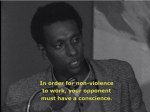
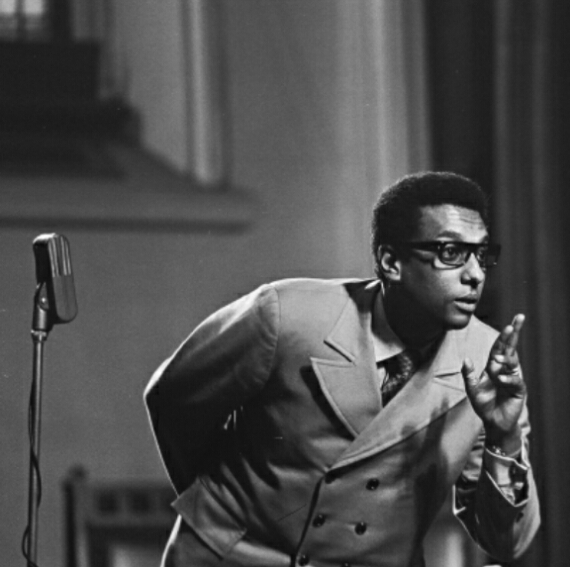
Stokely Carmichael was a civil rights activist during the turbulent 1960s. He soared to fame by popularizing the phrase “Black Power.” Carmichael championed civil rights for African Americans in a rapidly changing world.

Inspiration in New York

Stokely Carmichael was born in Port of Spain, Trinidad, on June 29, 1941. His father moved his family to the United States when Stokely was only two years old. In New York City’s Harlem neighborhood, Carmichael’s self-described “hip” presence quickly made him popular among his white, upper-class schoolmates. Later his family moved to the Bronx, where Carmichael soon discovered the lure of intellectual life after being admitted to the Bronx High School of Science, a school for gifted students.

Carmichael’s political interests began with the work of African American civil rights activist Bayard Rustin (1910–1987), whom he heard speak many times. At one point Carmichael volunteered to help Rustin organize African American workers in a paint factory. But the radical and unfriendly views of Rustin and other similar African American activists would eventually push Carmichael away from the movement.

The civil rights movement

While Carmichael was in school in the Bronx in the early 1960s, the civil rights movement exploded into the forefront of American culture. The Supreme Court declared that school segregation (separating people based on their race) was illegal. African Americans in Montgomery, Alabama, successfully ended segregation on the city’s buses through a yearlong boycott. During the boycott, they recruited others to stop using the buses until the companies changed their policies. During Carmichael’s senior year in high school, four African American freshmen from a school in North Carolina staged a famous sit-in, or peaceful protest, at the white-only lunch counter in a department store.

The action of these students captured the imagination of young Carmichael. He soon began participating in the movements around New York City. Carmichael also traveled to Virginia and South Carolina to join sit-ins protesting discrimination (treating people differently based solely on their race).

Joining the movement

Carmichael refused offers to attend white colleges and decided to study at the historically black Howard University in Washington, D.C. At Howard, Carmichael majored in philosophy and became more and more involved in the civil rights movement.

Carmichael joined a local organization called the Nonviolent Action Group. This group was connected with an Atlanta-based civil rights organization, the Student Nonviolent Coordinating Committee (SNCC). Whenever he had free time, Carmichael traveled south to join the “freedom riders,” an activist group that rode interstate buses in an attempt to end segregation on buses and in bus terminals.

Although the “freedom riders” gained support in some parts of the country, they met resistance in other areas, especially the South. Some of the freedom rider buses were bombed or burned. The riders themselves were often beaten and jailed. In the spring of 1961, when Carmichael was twenty, he spent forty-nine days in a Jackson, Mississippi, jail. One observer said that Carmichael was so rebellious during this period that the sheriff and prison guards were relieved when he was released.

After graduating in 1964 with a bachelor’s degree in philosophy, Carmichael stayed in the South. He constantly participated in sit-ins, picketing, and voter registration drives (organized gatherings to help people register to vote). He was especially active in Lowndes County, Alabama, where he helped found the Lowndes County Freedom Party, a political party that chose a black panther as its symbol. The symbol was a perfect choice to oppose the white rooster that symbolized the Alabama Democratic Party.

image

Quotessays.com

Turning from nonviolence

The turning point in Carmichael’s experience came as he watched when African American demonstrators were beaten and shocked with cattle prods by police. With his activism deepening and as he saw the violence toward both violent and nonviolent protesters, he began to distance himself from nonviolent methods, including those of Martin Luther King Jr. (1929–1968).

In 1965 Carmichael replaced the moderate John Lewis (1940–) as the president of the SNCC. He then joined Martin Luther King Jr. in his now famous “Freedom March.” King led thousands from Selma to Montgomery, Alabama, to register black voters. But Carmichael had trouble agreeing with King that the march should be nonviolent and that people from all races should participate. During this march Carmichael began to express his views about “Black Power” to the media. Many Americans reacted strongly to this slogan that some people believed was antiwhite and promoted violence.

“Black Power” and backlash

Carmichael’s ideas of “Black Power,” which he turned into the book Black Power (coauthored by Charles V. Hamilton), and his article “What We Want,” advanced the idea that racial equality was not the only answer to racism in America. Carmichael and Hamilton linked the struggle for African American empowerment, or the process of gaining political power, in America to the end of imperialism worldwide (or the end of powerful countries forcing their authority on weaker countries, especially those in Africa).

With racial tensions at an all-time high, journalists demanded that Carmichael define the phrase “Black Power.” Soon Carmichael began to believe that no matter what his explanation, the American public would interpret it negatively. In one interview, Carmichael spoke of rallying African Americans to elect officials who would help the black community. However, Carmichael sometimes explained the term “Black Power” in a different way when he spoke to African American audiences. As James Haskins recorded in his book, Profiles in Black Power (1972), Carmichael explained to one crowd, “When you talk of ‘Black Power,’ you talk of building a movement that will smash everything Western civilization has created.” Carmichael and his movement continued to be seen by many in America as a movement that could spark a “Race War.”

With the civil rights movement in full swing, the SNCC became more of a way to spread Carmichael’s “Black Power” movement. When Carmichael declined to run for reelection as leader of the SNCC, however, the organization soon dissolved.

An international focus

By this time, Carmichael’s political attention had shifted as well. He began speaking out against what he called U.S. imperialism (domination of other nations) worldwide. Reports told of Carmichael traveling the world making statements against American policies in other countries, especially America’s involvement in the Vietnam War (1955–75), a war fought in Vietnam in which the United States supported South Vietnam in its fight against a takeover by Communist North Vietnam. These reports only fueled dislike and fear of Carmichael in the United States.

In 1968, the radical and violent Oakland, California-based Black Panther Party made Carmichael their honorary prime minister. He resigned from that post the following year, rejecting Panther loyalty to white activists.

Carmichael then based himself in Washington, D.C., and continued to speak around the country. In May 1968 he married South African singer-activist Miriam Makeba.

Leaving America behind

In 1969 Carmichael left the United States for Conakry, Republic of Guinea, in West Africa. While in Guinea, Carmichael took the name Kwame Ture. Over the next decades, he founded the All-African Revolutionary Party.

Unlike many of his peers who emerged from the civil rights movement, Carmichael’s passion and beliefs always remained strong. He continued to support a revolution as the answer to the problems of racism and unfairness until his death from prostate cancer on November 15, 1998, in Conakry, Guinea.

 
Leave a comment

Posted by on February 16, 2015 in Inspirational Sips


Tags: , ,

Morning Inspiration

Morning Inspiration

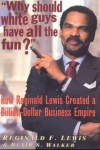
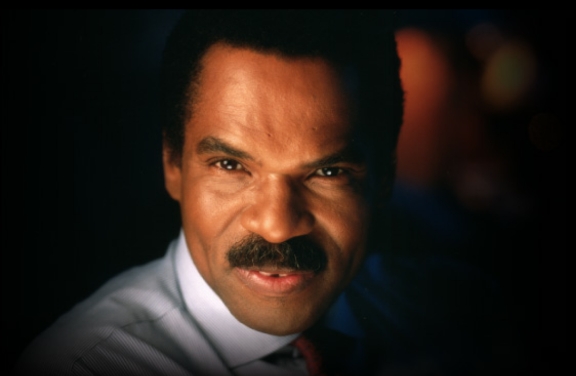
Reginald F. Lewis was born on December 7, 1942, in a Baltimore, Maryland, neighborhood he later described as “semi-tough.” Strongly influenced by his family, he began his career at the age of ten by delivering the local Afro-American newspaper. Fortune Magazine reported that “as a child, Lewis kept his earnings in a tin can known as ‘Reggie’s Hidden Treasure.’” The tin can had been given to him by his grandmother, who taught him the importance of saving some of everything he earned. Reginald later sold his newspaper business at a profit.
During his high school years at Dunbar, Reginald excelled in both his studies and sports. As quarterback of the football team, shortstop on the baseball team, and a forward on the basketball team, he served as captain for all three teams. Reginald was also elected vice-president of the student body; his friend and classmate, Robert M. Bell (current Chief Judge of Maryland), was elected president. In addition, Reginald worked nights and weekends at jobs with his grandfather, a head waiter and maitre’d.

In 1961, Reginald entered Virginia State University on a football scholarship, majoring in economics. He graduated on the Dean’s List despite having a rough first year academically as well as losing his scholarship due to an injury. After losing his scholarship, he worked in a bowling alley and as a photographer’s assistant to help pay his expenses. In his senior year, the Rockefeller Foundation funded a program at Harvard Law School to select a few black students to attend summer school at Harvard to introduce them to legal studies in general.
At the end of the program, Reginald was invited to attend Harvard Law School—the only person in the 148-year history of Harvard Law to be admitted before applying to the school. He arrived at Harvard with $50 in his pocket. During his third year at Harvard, he discovered the direction for his future career in a course on securities law. He wrote his third-year paper on takeovers. He graduated from Harvard Law School in 1968 and went to work for a prestigious New York law firm (Paul, Weiss.)

Within two years of graduation, Reginald established his own law firm, the first African American law firm on Wall Street. He focused on corporate law, and he also helped many minority-owned businesses secure badly needed capital using Minority Enterprise Small Business Investment Companies (venture capital firms formed by corporations or foundations, operating under the aegis of the Small Business Administration).  A desire to “do the deals myself” led him to establish the TLC Group L.P. in 1983. His first major deal involved the $22.5-million leveraged buyout of the McCall Pattern Company. Reginald nursed the struggling company back to health and, despite a declining market, led the company to enjoy the two most profitable years in its 113-year history. In the summer of 1987, he sold it for $90 million, making $50 million in profit.

In October 1987, Reginald purchased the international division of Beatrice Foods, with holdings in 31 countries, which became known as TLC Beatrice International. At $985 million, the deal was the largest leveraged buyout at the time of overseas assets by an American company. As Chairman and CEO, he moved quickly to reposition the company, pay down the debt, and vastly increase the company’s worth. By 1992, the company had sales of over $1.6 billion annually, and Reginald was sharing his time between his company’s offices in New York and an office in Paris (most of the company’s businesses were in Europe).

With all of his success, Reginald did not forget others; giving back was part of his life. In 1987 he established The Reginald F. Lewis Foundation, which funded grants of approximately $10 million to various non-profit programs and organizations while Reginald was alive. His first major grant was an unsolicited $1 million to Howard University—a school he never attended—in 1988; the federal government matched the grant, making the gift to Howard University $2 million, which was used to fund an endowment. Interest from this endowment is used for scholarships, fellowships, and faculty sabbaticals. In 1992, Reginald donated $3 million to Harvard Law School—the largest grant in the history of the school at the time. In gratitude, the school renamed its International Law Center the Reginald F. Lewis International Law Center. Among other programs, the grant supports a fellowship to teach minority lawyers how to be law professors. In January 1993, Reginald’s remarkable career was cut short by his untimely death at the age of 50 after a short illness. At his funeral, a letter from his longtime friend, David N. Dinkins, former mayor of New York, was read. In the letter, Dinkins wrote “Reginald Lewis accomplished more in half a century than most of us could ever deem imaginable. And his brilliant career was matched always by a warm and generous heart.” Dinkins added, “It is said that service to others is the rent we pay on earth. Reg Lewis departed us paid in full.”

Even after his death, Reginald’s philanthropic endeavors continue. During his illness, he made known his desire to support a museum of African American culture. In 2002, the Vice President of the foundation read an article in the Baltimore Sun describing a museum of Maryland African American History and Culture slated to be built near Baltimore’s Inner Harbor.
After further research and discussion, especially relative to the partnership between the museum and the Maryland State Department of Education to develop an African American curriculum to be taught in all public schools in the state of Maryland, the foundation made its largest grant to date to the proposed museum; $5 million dollars. The money is an endowment with the interest to be used for educational purposes.

image

Reginaldflewis.com

Lawyer, entrepreneur, philanthropist, Chairman, CEO, husband, father, son, brother, nephew, cousin, friend—Reginald F. Lewis lived his life according to the words he often quoted to audiences around the country:
“Keep going, no matter what.”

 
Leave a comment

Posted by on February 15, 2015 in Inspirational Sips


Tags: , ,

Morning Inspiration

Morning Inspiration

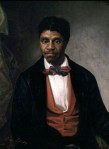
Dred Scott was born in sometime around the turn of the century, often fixed at 1795, in Southampton County, Virginia. Legend has it that his name was Sam, but when his elder brother died, he adopted his name instead. His parents were slaves, but it is uncertain whether the Blow family owned them at his birth or thereafter. Peter Blow and his family relocated first to Huntsville, Alabama, and then to St. Louis Missouri. After Peter Blow’s death, in the early 1830s, Scott was sold to a U.S. Army doctor, John Emerson.

In 1836, Scott fell in love with a slave of another army doctor, 19-year-old Harriett Robinson, and her ownership was transferred over to Dr. Emerson when they were wed.

In the ensuing years, Dr. Emerson traveled to Illinois and the Wisconsin Territories, both of which prohibited slavery. When Emerson died in 1846, Scott tried to buy freedom for himself and his family from Emerson’s widow, but she refused.

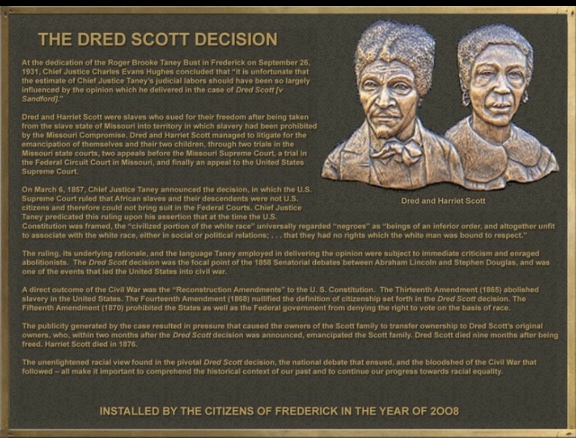
Dred Scott made history by launching a legal battle to gain his freedom. That he had lived with Dr. Emerson in free territories become the basis for his case.

The process began in 1846: Scott lost in his initial suit in a local St. Louis district court, but he won in a second trial, only to have that decision overturned by the Missouri State Supreme Court. With support from local abolitionists, Scott filed another suit in federal court in 1854, against John Sanford, the widow Emerson’s brother and executor of his estate. When that case was decided in favor of Sanford, that Scott turned to the U.S. Supreme Court.

In December 1856, Abraham Lincoln delivered a speech, foreshadowing the Emancipation Proclamation of 1863, examining the constitutional implications of the Dred Scott Case.

On March 6, 1857, the Supreme Court decision in Dred Scott v. Sandford was issued, 11 long years after the initial suits. Seven of the nine judges agreed with the outcome delivered by Chief Justice Roger Taney, who announced that slaves were not citizens of the United States and therefore had no rights to sue in Federal courts: “… They had no rights which the white man was bound to respect.”

The decision also declared that the Missouri Compromise (which had allowed Scott to sample freedom in Illinois and Wisconsin) was unconstitutional, and that Congress did not have the authority to prohibit slavery.

The Dred Scott decision sparked outrage in the northern states and glee in the south—the growing schism made civil war inevitable.

Too controversial to retain the Scotts as slaves after the trial, Mrs. Emerson remarried and returned Dred Scott and his family to the Blows who granted them their freedom in May 1857. That same month, Frederick Douglass delivered a speech discussing the Dred Scott decision on the anniversary of the American Abolition Society.

Eventually, the 13th and 14th amendments to the Constitution overrode this Supreme Court ruling.

Dred Scott and his family stayed in St. Louis after his emancipation, and he found work as a porter in a local hotel. But after only a little more than a year of true freedom, Scott died from tuberculosis on September 17, 1858.

Dred Scott is buried in the Calvary Cemetery in St. Louis (Harriet survived him by 18 years and is buried in Hillsdale, Missouri). Putting pennies (displaying the face of President Lincoln) on Scott’s headstone has become a local tradition over the decades. The commemorative marker next to the headstone reads: “In Memory Of A Simple Man Who Wanted To Be Free.”

In 1997, Dred Scott and his wife Harriet were admitted to the St. Louis Walk of Fame.

image

Lawprofessors.typepad.com

 
1 Comment

Posted by on February 12, 2015 in Inspirational Sips


Tags: ,

Morning Inspiration

Morning Inspiration

Bio courtesy of biography.com

image

Pinterest

Born Eunice Kathleen Waymon on February 21, 1933, in Tryon, North Carolina, Nina Simone took to music at an early age, learning to play piano at the age of 4 and singing in her church’s choir. The sixth of seven children, Simone grew up poor. Her music teacher helped establish a special fund to pay for Simone’s education and, after finishing high school, Simone won a scholarship to New York City’s famed Juilliard School of Music to train as a classical pianist.

Simone taught piano and worked as a accompanist for other performers while at Juilliard, but she eventually had to leave school after she ran out of funds. Moving to Philadelphia, Simone lived with her family there in order to save money and go to a more affordable music program. Her career took an unexpected turn, however, when she was rejected from the Curtis Institute of Music in Philadelphia; she later claimed the school denied her admittance because she was African-American. Turning away from classical music, she started playing American standards, jazz and blues in clubs in the 1950s. Before long, she also started singing along with her music at the behest of one bar owner. She took the stage name Nina Simone—”Nina” came from a nickname meaning “little one” and “Simone” after the actress Simone Signoret. She won over such fans as Harlem Renaissance writers Langston Hughes, Lorraine Hansberry, and James Baldwin.

Simone began recording her music in the late 1950s under the Bethlehem label, releasing her first full album in 1958, which featured “Plain Gold Ring” and “Little Girl Blue.” It also included her one and only top 40 pop hit with her version of “I Loves You Porgy” from the George Gershwin musical Porgy and Bess.

In many ways, Simone’s music defied standard definitions. Her classical training showed through, no matter what genre of song she played, and she drew from many sources including gospel, pop and folk. She was often called the “High Priestess of Soul,” but she hated that nickname. She didn’t like the label of “jazz singer”, either. “If I had to be called something, it should have been a folk singer because there was more folk and blues than jazz in my playing,” she later wrote.

By the mid-1960s, Simone became known as the voice of the civil rights movement. She wrote “Mississippi Goddam” in response to the 1963 assassination of Medgar Evers and the Birmingham church bombing that killed four young African-American girls. After the assassination of Reverend Martin Luther King, Jr. in 1968, Simone penned “Why (The King of Love Is Dead).” She also wrote “Young, Gifted and Black,” borrowing the title of a play by Hansberry, which became a popular anthem at the time.
As the 1960s drew to a close, Simone tired of the American music scene and the country’s deeply divided racial politics. She lived in several different countries, including Liberia, Switzerland, England and Barbados before eventually settling down in the South of France. For years, Simone also struggled with her finances, and clashed with managers, record labels, and the Internal Revenue Service.

Around this time, Simone recorded cover songs of popular music, putting her own spin on such songs as Bob Dylan’s “The Times They Are A-Changin'” and the Beatles’ “Here Comes the Sun.” She also showed her sensual side with the song “I Want a Little Sugar in My Bowl.” She then took a break from recording, returning in 1978 with the album Baltimore. The title track was a cover version of a Randy Newman song. Critics gave the album a warm reception, but it did not do well commercially.

Simone went through a career renaissance in the late 1980s when her song “My Baby Just Cares For Me” was used in a perfume commercial in the United Kingdom. The song became a Top 10 hit in Britain. She also penned her autobiography, I Put a Spell on You, which was published in 1992. Her next recording, A Single Woman, came out in 1993. To support these works, Simone gave some performances in the United States.

Touring periodically, Simone maintained a strong fan base that filled concert halls whenever she performed. She appeared in New York City in 1998, her first trip there in five years. The New York Times critic Jon Paneles reviewed the concert, saying that “there is still power in her voice” and the show featured “a beloved sound, a celebrated personality, and a repertory that magnifies them both.” That same year, Simone attended South African leader Nelson Mandela’s 80th birthday celebration.
In 1999, Simone performed at the Guinness Blues Festival in Dublin, Ireland. She was joined on stage by her daughter Lisa for a few songs. Lisa, from Simone’s second marriage to manager Andrew Stroud, followed in her mother’s footsteps. She has appeared on Broadway in Aida, using the stage name “Simone.”

In her final years, Simone battled with health problems. Some reports indicate she was battling breast cancer, but that claim has not been officially confirmed. She died on April 21, 2003, at her home in Carry-le-Rouet, France.

While she may be gone, Simone left a lasting impression on the world of music. She sang to share her truth, and her music still resonates with great emotion and power. Simone has inspired an array of performers, from Aretha Franklin to Joni Mitchell. Her deep, distinctive voice continues to be a popular choice for television and film soundtracks, from documentaries to comedies to dramas.

 
Leave a comment

Posted by on February 10, 2015 in Inspirational Sips


Tags: , ,

Morning Inspiration

Morning Inspiration

Bio courtesy of marvacollins.com

Marva Collins grew up in Atmore, Alabama at a time when segregation was the rule. Black people were not permitted to use the public library, and her schools had few books, and no indoor plumbing. Nonetheless, her family instilled in her an awareness of the family’s historical excellence and helped develop her strong desire for learning, achievement and independence. After graduating from Clark College in Atlanta, Georgia, she taught school in Alabama for two years. She moved to Chicago and taught in Chicago’s public school system for fourteen years.

Her experiences in that system, coupled with her dissatisfaction with the quality of education that her two youngest children were receiving in prestigious private schools, convinced her that children deserved better than what was passing for acceptable education. That conviction led to her decision to open her own school on the second floor of her home. She took the $5,000 balance in her school pension fund and began her educational program with an enrollment of her own two children and four other neighborhood youngsters.

Thus, Westside Preparatory School was founded in 1975 in Garfield Park, a Chicago inner-city area. During the first year, Marva took in learning disabled, problem children and even one child who had been labeled by Chicago public school authorities as borderline retarded. At the end of the first year, every child scored at least five grades higher proving that the previous labels placed on these children were misguided. The CBS program, 60 Minutes, visited her school for the second time in 1996. That little girl who had been labeled as border line retarded, graduated in 1976 from college Summa Cum Laude. It was documented on the 60 Minutes programs in 1996. Marva’s graduates have entered some of the nation’s finest colleges and universities, such as Harvard, Yale, and Stanford, to mention just a few. And, they have become physicians, lawyers, engineers, educators, and entered other professions.

Ms. Collins has received many accolades in recognition of her outstanding work with children. She was featured on Good Morning, America, 20/20, Fox News, and many more programs too numerous to list. A made-for-television movie titled, The Marva Collins Story starred Cicely Tyson and Morgan Freeman first aired in1 1982, and is still presented on television. Some of her awards include:

– The Jefferson Award for Benefiting the Disadvantaged
– The Humanitarian Award for Excellence
– Legendary Women of the World Award
– Many honorary doctoral degrees from universities such as
Amherst, Dartmouth, Notre Dame, and Clark University
– The prestigious National Humanities Medal from President Bush in 2004

She has turned the responsibilities of running her school over to her daughter, Cynthia B. Collins, who was one of the first students in the Westside Preparatory School. Today, Marva Collins trains teachers in her educational program and methodology. Her curriculum is based on classical literature, and other subject material that contain ideas, lofty thoughts, and abstract concepts. The purpose is to teach children the values that hold societies together and that present to students thoughts that may be interpreted differently. Fourth graders in her school, for example, read Plato’s dialogue, The Republic. In it, Plato asks, “What is justice?” Justice has different meaning, according to one’s viewpoint or interpretations. The students are encouraged to express their own opinion. And, as any observer of Ms. Collins classes will attest, the children are eager to participate in classroom discussions, and their verbal skills are outstanding as are their reasoning abilities. Her students are taught to appreciate the nuances of language, how to analyze and challenge what they read, and to express their opinions. They learn to contrast their own ideas with the differing ones as expressed by the other students.

Ms. Collins has spoken to many major corporations including The National Girl Scouts, The National Retailers Association, The National Dairy Association, The European Division of IBM, Xerox Corporation, The Million Dollar Roundtable, The Young President’s Organization (YPO), The National Bankers’ Association, Anheuser-Busch, Coors, and she has trained executives of Long John Silvers. Corporations have accurately discerned that the same skills Ms. Collins develops in her students are applicable in successful business entities.

 
Leave a comment

Posted by on February 9, 2015 in Inspirational Sips


Tags: , ,

Morning Inspiration

Morning Inspiration

Bio courtesy of historymakers.com

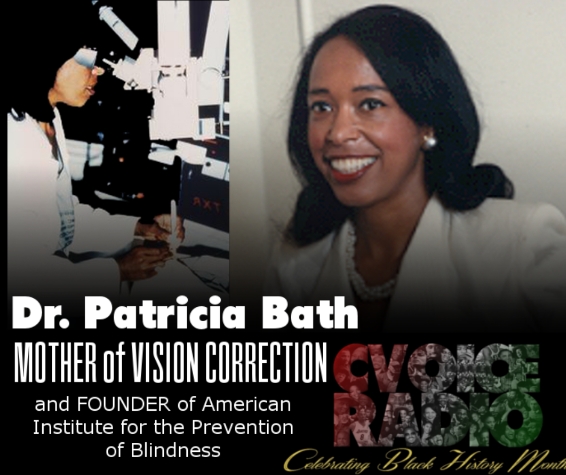
Medical scientist Patricia E. Bath was born on November 4, 1942 in Harlem, New York. Bath’s father, Rupert, was a Trinidadian immigrant and the first black motorman in the New York City subway system; her mother, Gladys, was a descendant of African slaves and Cherokee Native Americans and worked as a housewife and domestic. Bath attended Julia Ward Howe Junior High School and Charles Evans Hughes High School. In 1959, Bath received a grant from the National Science Foundation to attend the Summer Institute in Biomedical Science at Yeshiva University in New York, where she worked on a project studying the relationship between caner, nutrition, and stress. Bath went on to graduate from Hunter College in New York City with her B.S. degree in chemistry in 1964. She then attended Howard University Medical School. Bath graduated with honors in 1968 with her M.D. degree and also won the Edwin J. Watson Prize for Outstanding Student in Ophthalmology.

From 1970 until 1973, Bath was the first African American resident in ophthalmology at new York University’s School of Medicine. During this time, she married and gave birth to a daughter, Eraka, in 1972. In 1973, Bath worked as an assistant surgeon at Sydenham Hospital, Flower and Fifth Avenue Hospital, and Metropolitan Surgical Hospital, all in New York City. In 1974, she completed a fellowship in corneal and keratoprosthesis surgery. Then, Bath moved to Los Angeles, California where she became the first African American woman surgeon at the University of California, Los Angeles (UCLA) Medical Center. She was also appointed assistant professor at the Charles R. Drew University. In 1975, Bath became the first woman faculty member of the UCLA Jules Stein Eye Institute.

image

In 1981, Bath conceived of her invention, the Laserphaco Probe. She traveled to Berlin University in Germany to learn more about laser technology, and over the course of the next five years, she developed and tested a model for a laser instrument that could be tested to remove cataracts. Bath received a patent for her invention on May 17, 1988, and became the first African American female doctor to receive a patent for a medical invention. She continued to work at UCLA and Drew University during the development of her laser cataract removal instrument, and, in 1983, she developed and chaired an ophthalmology residency training program. From 1983 to 1986, Bath was the first woman chair and first female program director of a postgraduate training program in the United States. In 1993, Bath retired from the UCLA Medical Center. Bath was inducted into the International Women in Medicine Hall of Fame in 2001.

 
Leave a comment

Posted by on February 8, 2015 in Inspirational Sips


Tags: , ,