RSS

Tag Archives: black history month

Late Morning Inspiration

Late Morning Inspiration

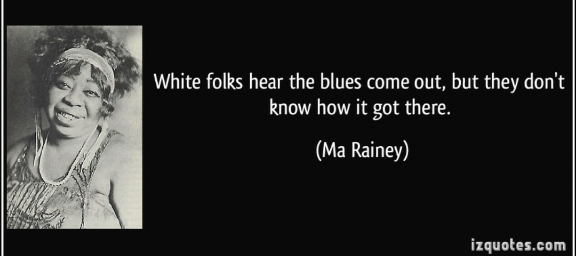
Styled as the “Mother of the Blues,” Gertrude Pridgett Rainey, better known as “Ma” Rainey, was one of the most important of the early blues singers. In her thirty-five years of touring and recordings she made with Paramount, the Georgia native did much to establish the “classic” blues in American musical life.

She played a central role in connecting the less polished, male-dominated country blues and the smoother, female-centered urban blues of the 1920s. Walking on stage, she made an incredible impression before she even began singing, with her thick straightened hair sticking out all over, her huge teeth capped in gold, an ostrich plume in her hand, and a long triple necklace of shining gold coins sparkling against her sequined dress. The gravelly timbre of her contralto voice, with its range of only about an octave, enraptured audiences wherever she went. She generally sang without melodic embellishment, in a raspy, deep voice that had an emotional appeal for listeners.

Rainey was born on April 26, 1886. She grew up in a poor family in Columbus, an important river port and a stop on the minstrel circuit. Her grandmother and both her parents were singers. She showed musical talent early on, beginning her career at age fourteen in a local talent show, “Bunch of Blackberries,” at the Springer Opera House in Columbus. She soon began traveling in vaudeville and minstrel shows, where in 1904 she met and married her husband, William “Pa” Rainey, who was a minstrel show manager. She toured with him in F. S. Wolcott’s Rabbit Foot Minstrels and later with Tolliver’s Circus and Musical Extravaganza and other tent-show groups. For more than three decades the Raineys toured the South, the Midwest, and Mexico.

Ma Rainey was one of the first women to incorporate blues into minstrel and vaudeville stage shows, blending styles from country blues, early jazz, and her own personal musical idiom. By the time she began recording with Paramount Records in 1923 she had toured extensively as “Madame,” earning an enduring reputation as a key figure among the early female blues singers. In 1912 the young Bessie Smith joined her troupe in Chattanooga, Tennessee. While Rainey’s influence on Smith’s style has been exaggerated, her uniquely penetrating voice did help shape the young singer’s development, something clearly audible in Smith’s early recordings. Though they sang together for only a short time, they were two of the most important figures in the development of what later came to be called classical blues, a musical style widely popularized by Bessie Smith, who came to be known as the “Empress of the Blues.”
image

In December 1923 Rainey began a five-year association with Paramount, becoming one of the first women to record the blues professionally, eventually producing more than 100 recordings of her own compositions with some of the finest musicians of the day. Her early discs—Bo-weavil Blues (1923) and Moonshine Blues (1923)—soon spread her reputation outside the South. Louis Armstrong accompanied her in Jelly Bean Blues (1924), and later her Georgia Jazz Band included at different times Tommy Ladnier, Joe Smith, and Coleman Hawkins. One of the few times her flair for comedy comes through is in her widely popular Ma Rainey’s Black Bottom (1927). Although these recordings scarcely do her vocal style justice, they do give a sense of her raw, “moaning” style and her exquisite phrasing. Her songs and vocal style reveal her deep connection with the pain of jealousy, poverty, sexual abuse, and loneliness of sharecroppers and southern blacks.

Changing urban musical tastes began diminishing her appeal, and in 1928 Paramount dropped her, claiming that her “down-home material has gone out of fashion.” The Great Depression further eroded her audiences, and she retired in 1933 to Columbus and Rome, where she managed two theaters she had bought with her earnings. She died of heart disease in 1939, at age fifty-three, and was buried in Porterdale Cemetery in Columbus.

Rainey’s death came just as her work began gaining serious attention among collectors and critics. She was inducted into the Blues Foundation’s Blues Hall of Fame in 1983, the Rock and Roll Hall of Fame in 1990, the Georgia Music Hall of Fame in 1992, and Georgia Women of Achievement in 1993. In 1994 the U.S. Postal Service issued a stamp in her honor.

 
Leave a comment

Posted by on February 18, 2015 in Inspirational Sips


Tags: ,

Morning Inspiration

Morning Inspiration

Bio courtesy of notablebiographies.com

Bessie Coleman was the first African American to earn an international pilot’s license. She dazzled crowds with her stunts at air shows and refused to be slowed by racism (a dislike or disrespect of a person based on their race).

Early life

Bessie Coleman was born on January 26, 1892, in a one-room, dirt-floored cabin in Atlanta, Texas, to George and Susan Coleman, the illiterate (unable to read and write) children of slaves. When Bessie was two years old, her father, a day laborer, moved his family to Waxahachie, Texas, where he bought a quarter-acre of land and built a three-room house in which two more daughters were born. In 1901 George Coleman left his family. Bessie’s mother and two older brothers went to work and Bessie was left as caretaker of her two younger sisters.

Education for Coleman was limited to eight grades in a one-room schoolhouse that closed whenever the students were needed in the fields to help their families harvest cotton. Coleman easily established her position as family leader, reading aloud to her siblings and her mother at night. She often assured her ambitious church-going mother that she intended to “amount to something.” After completing school she worked as a laundress and saved her pay until 1910 when she left for Oklahoma to attend Langston University. She left after one year when she ran out of money.

Back in Waxahachie Coleman again worked as a laundress until 1915, when she moved to Chicago, Illinois, to live with her older brother, Walter. Within months she became a manicurist and moved to a place of her own while continuing to seek—and finally, in 1920, to find—a goal for her life: to become a pilot.

Learning to fly

After befriending several leaders in South Side Chicago’s African American community, Coleman found a sponsor in Robert Abbott (1868–1940), publisher of the nation’s largest African American weekly, the Chicago Defender. There were no African American aviators (pilots) in the area and, when no white pilot was willing to teach her to fly, Coleman turned to Abbott, who suggested that she go to France. The French, he insisted, were not racists and were the world’s leaders in aviation.

Coleman left for France late in 1920. There she completed flight training at the best school in France and was awarded her Fédération Aéronautique Internationale (F.A.I.; international pilot’s license) license on June 15, 1921. She traveled Europe, gaining further flying experience so that she could perform in air shows.

Her mission

Back in New York in August 1922, Coleman outlined the goals for the remainder of her life to reporters. She would be a leader, she said, in introducing aviation to her race. She would found a school for aviators of any race, and she would appear before audiences in churches, schools, and theaters to spark the interest of African Americans in the new, expanding technology of flight.
Intelligent, beautiful, and well spoken, Coleman often exaggerated her already remarkable accomplishments in the interest of better publicity and bigger audiences. As a result, the African American press of the country, primarily weekly newspapers, quickly proclaimed her “Queen Bess.”

In 1923 Coleman purchased a small plane but crashed on the way to her first scheduled West Coast air show. The plane was destroyed and Coleman suffered injuries that hospitalized her for three months. Returning to Chicago to recover, it took her another eighteen months to find financial backers for a series of shows in Texas. Her flights and theater appearances there during the summer of 1925 were highly successful, earning her enough to make a down payment on another plane. Her new fame was also bringing in steady work. At last, she wrote to one of her sisters, she was going to be able to earn enough money to open her school for fliers.

image

quoteimg.com

A tragic ending

Coleman left Orlando, Florida, by train to give a benefit exhibition for the Jacksonville Negro Welfare League, scheduled for May 1, 1926. Her pilot, William D. Wills, flew her plane into Orlando, but had to make three forced landings because the plane was so worn and poorly maintained. On April 30, 1926, Wills piloted the plane on a trial flight while Coleman sat in the other cockpit to survey the area over which she was to fly and parachute jump the next day. Her seat belt was unattached because she had to lean out over the edge of the plane while picking the best sites for her program. At an altitude of 1,000 feet, the plane dived, then flipped over, throwing Coleman out. Moments later Wills crashed. Both were killed.

Coleman had three memorial services—in Jacksonville, Orlando, and Chicago, the last attended by thousands. She was buried at Chicago’s Lincoln Cemetery and gradually, over the years following her death, achieved recognition at last as a hero of early aviation.

 
Leave a comment

Posted by on February 17, 2015 in Inspirational Sips


Tags: ,

Morning Inspiration

Morning Inspiration

Bio courtesy of notablebiographies.com

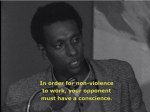
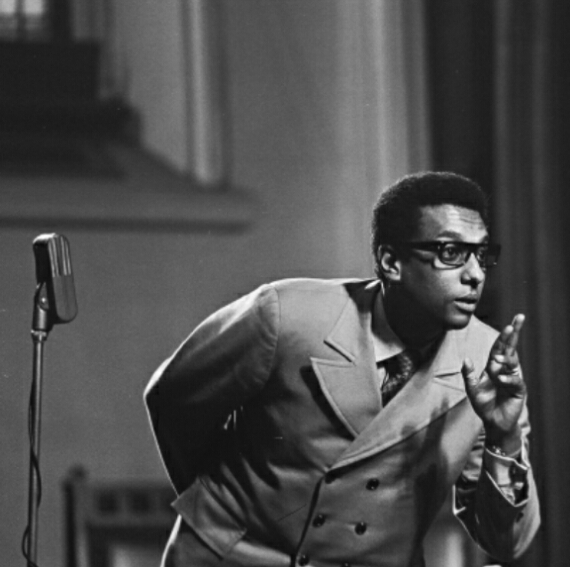
Stokely Carmichael was a civil rights activist during the turbulent 1960s. He soared to fame by popularizing the phrase “Black Power.” Carmichael championed civil rights for African Americans in a rapidly changing world.

Inspiration in New York

Stokely Carmichael was born in Port of Spain, Trinidad, on June 29, 1941. His father moved his family to the United States when Stokely was only two years old. In New York City’s Harlem neighborhood, Carmichael’s self-described “hip” presence quickly made him popular among his white, upper-class schoolmates. Later his family moved to the Bronx, where Carmichael soon discovered the lure of intellectual life after being admitted to the Bronx High School of Science, a school for gifted students.

Carmichael’s political interests began with the work of African American civil rights activist Bayard Rustin (1910–1987), whom he heard speak many times. At one point Carmichael volunteered to help Rustin organize African American workers in a paint factory. But the radical and unfriendly views of Rustin and other similar African American activists would eventually push Carmichael away from the movement.

The civil rights movement

While Carmichael was in school in the Bronx in the early 1960s, the civil rights movement exploded into the forefront of American culture. The Supreme Court declared that school segregation (separating people based on their race) was illegal. African Americans in Montgomery, Alabama, successfully ended segregation on the city’s buses through a yearlong boycott. During the boycott, they recruited others to stop using the buses until the companies changed their policies. During Carmichael’s senior year in high school, four African American freshmen from a school in North Carolina staged a famous sit-in, or peaceful protest, at the white-only lunch counter in a department store.

The action of these students captured the imagination of young Carmichael. He soon began participating in the movements around New York City. Carmichael also traveled to Virginia and South Carolina to join sit-ins protesting discrimination (treating people differently based solely on their race).

Joining the movement

Carmichael refused offers to attend white colleges and decided to study at the historically black Howard University in Washington, D.C. At Howard, Carmichael majored in philosophy and became more and more involved in the civil rights movement.

Carmichael joined a local organization called the Nonviolent Action Group. This group was connected with an Atlanta-based civil rights organization, the Student Nonviolent Coordinating Committee (SNCC). Whenever he had free time, Carmichael traveled south to join the “freedom riders,” an activist group that rode interstate buses in an attempt to end segregation on buses and in bus terminals.

Although the “freedom riders” gained support in some parts of the country, they met resistance in other areas, especially the South. Some of the freedom rider buses were bombed or burned. The riders themselves were often beaten and jailed. In the spring of 1961, when Carmichael was twenty, he spent forty-nine days in a Jackson, Mississippi, jail. One observer said that Carmichael was so rebellious during this period that the sheriff and prison guards were relieved when he was released.

After graduating in 1964 with a bachelor’s degree in philosophy, Carmichael stayed in the South. He constantly participated in sit-ins, picketing, and voter registration drives (organized gatherings to help people register to vote). He was especially active in Lowndes County, Alabama, where he helped found the Lowndes County Freedom Party, a political party that chose a black panther as its symbol. The symbol was a perfect choice to oppose the white rooster that symbolized the Alabama Democratic Party.

image

Quotessays.com

Turning from nonviolence

The turning point in Carmichael’s experience came as he watched when African American demonstrators were beaten and shocked with cattle prods by police. With his activism deepening and as he saw the violence toward both violent and nonviolent protesters, he began to distance himself from nonviolent methods, including those of Martin Luther King Jr. (1929–1968).

In 1965 Carmichael replaced the moderate John Lewis (1940–) as the president of the SNCC. He then joined Martin Luther King Jr. in his now famous “Freedom March.” King led thousands from Selma to Montgomery, Alabama, to register black voters. But Carmichael had trouble agreeing with King that the march should be nonviolent and that people from all races should participate. During this march Carmichael began to express his views about “Black Power” to the media. Many Americans reacted strongly to this slogan that some people believed was antiwhite and promoted violence.

“Black Power” and backlash

Carmichael’s ideas of “Black Power,” which he turned into the book Black Power (coauthored by Charles V. Hamilton), and his article “What We Want,” advanced the idea that racial equality was not the only answer to racism in America. Carmichael and Hamilton linked the struggle for African American empowerment, or the process of gaining political power, in America to the end of imperialism worldwide (or the end of powerful countries forcing their authority on weaker countries, especially those in Africa).

With racial tensions at an all-time high, journalists demanded that Carmichael define the phrase “Black Power.” Soon Carmichael began to believe that no matter what his explanation, the American public would interpret it negatively. In one interview, Carmichael spoke of rallying African Americans to elect officials who would help the black community. However, Carmichael sometimes explained the term “Black Power” in a different way when he spoke to African American audiences. As James Haskins recorded in his book, Profiles in Black Power (1972), Carmichael explained to one crowd, “When you talk of ‘Black Power,’ you talk of building a movement that will smash everything Western civilization has created.” Carmichael and his movement continued to be seen by many in America as a movement that could spark a “Race War.”

With the civil rights movement in full swing, the SNCC became more of a way to spread Carmichael’s “Black Power” movement. When Carmichael declined to run for reelection as leader of the SNCC, however, the organization soon dissolved.

An international focus

By this time, Carmichael’s political attention had shifted as well. He began speaking out against what he called U.S. imperialism (domination of other nations) worldwide. Reports told of Carmichael traveling the world making statements against American policies in other countries, especially America’s involvement in the Vietnam War (1955–75), a war fought in Vietnam in which the United States supported South Vietnam in its fight against a takeover by Communist North Vietnam. These reports only fueled dislike and fear of Carmichael in the United States.

In 1968, the radical and violent Oakland, California-based Black Panther Party made Carmichael their honorary prime minister. He resigned from that post the following year, rejecting Panther loyalty to white activists.

Carmichael then based himself in Washington, D.C., and continued to speak around the country. In May 1968 he married South African singer-activist Miriam Makeba.

Leaving America behind

In 1969 Carmichael left the United States for Conakry, Republic of Guinea, in West Africa. While in Guinea, Carmichael took the name Kwame Ture. Over the next decades, he founded the All-African Revolutionary Party.

Unlike many of his peers who emerged from the civil rights movement, Carmichael’s passion and beliefs always remained strong. He continued to support a revolution as the answer to the problems of racism and unfairness until his death from prostate cancer on November 15, 1998, in Conakry, Guinea.

 
Leave a comment

Posted by on February 16, 2015 in Inspirational Sips


Tags: , ,

Morning Inspiration

Morning Inspiration

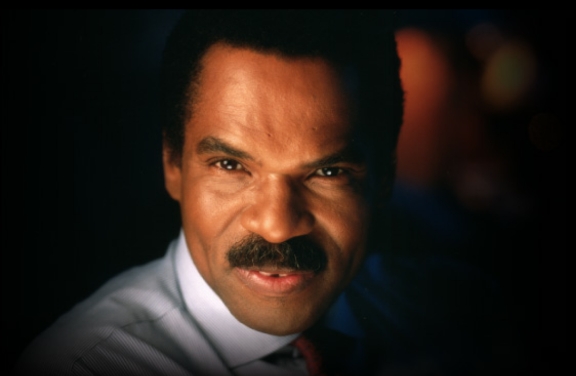
Reginald F. Lewis was born on December 7, 1942, in a Baltimore, Maryland, neighborhood he later described as “semi-tough.” Strongly influenced by his family, he began his career at the age of ten by delivering the local Afro-American newspaper. Fortune Magazine reported that “as a child, Lewis kept his earnings in a tin can known as ‘Reggie’s Hidden Treasure.’” The tin can had been given to him by his grandmother, who taught him the importance of saving some of everything he earned. Reginald later sold his newspaper business at a profit.
During his high school years at Dunbar, Reginald excelled in both his studies and sports. As quarterback of the football team, shortstop on the baseball team, and a forward on the basketball team, he served as captain for all three teams. Reginald was also elected vice-president of the student body; his friend and classmate, Robert M. Bell (current Chief Judge of Maryland), was elected president. In addition, Reginald worked nights and weekends at jobs with his grandfather, a head waiter and maitre’d.

In 1961, Reginald entered Virginia State University on a football scholarship, majoring in economics. He graduated on the Dean’s List despite having a rough first year academically as well as losing his scholarship due to an injury. After losing his scholarship, he worked in a bowling alley and as a photographer’s assistant to help pay his expenses. In his senior year, the Rockefeller Foundation funded a program at Harvard Law School to select a few black students to attend summer school at Harvard to introduce them to legal studies in general.
At the end of the program, Reginald was invited to attend Harvard Law School—the only person in the 148-year history of Harvard Law to be admitted before applying to the school. He arrived at Harvard with $50 in his pocket. During his third year at Harvard, he discovered the direction for his future career in a course on securities law. He wrote his third-year paper on takeovers. He graduated from Harvard Law School in 1968 and went to work for a prestigious New York law firm (Paul, Weiss.)

Within two years of graduation, Reginald established his own law firm, the first African American law firm on Wall Street. He focused on corporate law, and he also helped many minority-owned businesses secure badly needed capital using Minority Enterprise Small Business Investment Companies (venture capital firms formed by corporations or foundations, operating under the aegis of the Small Business Administration).  A desire to “do the deals myself” led him to establish the TLC Group L.P. in 1983. His first major deal involved the $22.5-million leveraged buyout of the McCall Pattern Company. Reginald nursed the struggling company back to health and, despite a declining market, led the company to enjoy the two most profitable years in its 113-year history. In the summer of 1987, he sold it for $90 million, making $50 million in profit.

In October 1987, Reginald purchased the international division of Beatrice Foods, with holdings in 31 countries, which became known as TLC Beatrice International. At $985 million, the deal was the largest leveraged buyout at the time of overseas assets by an American company. As Chairman and CEO, he moved quickly to reposition the company, pay down the debt, and vastly increase the company’s worth. By 1992, the company had sales of over $1.6 billion annually, and Reginald was sharing his time between his company’s offices in New York and an office in Paris (most of the company’s businesses were in Europe).

With all of his success, Reginald did not forget others; giving back was part of his life. In 1987 he established The Reginald F. Lewis Foundation, which funded grants of approximately $10 million to various non-profit programs and organizations while Reginald was alive. His first major grant was an unsolicited $1 million to Howard University—a school he never attended—in 1988; the federal government matched the grant, making the gift to Howard University $2 million, which was used to fund an endowment. Interest from this endowment is used for scholarships, fellowships, and faculty sabbaticals. In 1992, Reginald donated $3 million to Harvard Law School—the largest grant in the history of the school at the time. In gratitude, the school renamed its International Law Center the Reginald F. Lewis International Law Center. Among other programs, the grant supports a fellowship to teach minority lawyers how to be law professors. In January 1993, Reginald’s remarkable career was cut short by his untimely death at the age of 50 after a short illness. At his funeral, a letter from his longtime friend, David N. Dinkins, former mayor of New York, was read. In the letter, Dinkins wrote “Reginald Lewis accomplished more in half a century than most of us could ever deem imaginable. And his brilliant career was matched always by a warm and generous heart.” Dinkins added, “It is said that service to others is the rent we pay on earth. Reg Lewis departed us paid in full.”

Even after his death, Reginald’s philanthropic endeavors continue. During his illness, he made known his desire to support a museum of African American culture. In 2002, the Vice President of the foundation read an article in the Baltimore Sun describing a museum of Maryland African American History and Culture slated to be built near Baltimore’s Inner Harbor.
After further research and discussion, especially relative to the partnership between the museum and the Maryland State Department of Education to develop an African American curriculum to be taught in all public schools in the state of Maryland, the foundation made its largest grant to date to the proposed museum; $5 million dollars. The money is an endowment with the interest to be used for educational purposes.

image

Reginaldflewis.com

Lawyer, entrepreneur, philanthropist, Chairman, CEO, husband, father, son, brother, nephew, cousin, friend—Reginald F. Lewis lived his life according to the words he often quoted to audiences around the country:
“Keep going, no matter what.”

 
Leave a comment

Posted by on February 15, 2015 in Inspirational Sips


Tags: , ,

Morning Inspiration

image

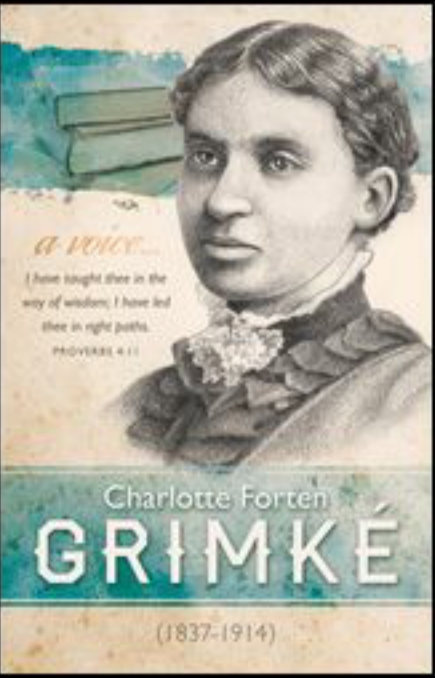
Charlotte Forten was the first northern African-American schoolteacher to go south to teach former slaves. A sensitive and genteel young woman, she brought intense idealism and fierce abolitionist zeal to her work. As a black woman, she hoped to find kinship with the freedmen, though her own education set her apart from the former slaves. She stayed on St. Helena Island for two years, then succumbed to ill health and had to return north. In 1864, she published “Life on the Sea Islands” in The Atlantic Monthly, which brought the work of the Port Royal Experiment to the attention of Northern readers.

Charlotte Forten was born in Philadelphia in 1837 into an influential and affluent family. Her grandfather had been an enormously successful businessman and significant voice in the abolitionist movement. The family moved in the same circles as William Lloyd Garrison and John Greenleaf Whittier: intellectual and political activity were part of the air Charlotte Forten breathed.

She attended Normal School in Salem, Massachusetts and began her teaching career in the Salem schools, the first African-American ever hired. But she longed to be part of a larger cause, and with the coming of the Civil War Forten found a way to act on her deepest beliefs. In 1862, she arrived on St. Helena Island, South Carolina, where she worked with Laura Towne. As she began teaching, she found that many of her pupils spoke only Gullah and were unfamiliar with the routines of school. Though she yearned to feel a bond with the islanders, her temperament, upbringing and education set her apart, and she found she had more in common with the white abolitionists there. Under physical and emotional stress, Forten, who was always frail, grew ill and left St. Helena after two years.

Today, Forten is best remembered for her diaries. From 1854-64 and 1885-92, she recorded the life of an intelligent, cultured, romantic woman who read and wrote poetry, attended lectures, worked, and took part in the largest social movement of her time. She was determined to embody the intellectual potential of all black people. She set a course of philosophical exploration, social sophistication, cultural achievement and spiritual improvement. She was, above all, dedicated to social justice.

image

Voices.cla.umn.edu

In her later life, she lived in Washington D.C. and continued to support equal rights for African-Americans. She married the minister Francis Grimke, nephew of the crusading Grimke sisters. After many years as an invalid, she died in 1914, having been a voice for equality throughout her life.

In Her Own Words

“Monday, October 23, 1854: I will spare no effort to prepare myself well for the responsible duties of a teacher, and to live for the good I can do my oppressed and suffering fellow creatures.” — Diary entry

“Sunday, January 18, 1856: But oh, how inexpressibly bitter and agonizing it is to feel oneself an outcast from the rest of mankind, as we are in this country! To me it is dreadful, dreadful. Oh, that I could de much towards bettering our condition. I will do all, all the very little that lies in my power, while life and strength last!” — Diary entry

“Wednesday, November 5, 1862: Had my first regular teaching experience, and to you and you only friend beloved, will I acknowledge that it was not a very pleasant one.” — Diary entry

“Thursday, November 13, 1862: Talked to the children a little while to-day about the noble Toussaint [L’Ouverture]. They listened very attentively. It is well that they should know what one of their own color could do for his race. I long to inspire them with courage and ambition (of a noble sort), and high purpose.” — Diary entry

“The first day of school was rather trying. Most of my children are very small, and consequently restless. But after some days of positive, though not severe, treatment, order was brought out of chaos. I never before saw children so eager to learn.” — Life on the Sea Islands

“The long, dark night of the Past, with all its sorrows and its fears, was forgotten; and for the Future — the eyes of these freed children see no clouds in it. It is full of sunlight, they think, and they trust in it, perfectly.” — Life on the Sea Islands

“I shall dwell again among ‘mine own people.'” I shall gather my scholars about me, and see smiles of greeting break over their dusky faces. My heart sings a song of thanksgiving, at the thought that even I am permitted to do something for a long-abused race, and aid in promoting a higher, holier, and happier life on the Sea Islands.” — Life on the Sea Islands

 
1 Comment

Posted by on February 14, 2015 in Inspirational Sips


Tags: ,

Morning Inspiration

Morning Inspiration

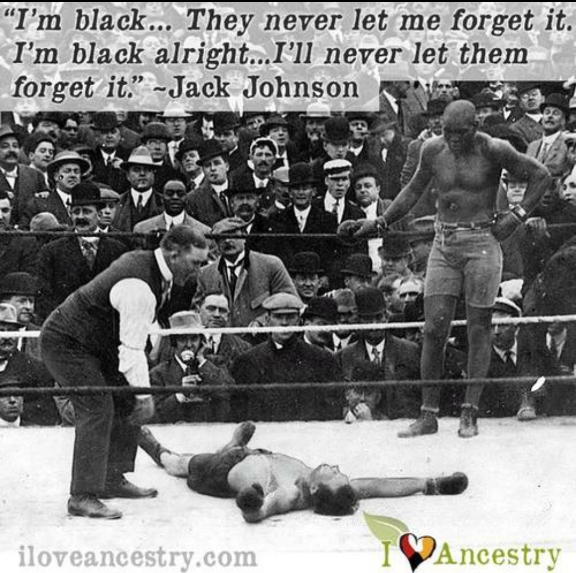
Jack Johnson is one of the most interesting inventors ever, not simply because of his invention but more so because of his celebrated and controversial life. Johnson was born on March 31, 1878 in Galveston, Texas under the name John Arthur Johnson and spent much of his teenage life working on boats and along the city’s docks. He began boxing in 1897 and quickly became an accomplished and feared fighter. Standing 6′ 1″ and weighing 192 lbs., Johnson captured the “Colored Heavyweight Championship of the World” on February 3, 1903 in Los Angeles, California and became the World Heavyweight Champion in 1908. He defeated Tommy Burns for the title and thereby became the first Black man to hold the World Heavyweight Title, a fact that did not endear him to the hearts of white boxing fans.

image

Johnson was extremely confident about his capabilities, and defeated everyone he faced with ease. He also bucked many of the social “rules” of the day and openly dated White women. This eventually got him into trouble in 1912 when he was arrested for violation of the Mann Act, a law often used to prevent Black men from traveling with white women. He was charged with taking his White girlfriend, Lucille Cameron, across state lines across state lines for “immoral purposes.” Although he and Lucille married later in the year, he was convicted of the crime by Judge Kenesaw Mountain Landis (who would later become the Commissioner of Major League Baseball) and was sentenced to Federal prison for one year. Before he could be imprisoned, he and Lucille fled to Europe.
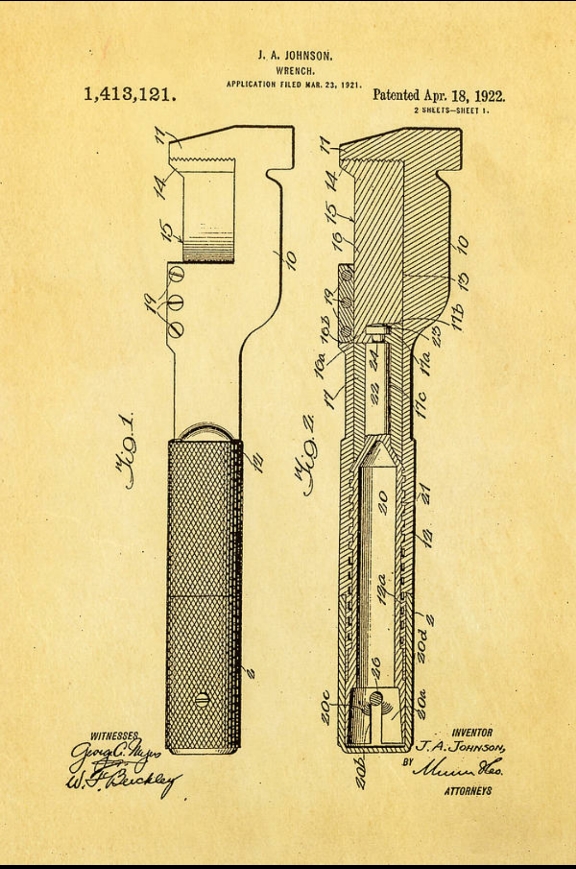
Johnson eventually returned to the United States and was sent to Leavenworth Federal Prison in Kansas. While in prison, Johnson found need for a tool which would help tighten of loosening fastening devices. He therefore crafted a tool and eventually patented it on April 18, 1922, calling it a wrench.

Jack Johnson died on June 10, 1946 in an automobile accident in Raleigh, North Carolina and was elected to the Boxing Hall of Fame in 1954. Although many boxing fans are unaware of the life of the first Black Heavyweight Boxing Champion, they probably utilize his invention routinely around their homes.

image

Pixels.com

 
Leave a comment

Posted by on February 13, 2015 in Inspirational Sips


Tags: ,

Morning Inspiration

Morning Inspiration

Bio courtesy of historymakers.com

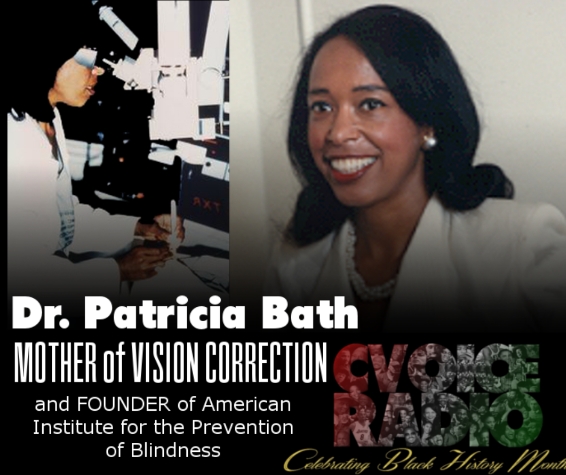
Medical scientist Patricia E. Bath was born on November 4, 1942 in Harlem, New York. Bath’s father, Rupert, was a Trinidadian immigrant and the first black motorman in the New York City subway system; her mother, Gladys, was a descendant of African slaves and Cherokee Native Americans and worked as a housewife and domestic. Bath attended Julia Ward Howe Junior High School and Charles Evans Hughes High School. In 1959, Bath received a grant from the National Science Foundation to attend the Summer Institute in Biomedical Science at Yeshiva University in New York, where she worked on a project studying the relationship between caner, nutrition, and stress. Bath went on to graduate from Hunter College in New York City with her B.S. degree in chemistry in 1964. She then attended Howard University Medical School. Bath graduated with honors in 1968 with her M.D. degree and also won the Edwin J. Watson Prize for Outstanding Student in Ophthalmology.

From 1970 until 1973, Bath was the first African American resident in ophthalmology at new York University’s School of Medicine. During this time, she married and gave birth to a daughter, Eraka, in 1972. In 1973, Bath worked as an assistant surgeon at Sydenham Hospital, Flower and Fifth Avenue Hospital, and Metropolitan Surgical Hospital, all in New York City. In 1974, she completed a fellowship in corneal and keratoprosthesis surgery. Then, Bath moved to Los Angeles, California where she became the first African American woman surgeon at the University of California, Los Angeles (UCLA) Medical Center. She was also appointed assistant professor at the Charles R. Drew University. In 1975, Bath became the first woman faculty member of the UCLA Jules Stein Eye Institute.

image

In 1981, Bath conceived of her invention, the Laserphaco Probe. She traveled to Berlin University in Germany to learn more about laser technology, and over the course of the next five years, she developed and tested a model for a laser instrument that could be tested to remove cataracts. Bath received a patent for her invention on May 17, 1988, and became the first African American female doctor to receive a patent for a medical invention. She continued to work at UCLA and Drew University during the development of her laser cataract removal instrument, and, in 1983, she developed and chaired an ophthalmology residency training program. From 1983 to 1986, Bath was the first woman chair and first female program director of a postgraduate training program in the United States. In 1993, Bath retired from the UCLA Medical Center. Bath was inducted into the International Women in Medicine Hall of Fame in 2001.

 
Leave a comment

Posted by on February 8, 2015 in Inspirational Sips


Tags: , ,

Morning Inspiration

Morning Inspiration

Bio courtesy of johncoltrane.com

Merely mention the name John Coltrane and you’re likely to evoke a deeply emotional, often spiritual response from even the most casual jazz fan.

Born September 23, 1926 in Hamlet, North Carolina, John Coltrane was always surrounded by music. His father played several instruments sparking Coltrane’s study of E-flat horn and clarinet. While in high school, Coltrane’s musical influences shifted to the likes of Lester Young and Johnny Hodges prompting him to switch to alto saxophone. He continued his musical training in Philadelphia at Granoff Studios and the Ornstein School of Music. He was called to military service during WWII, where he performed in the U.S. Navy Band in Hawaii.

image

Quotessays.com

After the war, Coltrane began playing tenor saxophone with the Eddie “CleanHead” Vinson Band, and was later quoted as saying, “A wider area of listening opened up for me. There were many things that people like Hawk, and Ben and Tab Smith were doing in the ‘40’s that I didn’t understand, but that I felt emotionally.” Prior to joining the Dizzy Gillespie band, Coltrane performed with Jimmy Heath where his passion for experimentation began to take shape. However, it was his work with the Miles Davis Quintet in 1958 that would lead to his own musical evolution. ” Miles music gave me plenty of freedom,” he once said. During that period, he became known for using the three-on-one chord approach, and what has been called the ‘sheets of sound,’ a method of playing multiple notes at one time.

By 1960 Coltrane had formed his own quartet which included pianist McCoy Tyner, drummer Elvin Jones, and bassist Jimmy Garrison. Eventually adding players like Eric Dolphy, and Pharoah Sanders. The John Coltrane Quartet created some of the most innovative and expressive music in Jazz history including the hit albums: “My Favorite Things,” “Africa Brass,” ” Impressions,” ” Giant Steps,” and his monumental work “A Love Supreme” which attests to the power, glory, love, and greatness of God. Coltrane felt we must all make a conscious effort to effect positive change in the world, and that his music was an instrument to create positive thought patterns in the minds of people.

In 1967, liver disease took Coltrane’s life leaving many to wonder what might have been. Yet decades after his departure his music can be heard in motion pictures, on television and radio. Recent film projects that have made references to Coltrane’s artistry in dialogue or musical compositions include, “Mr. Holland’s Opus”, “The General’s Daughter”, “Malcolm X”, “Mo Better Blues”, “Jerry McGuire”, “White Night”, “The Last Graduation”, “Come Unto Thee”, “Eyes On The Prize II” and “Four Little Girls”. Also, popular television series such as “NYPD Blue”, “The Cosby Show”, “Day’s Of Our Lives”, “Crime Stories” and “ER”, have also relied on the beautiful melodies of this distinguished saxophonist.

 
Leave a comment

Posted by on February 7, 2015 in Inspirational Sips


Tags: ,

Morning Inspiration

Morning Inspiration

image

Bio courtesy of arthurashe.org and biography.com

Arthur Ashe was a top ranked tennis player in the 1960s and 70s. Raised in the segregated South, he was the first African-American male tennis player to win a Grand Slam tournament. He was much more than an athlete though. His commitment to social justice, health and humanitarian issues left a mark on the world as indelible as his tennis was on the court.

Born on July 10, 1943, in Richmond, Virginia, Arthur Ashe became the first, and is still the only, African-American male player to win the U.S. Open and Wimbledon. He is also the first black American to be ranked No. 1 in the world. Always an activist, when Ashe learned that he had contracted AIDS via a blood transfusion, he turned his efforts to raising awareness of the disease, before finally succumbing to it on February 6, 1993.

 
Leave a comment

Posted by on February 6, 2015 in Inspirational Sips


Tags: ,

Morning Inspiration

Morning Inspiration

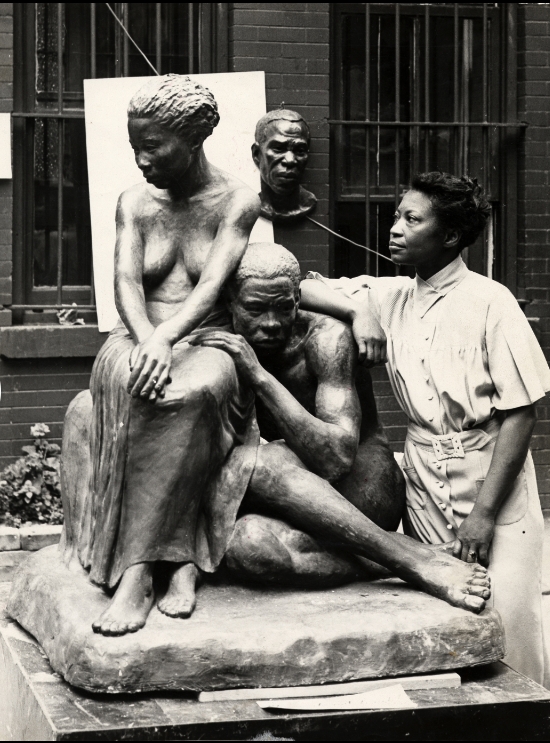
Augusta Savage

Pic Credit: biography.com

Pic Credit: biography.com


Biography courtesy of blackpast.org

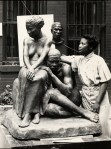
African American sculptor, teacher, and advocate for black artists Augusta Savage was born Augusta Christine Fell in Green Cove Springs, Florida on February 29, 1892, the child of Edward Fells, a laborer and Methodist minister, and Cornelia Murphy. Her daughter, Irene Connie Moore, was born when Savage was 16, in the first of her three marriages. She retained the last name of her second husband, a carpenter named James Savage; they were divorced in the early 1920s.   After moving to Harlem in New York in 1921, Savage studied art at the Cooper Union for the Advancement of Science and Art where she finished the four-year program in three years. She was recommended by Harlem librarian Sadie Peterson (later Delaney), for a commission of a bust of W.E.B. DuBois.  The sculpture was well received and she began sculpting busts of other African American leaders, including Marcus Garvey. Savage’s bust of a Harlem child, Gamin (1929), brought her fame as an artist, and a scholarship to study at the Academie de la Grande Chaumiere in Paris.

In France, she associated with expatriates Henry Ossawa Tanner, Claude McKay, and Countee Cullen. Savage had first received a French scholarship in 1922 but the offer was rescinded when white Alabama students who had received similar grants refused to travel to France unless she was removed from the group.  Her unsuccessful appeal against that loss initiated her lifelong fight for civil rights and the recognition of black artists. Her challenge to the denial of her application was reported in both the black and white presses.   Savage exhibited in several galleries and had numerous commissions, among them for busts of James Weldon Johnson and W.C. Handy, after her return from Paris to Harlem. With a grant from the Carnegie Foundation, she founded in 1932 the Savage School of Arts, which was the largest program of free art classes in New York. Her students included painter Jacob Lawrence and psychologist Kenneth B. Clark. In 1934 Savage became the first African American woman elected to the National Association of Women Painters and Sculptors. She was president of the Harlem Artists Guild during the 1930s. Using her appointment in 1936 as an assistant supervisor in the Federal Arts Project (a division of the Works Progress Administration or WPA), she fought for commissions for black artists and to have African American history included on public murals. Savage was the first director of the Harlem Community Art Center, the most successful community center of the Federal Arts Project. After resigning from the WPA in 1939, she opened the Salon of Contemporary Negro Art in Harlem, which was America’s first gallery for the exhibition and sale of works by African American artists. Works exhibited included those by Beauford Delaney, James Lesesne Wells, Lois Mailou Jones, and Richmond Barthe.

The gallery was not financially successful, however, and was forced to close after several months. Although she was a leading artist of the Harlem Renaissance, low sales and a lack of financial resources dogged Savage’s career. Many of her works were done in plaster, and she was unable to raise the money to have them cast in more permanent materials, so not all have survived. Most notably, the 16-foot-tall 1937 sculpture The Harp, also known as Lift Every Voice and Sing, commissioned for and a popular display at the 1939 New York World’s Fair, was destroyed when the fair was over because she didn’t have the funds to have it removed from the fairgrounds and cast in a more permanent material. When the Schomburg Center had a retrospective of her work in 1988, only 19 pieces were located. Savage became reclusive in the early 1940s, and died of cancer on March 26, 1962, after spending her last year with her daughter in New York.

 
Leave a comment

Posted by on February 5, 2015 in Inspirational Sips


Tags: , ,