RSS

Morning Inspiration

Morning Inspiration

Bio courtesy of legendsofamerica.com

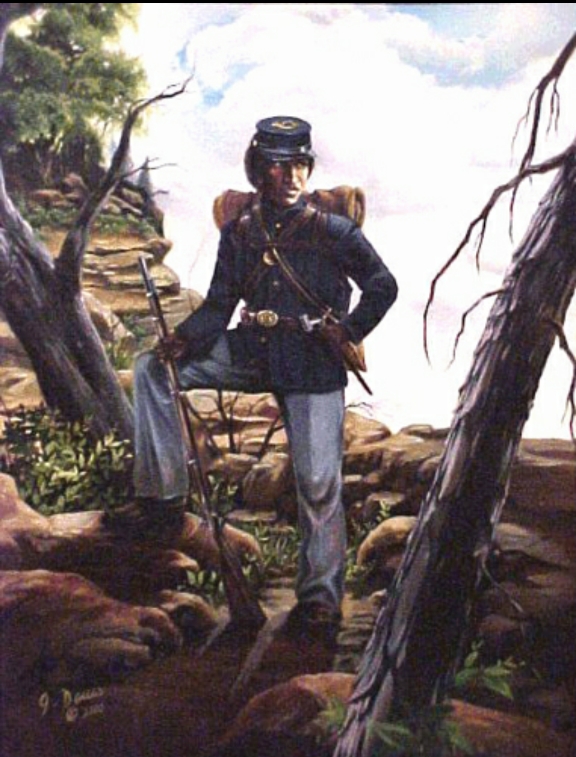
When Congress passed an act authorizing the establishment of the first all Black units of the military, later to become known as “Buffalo Soldiers,” Cathay Williams, a former slave, joined the Army. At that time, women were not allowed to serve as soldiers so Williams posed as a man, calling herself William Cathay.

Williams was born into slavery in Independence, Missouri in 1842. She worked as a house slave for William Johnson, a wealthy planter in Jefferson City, Missouri until his death. Shortly after the Civil War broke out she was freed by Union soldiers and soon went to work for the Federal Army as a paid servant. While working in this capacity, she served Colonel Thomas Hart Benton while he was in Little Rock, Arkansas as well as General Philip Sheridan and his staff, experiencing military life first hand. Sheridan brought her with him to Washington to serve as a cook and laundress.

While traveling with them, she witnessed the Shenandoah Valley raids in Virginia, and afterwards continued to travel with them to Iowa, St. Louis, New Orleans, Savannah, and Macon.

When the war was over, Williams wanted to maintain her financial independence and in November 1866, she enlisted as William Cathay in the 38th U.S. Infantry, Company A in St. Louis, Missouri. At that time, only a cursory medical examination was required and she was quickly found to be fit for duty. There were only two people that knew her true identify – a cousin and a friend, who faithfully kept her secret. She informed her recruiting officer that she was a 22-year-old cook. He described her as 5′ 9″, with black eyes, black hair and black complexion.

On February 13, 1867, Williams was sent to Jefferson Barracks, Missouri and a few months later, in April, the troops marched to Fort Riley, Kansas. By June, they were on the march again, this time to Fort Harker, Kansas, and the next month, on to Fort Union, New Mexico, more than 500 miles away. On September 7, the regiment moved on to Fort Cummings, New Mexico, arriving on October 1st. They were stationed there for eight months, protecting miners and traveling immigrants from Apache attack. While she was there, a brief mutiny broke out in December, 1867 when a camp follower was expelled for stealing money. Several men were brought up on charges or jailed, but Williams was not among them.

It did however, take a toll on her and seemingly her health was suffering, as she was recorded as being in four different hospitals on five separate occasions. Amazingly, during these various hospitalizations, it was never discovered that she was female.
image

legendsofamerica.com

Fort Bayard, New MexicoOn June 6, 1868 the company marched once again, this time to Fort Bayard, New Mexico. By this time Williams longed to be quit of the army and, on July 13, she was admitted into Fort Bayard hospital, this time diagnosed with neuralgia – a catch-all term for any acute, intermittent pain caused by a nerve.

It was during this hospitalization that it was finally discovered that she was a woman. On October 14, 1868, William Cathey and was discharged at Fort Bayard with a certificate of disability, which included statements from the captain of her company and the post’s assistant surgeon. The captain stated that Williams had been under his command since May 20, 1867 “… and has been since feeble both physically and mentally, and much of the time quite unfit for duty. The origin of his infirmities is unknown to me.” The surgeon stated that Cathey was of “…a feeble habit. He is continually on sick report without benefit. He is unable to do military duty…. This condition dates prior to enlistment.”

Over her two year stint Williams participated in regular garrison duties but there is no record that she ever saw direct combat while she was enlisted. Though seemingly not well regarded by her commanding officer, she was honorably discharged with the legacy of being the first and only female Buffalo Soldier to serve.

Afterwards, she worked as a cook for a colonel at Fort Union, New Mexico in 1869 and 1870. She then moved on to Pueblo, Colorado, where she worked as a laundress before permanently settling in Trinidad, Colorado in 1872. There, she made her living as a laundress and part-time nurse. Some years later, her failing health arose again when she was hospitalized in early 1890, for nearly a year and a half. By the time she left the hospital, she was completely without funds and in June, 1891 filed for a pension from the U.S. Army. Her application claimed that she was suffering deafness, rheumatism and neuralgia, all of which she had contracted while in the army.

However, after various doctor’s exams and investigation, the Pension Bureau rejected her claim on medical grounds, stating that no disability existed. Further, they found that her discharge certificate indicated her feeble condition pre-dated enlistment and was not due to service. Lastly, and most obviously, her service in the Army was not legal, and any type of pension, disability or otherwise, was denied.

What happened to Cathay Williams afterwards is unknown, but it appears that she may have died sometime between 1892 and 1900 as her name no longer appeared on Census rolls from 1900.


 
Leave a comment

Posted by on February 19, 2015 in Inspirational Sips


Tags: ,

Just Don’t Do It

Just Don’t Do It
image

FB post by Shannon Westfield

 
Leave a comment

Posted by on February 18, 2015 in Random Sips, Relationship Sips


Tags: ,

Hair Crush

Hair Crush
image

teamnatural_ on IG

Mother/Daughter Puffs! Too cute.

KT

 
Leave a comment

Posted by on February 18, 2015 in Naturally Me Sips


Tags:

Late Morning Inspiration

Late Morning Inspiration

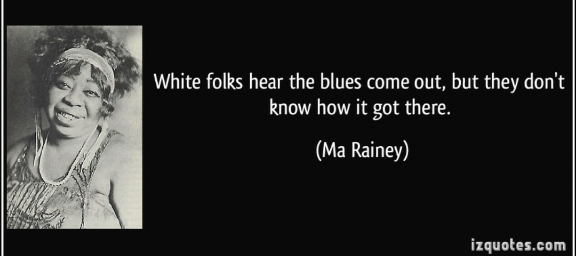
Styled as the “Mother of the Blues,” Gertrude Pridgett Rainey, better known as “Ma” Rainey, was one of the most important of the early blues singers. In her thirty-five years of touring and recordings she made with Paramount, the Georgia native did much to establish the “classic” blues in American musical life.

She played a central role in connecting the less polished, male-dominated country blues and the smoother, female-centered urban blues of the 1920s. Walking on stage, she made an incredible impression before she even began singing, with her thick straightened hair sticking out all over, her huge teeth capped in gold, an ostrich plume in her hand, and a long triple necklace of shining gold coins sparkling against her sequined dress. The gravelly timbre of her contralto voice, with its range of only about an octave, enraptured audiences wherever she went. She generally sang without melodic embellishment, in a raspy, deep voice that had an emotional appeal for listeners.

Rainey was born on April 26, 1886. She grew up in a poor family in Columbus, an important river port and a stop on the minstrel circuit. Her grandmother and both her parents were singers. She showed musical talent early on, beginning her career at age fourteen in a local talent show, “Bunch of Blackberries,” at the Springer Opera House in Columbus. She soon began traveling in vaudeville and minstrel shows, where in 1904 she met and married her husband, William “Pa” Rainey, who was a minstrel show manager. She toured with him in F. S. Wolcott’s Rabbit Foot Minstrels and later with Tolliver’s Circus and Musical Extravaganza and other tent-show groups. For more than three decades the Raineys toured the South, the Midwest, and Mexico.

Ma Rainey was one of the first women to incorporate blues into minstrel and vaudeville stage shows, blending styles from country blues, early jazz, and her own personal musical idiom. By the time she began recording with Paramount Records in 1923 she had toured extensively as “Madame,” earning an enduring reputation as a key figure among the early female blues singers. In 1912 the young Bessie Smith joined her troupe in Chattanooga, Tennessee. While Rainey’s influence on Smith’s style has been exaggerated, her uniquely penetrating voice did help shape the young singer’s development, something clearly audible in Smith’s early recordings. Though they sang together for only a short time, they were two of the most important figures in the development of what later came to be called classical blues, a musical style widely popularized by Bessie Smith, who came to be known as the “Empress of the Blues.”

image

In December 1923 Rainey began a five-year association with Paramount, becoming one of the first women to record the blues professionally, eventually producing more than 100 recordings of her own compositions with some of the finest musicians of the day. Her early discs—Bo-weavil Blues (1923) and Moonshine Blues (1923)—soon spread her reputation outside the South. Louis Armstrong accompanied her in Jelly Bean Blues (1924), and later her Georgia Jazz Band included at different times Tommy Ladnier, Joe Smith, and Coleman Hawkins. One of the few times her flair for comedy comes through is in her widely popular Ma Rainey’s Black Bottom (1927). Although these recordings scarcely do her vocal style justice, they do give a sense of her raw, “moaning” style and her exquisite phrasing. Her songs and vocal style reveal her deep connection with the pain of jealousy, poverty, sexual abuse, and loneliness of sharecroppers and southern blacks.

Changing urban musical tastes began diminishing her appeal, and in 1928 Paramount dropped her, claiming that her “down-home material has gone out of fashion.” The Great Depression further eroded her audiences, and she retired in 1933 to Columbus and Rome, where she managed two theaters she had bought with her earnings. She died of heart disease in 1939, at age fifty-three, and was buried in Porterdale Cemetery in Columbus.

Rainey’s death came just as her work began gaining serious attention among collectors and critics. She was inducted into the Blues Foundation’s Blues Hall of Fame in 1983, the Rock and Roll Hall of Fame in 1990, the Georgia Music Hall of Fame in 1992, and Georgia Women of Achievement in 1993. In 1994 the U.S. Postal Service issued a stamp in her honor.

 
Leave a comment

Posted by on February 18, 2015 in Inspirational Sips


Tags: ,

Can’t Wait To Get It

I thought I’d seen it and heard it all by now but unfortunately not.

Apparently (in my J. Cole voice) two people who had just met were so attracted to each other they couldn’t wait to get it on sooooooooooooo they went outside and got the party started on the ground in front of a store!

This was happening in front of other people inside the store, including teenagers and kids.

What kind of pheromones were they giving off?! I don’t want any parts of this everrrrrr!

🙂 Phee

posted on youTube by HeReCoMesMaX

 
Leave a comment

Posted by on February 18, 2015 in Are you Serious Sips


Give It Up

Give It Up
image

Jenell B. Stewart on FB

 
Leave a comment

Posted by on February 17, 2015 in Inspirational Sips, Random Sips


Tags: ,

Groom Beats Bride on Their Wedding Night

Groom Beats Bride on Their Wedding Night

This is absolutely ridiculous and sad!  The last thing you should be worried about on your wedding night is getting beaten by your new husband.

This bride was actually beaten after her new husband couldn’t get her dress off!  What was he thinking?!  Obviously the groom was certified crazy before this and that’s what the bride should have recognized.  Some women are just in love with the wedding event and ignore signs that a marriage shouldn’t take place.  She had signs and ignored them.

I don’t care how much I’ve put down on a deposit for the reception or that I’ve already paid for my dress….if he is crazy, you already know this and a wedding should not take place!  I could be getting ready to walk out with my dad on my arm and the flower girl tell me he cheated the night before at the bachelor party and show me a pic on her phone she hid in her flower basket, I will walk to the front and politely tell everyone and his lying self, there will be no wedding, thank you for coming out, goodnight (like Russell Simmons on Def Jam).

http://nypost.com/2015/02/17/man-beats-wife-on-wedding-night-after-failing-to-get-her-dress-off/

🙂 Phee

article and featured pic from link above

 
1 Comment

Posted by on February 17, 2015 in Are you Serious Sips


Cocoa Spill of the Day – Katie Holmes’ New Look

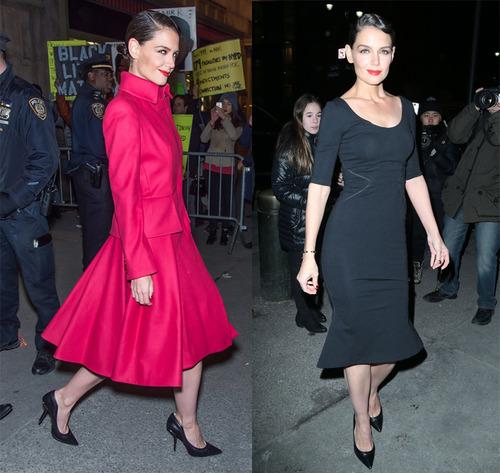
Hot, Hot, Hot, Hunny!!!!!

I love the new look on her. She looks sexy, confident, and just fab-u-lous!!!!!!!!!

Katie to me has always played it safe and stayed true to the good girl look and life.

With this look, it’s like, I’m a new woman….love me or hate me, I don’t care!!!!!!!!!!!!!!!!

katie holmes

Get it Ms. Katie Holmes!

🙂  Phee

pic from article link https://www.yahoo.com/style/katie-holmes-debuts-sexy-new-look-at-zac-posen-111296072613.html, Britt Aboutaleb.

 
1 Comment

Posted by on February 17, 2015 in Random Sips


Tags:

Rich People Thangs: Christening for Tyler Perry’s son

Rich People Thangs: Christening for Tyler Perry’s son

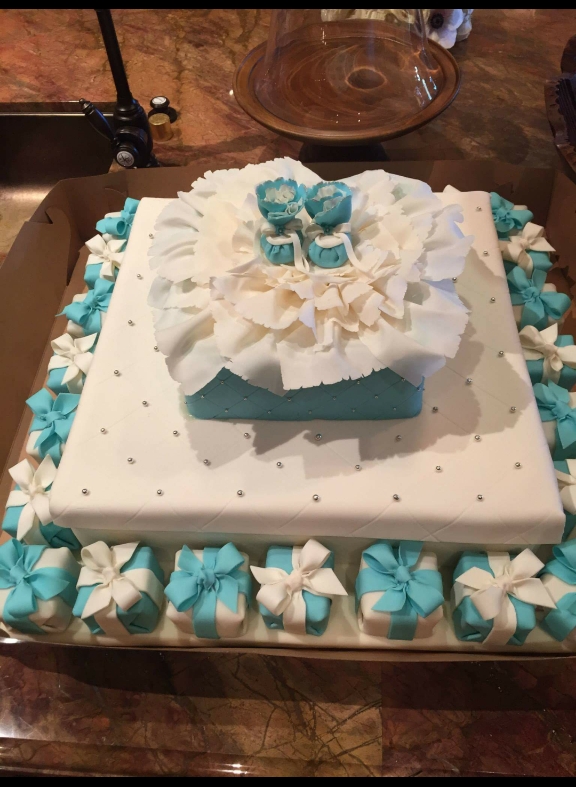
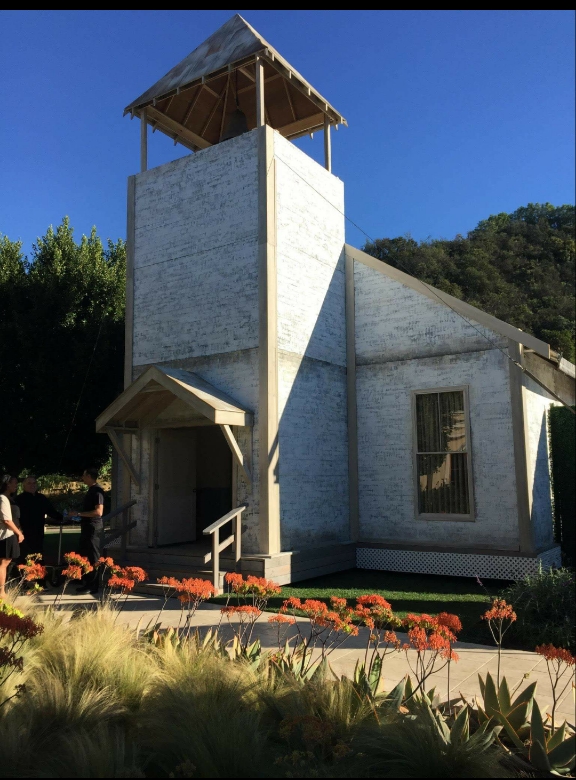
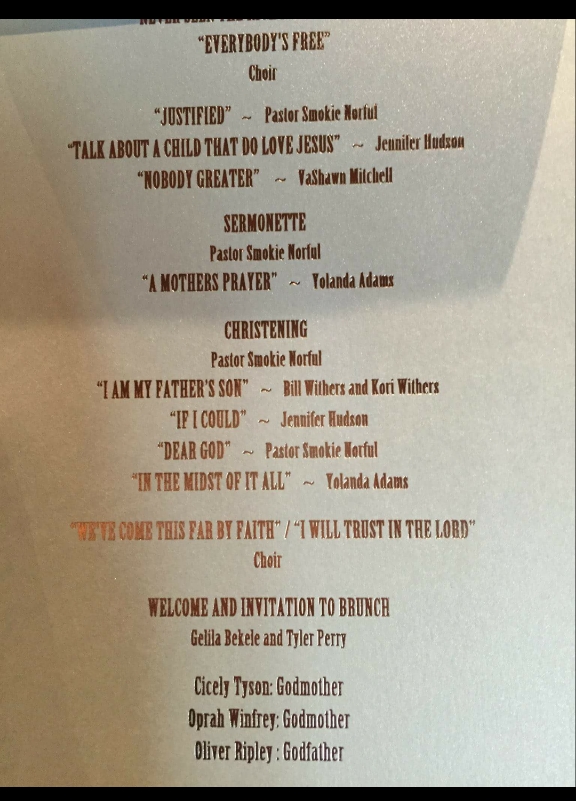
Ok, when do you know that someone has way too much money?  Hmmmm, perhaps when they decide to christen their child, they want to do it in their backyard AND build the actual church in the same backyard. When I christened my daughter, we did it at the church we were attending and then we went home. I’m just saying… I’m not one of those rich people. Lol

Tyler Perry being the rich and extravagant dude that he is; however, did just that. Tyler Perry posted several pictures on Facebook from the loving, celebrity – filled event. He also mentioned how he built an exact replica of the church where his mother grew up in his backyard in honor of his mother. He wanted her spirit to be with them during the service. I’m sure it was a fantabulous affair for little Aman. And with godparents like he has, he will have a fantabulous life full of wisdom. Check out the pics he shared on Facebook from this blessed occasion.

image

image

image

image

image

image

KT

 
Leave a comment

Posted by on February 17, 2015 in Online Sips


Tags: ,

Morning Inspiration

Morning Inspiration

Bio courtesy of notablebiographies.com

Bessie Coleman was the first African American to earn an international pilot’s license. She dazzled crowds with her stunts at air shows and refused to be slowed by racism (a dislike or disrespect of a person based on their race).

Early life

Bessie Coleman was born on January 26, 1892, in a one-room, dirt-floored cabin in Atlanta, Texas, to George and Susan Coleman, the illiterate (unable to read and write) children of slaves. When Bessie was two years old, her father, a day laborer, moved his family to Waxahachie, Texas, where he bought a quarter-acre of land and built a three-room house in which two more daughters were born. In 1901 George Coleman left his family. Bessie’s mother and two older brothers went to work and Bessie was left as caretaker of her two younger sisters.

Education for Coleman was limited to eight grades in a one-room schoolhouse that closed whenever the students were needed in the fields to help their families harvest cotton. Coleman easily established her position as family leader, reading aloud to her siblings and her mother at night. She often assured her ambitious church-going mother that she intended to “amount to something.” After completing school she worked as a laundress and saved her pay until 1910 when she left for Oklahoma to attend Langston University. She left after one year when she ran out of money.

Back in Waxahachie Coleman again worked as a laundress until 1915, when she moved to Chicago, Illinois, to live with her older brother, Walter. Within months she became a manicurist and moved to a place of her own while continuing to seek—and finally, in 1920, to find—a goal for her life: to become a pilot.

Learning to fly

After befriending several leaders in South Side Chicago’s African American community, Coleman found a sponsor in Robert Abbott (1868–1940), publisher of the nation’s largest African American weekly, the Chicago Defender. There were no African American aviators (pilots) in the area and, when no white pilot was willing to teach her to fly, Coleman turned to Abbott, who suggested that she go to France. The French, he insisted, were not racists and were the world’s leaders in aviation.

Coleman left for France late in 1920. There she completed flight training at the best school in France and was awarded her Fédération Aéronautique Internationale (F.A.I.; international pilot’s license) license on June 15, 1921. She traveled Europe, gaining further flying experience so that she could perform in air shows.

Her mission

Back in New York in August 1922, Coleman outlined the goals for the remainder of her life to reporters. She would be a leader, she said, in introducing aviation to her race. She would found a school for aviators of any race, and she would appear before audiences in churches, schools, and theaters to spark the interest of African Americans in the new, expanding technology of flight.
Intelligent, beautiful, and well spoken, Coleman often exaggerated her already remarkable accomplishments in the interest of better publicity and bigger audiences. As a result, the African American press of the country, primarily weekly newspapers, quickly proclaimed her “Queen Bess.”

In 1923 Coleman purchased a small plane but crashed on the way to her first scheduled West Coast air show. The plane was destroyed and Coleman suffered injuries that hospitalized her for three months. Returning to Chicago to recover, it took her another eighteen months to find financial backers for a series of shows in Texas. Her flights and theater appearances there during the summer of 1925 were highly successful, earning her enough to make a down payment on another plane. Her new fame was also bringing in steady work. At last, she wrote to one of her sisters, she was going to be able to earn enough money to open her school for fliers.

image

quoteimg.com

A tragic ending

Coleman left Orlando, Florida, by train to give a benefit exhibition for the Jacksonville Negro Welfare League, scheduled for May 1, 1926. Her pilot, William D. Wills, flew her plane into Orlando, but had to make three forced landings because the plane was so worn and poorly maintained. On April 30, 1926, Wills piloted the plane on a trial flight while Coleman sat in the other cockpit to survey the area over which she was to fly and parachute jump the next day. Her seat belt was unattached because she had to lean out over the edge of the plane while picking the best sites for her program. At an altitude of 1,000 feet, the plane dived, then flipped over, throwing Coleman out. Moments later Wills crashed. Both were killed.

Coleman had three memorial services—in Jacksonville, Orlando, and Chicago, the last attended by thousands. She was buried at Chicago’s Lincoln Cemetery and gradually, over the years following her death, achieved recognition at last as a hero of early aviation.

 
Leave a comment

Posted by on February 17, 2015 in Inspirational Sips


Tags: ,