RSS

Category Archives: Inspirational Sips

Morning Inspiration

Morning Inspiration

Bio courtesy of historymakers.com

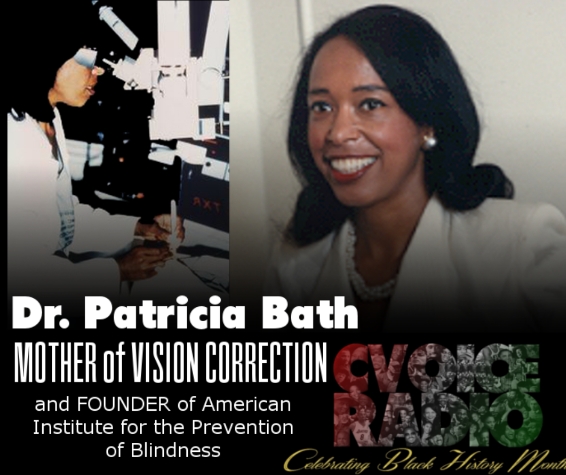
Medical scientist Patricia E. Bath was born on November 4, 1942 in Harlem, New York. Bath’s father, Rupert, was a Trinidadian immigrant and the first black motorman in the New York City subway system; her mother, Gladys, was a descendant of African slaves and Cherokee Native Americans and worked as a housewife and domestic. Bath attended Julia Ward Howe Junior High School and Charles Evans Hughes High School. In 1959, Bath received a grant from the National Science Foundation to attend the Summer Institute in Biomedical Science at Yeshiva University in New York, where she worked on a project studying the relationship between caner, nutrition, and stress. Bath went on to graduate from Hunter College in New York City with her B.S. degree in chemistry in 1964. She then attended Howard University Medical School. Bath graduated with honors in 1968 with her M.D. degree and also won the Edwin J. Watson Prize for Outstanding Student in Ophthalmology.

From 1970 until 1973, Bath was the first African American resident in ophthalmology at new York University’s School of Medicine. During this time, she married and gave birth to a daughter, Eraka, in 1972. In 1973, Bath worked as an assistant surgeon at Sydenham Hospital, Flower and Fifth Avenue Hospital, and Metropolitan Surgical Hospital, all in New York City. In 1974, she completed a fellowship in corneal and keratoprosthesis surgery. Then, Bath moved to Los Angeles, California where she became the first African American woman surgeon at the University of California, Los Angeles (UCLA) Medical Center. She was also appointed assistant professor at the Charles R. Drew University. In 1975, Bath became the first woman faculty member of the UCLA Jules Stein Eye Institute.
image

In 1981, Bath conceived of her invention, the Laserphaco Probe. She traveled to Berlin University in Germany to learn more about laser technology, and over the course of the next five years, she developed and tested a model for a laser instrument that could be tested to remove cataracts. Bath received a patent for her invention on May 17, 1988, and became the first African American female doctor to receive a patent for a medical invention. She continued to work at UCLA and Drew University during the development of her laser cataract removal instrument, and, in 1983, she developed and chaired an ophthalmology residency training program. From 1983 to 1986, Bath was the first woman chair and first female program director of a postgraduate training program in the United States. In 1993, Bath retired from the UCLA Medical Center. Bath was inducted into the International Women in Medicine Hall of Fame in 2001.


 
Leave a comment

Posted by on February 8, 2015 in Inspirational Sips


Tags: , ,

My Black is Beautiful Moment: The 2015 NAACP Image Awards

My Black is Beautiful Moment: The 2015 NAACP Image Awards

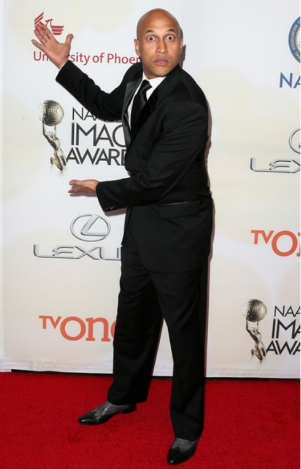
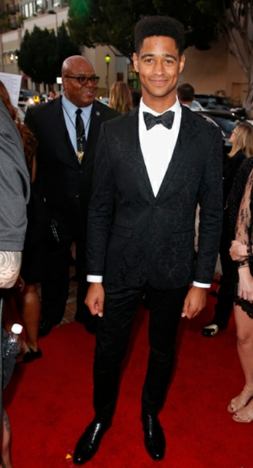
In case you missed it last night like I did because I don’t have TVOne, the 2015 NAACP Image Awards came on last night. Black – ish was the biggest winner of the night and Taraji P. Henson won Entertainer of the Year. But what I want to talk about is how fabulous and sexy everyone looked on the red carpet. This is definitely a black is beautiful moment. I chose random photos, but you can check out more photos at Young, Black, and Fabulous (ybf.com) and a complete list of winners at eonline.com.
Pics courtesy of redcardpetimages.net
image
image

image

image

image

image

image

image

Enjoyed that didn’t you? 😍

KT


Tags: , ,

Morning Inspiration

Morning Inspiration

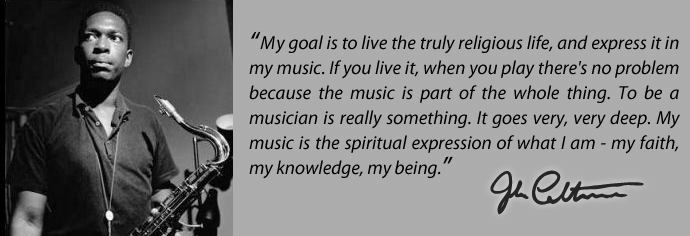
Bio courtesy of johncoltrane.com

Merely mention the name John Coltrane and you’re likely to evoke a deeply emotional, often spiritual response from even the most casual jazz fan.

Born September 23, 1926 in Hamlet, North Carolina, John Coltrane was always surrounded by music. His father played several instruments sparking Coltrane’s study of E-flat horn and clarinet. While in high school, Coltrane’s musical influences shifted to the likes of Lester Young and Johnny Hodges prompting him to switch to alto saxophone. He continued his musical training in Philadelphia at Granoff Studios and the Ornstein School of Music. He was called to military service during WWII, where he performed in the U.S. Navy Band in Hawaii.

image

Quotessays.com

After the war, Coltrane began playing tenor saxophone with the Eddie “CleanHead” Vinson Band, and was later quoted as saying, “A wider area of listening opened up for me. There were many things that people like Hawk, and Ben and Tab Smith were doing in the ‘40’s that I didn’t understand, but that I felt emotionally.” Prior to joining the Dizzy Gillespie band, Coltrane performed with Jimmy Heath where his passion for experimentation began to take shape. However, it was his work with the Miles Davis Quintet in 1958 that would lead to his own musical evolution. ” Miles music gave me plenty of freedom,” he once said. During that period, he became known for using the three-on-one chord approach, and what has been called the ‘sheets of sound,’ a method of playing multiple notes at one time.

By 1960 Coltrane had formed his own quartet which included pianist McCoy Tyner, drummer Elvin Jones, and bassist Jimmy Garrison. Eventually adding players like Eric Dolphy, and Pharoah Sanders. The John Coltrane Quartet created some of the most innovative and expressive music in Jazz history including the hit albums: “My Favorite Things,” “Africa Brass,” ” Impressions,” ” Giant Steps,” and his monumental work “A Love Supreme” which attests to the power, glory, love, and greatness of God. Coltrane felt we must all make a conscious effort to effect positive change in the world, and that his music was an instrument to create positive thought patterns in the minds of people.

In 1967, liver disease took Coltrane’s life leaving many to wonder what might have been. Yet decades after his departure his music can be heard in motion pictures, on television and radio. Recent film projects that have made references to Coltrane’s artistry in dialogue or musical compositions include, “Mr. Holland’s Opus”, “The General’s Daughter”, “Malcolm X”, “Mo Better Blues”, “Jerry McGuire”, “White Night”, “The Last Graduation”, “Come Unto Thee”, “Eyes On The Prize II” and “Four Little Girls”. Also, popular television series such as “NYPD Blue”, “The Cosby Show”, “Day’s Of Our Lives”, “Crime Stories” and “ER”, have also relied on the beautiful melodies of this distinguished saxophonist.

 
Leave a comment

Posted by on February 7, 2015 in Inspirational Sips


Tags: ,

Morning Inspiration

Morning Inspiration

image

Bio courtesy of arthurashe.org and biography.com

Arthur Ashe was a top ranked tennis player in the 1960s and 70s. Raised in the segregated South, he was the first African-American male tennis player to win a Grand Slam tournament. He was much more than an athlete though. His commitment to social justice, health and humanitarian issues left a mark on the world as indelible as his tennis was on the court.

Born on July 10, 1943, in Richmond, Virginia, Arthur Ashe became the first, and is still the only, African-American male player to win the U.S. Open and Wimbledon. He is also the first black American to be ranked No. 1 in the world. Always an activist, when Ashe learned that he had contracted AIDS via a blood transfusion, he turned his efforts to raising awareness of the disease, before finally succumbing to it on February 6, 1993.

 
Leave a comment

Posted by on February 6, 2015 in Inspirational Sips


Tags: ,

Morning Inspiration

Morning Inspiration

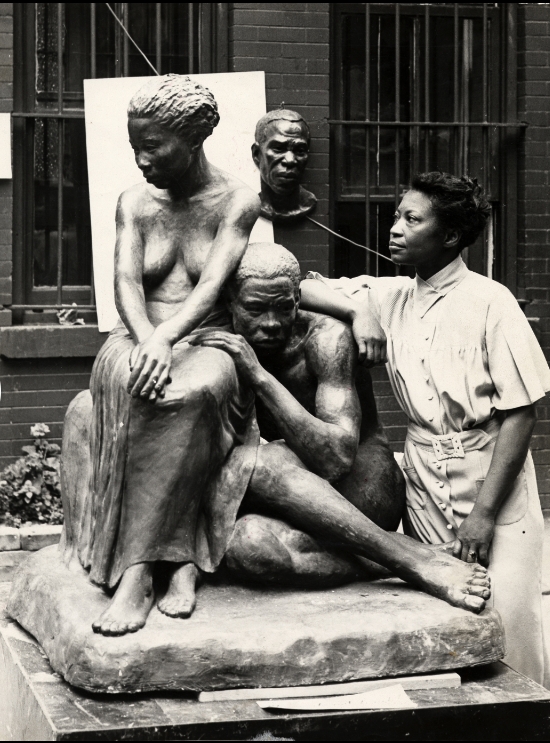
Augusta Savage

Pic Credit: biography.com

Pic Credit: biography.com


Biography courtesy of blackpast.org

African American sculptor, teacher, and advocate for black artists Augusta Savage was born Augusta Christine Fell in Green Cove Springs, Florida on February 29, 1892, the child of Edward Fells, a laborer and Methodist minister, and Cornelia Murphy. Her daughter, Irene Connie Moore, was born when Savage was 16, in the first of her three marriages. She retained the last name of her second husband, a carpenter named James Savage; they were divorced in the early 1920s.   After moving to Harlem in New York in 1921, Savage studied art at the Cooper Union for the Advancement of Science and Art where she finished the four-year program in three years. She was recommended by Harlem librarian Sadie Peterson (later Delaney), for a commission of a bust of W.E.B. DuBois.  The sculpture was well received and she began sculpting busts of other African American leaders, including Marcus Garvey. Savage’s bust of a Harlem child, Gamin (1929), brought her fame as an artist, and a scholarship to study at the Academie de la Grande Chaumiere in Paris.

In France, she associated with expatriates Henry Ossawa Tanner, Claude McKay, and Countee Cullen. Savage had first received a French scholarship in 1922 but the offer was rescinded when white Alabama students who had received similar grants refused to travel to France unless she was removed from the group.  Her unsuccessful appeal against that loss initiated her lifelong fight for civil rights and the recognition of black artists. Her challenge to the denial of her application was reported in both the black and white presses.   Savage exhibited in several galleries and had numerous commissions, among them for busts of James Weldon Johnson and W.C. Handy, after her return from Paris to Harlem. With a grant from the Carnegie Foundation, she founded in 1932 the Savage School of Arts, which was the largest program of free art classes in New York. Her students included painter Jacob Lawrence and psychologist Kenneth B. Clark. In 1934 Savage became the first African American woman elected to the National Association of Women Painters and Sculptors. She was president of the Harlem Artists Guild during the 1930s. Using her appointment in 1936 as an assistant supervisor in the Federal Arts Project (a division of the Works Progress Administration or WPA), she fought for commissions for black artists and to have African American history included on public murals. Savage was the first director of the Harlem Community Art Center, the most successful community center of the Federal Arts Project. After resigning from the WPA in 1939, she opened the Salon of Contemporary Negro Art in Harlem, which was America’s first gallery for the exhibition and sale of works by African American artists. Works exhibited included those by Beauford Delaney, James Lesesne Wells, Lois Mailou Jones, and Richmond Barthe.

The gallery was not financially successful, however, and was forced to close after several months. Although she was a leading artist of the Harlem Renaissance, low sales and a lack of financial resources dogged Savage’s career. Many of her works were done in plaster, and she was unable to raise the money to have them cast in more permanent materials, so not all have survived. Most notably, the 16-foot-tall 1937 sculpture The Harp, also known as Lift Every Voice and Sing, commissioned for and a popular display at the 1939 New York World’s Fair, was destroyed when the fair was over because she didn’t have the funds to have it removed from the fairgrounds and cast in a more permanent material. When the Schomburg Center had a retrospective of her work in 1988, only 19 pieces were located. Savage became reclusive in the early 1940s, and died of cancer on March 26, 1962, after spending her last year with her daughter in New York.

 
Leave a comment

Posted by on February 5, 2015 in Inspirational Sips


Tags: , ,

Morning Inspiration

Morning Inspiration
image

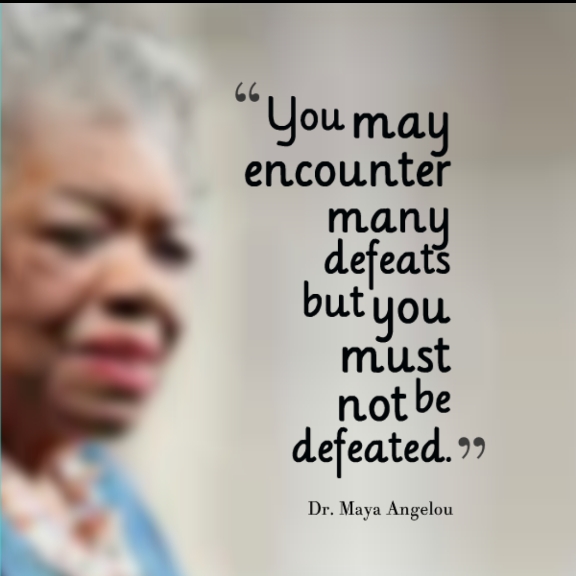
Pic credit: 303live

Bio courtesy of biography.com.

Born on April 4, 1928, in St. Louis, Missouri, writer and civil rights activist Maya Angelou is known for her 1969 memoir, I Know Why the Caged Bird Sings, which made literary history as the first nonfiction best-seller by an African-American woman. In 1971, Angelou published the Pulitzer Prize-nominated poetry collection Just Give Me a Cool Drink of Water ‘Fore I Die.

She later wrote the poem “On the Pulse of Morning”—one of her most famous works—which she recited at President Bill Clinton’s inauguration in 1993. Angelou received several honors throughout her career, including two NAACP Image Awards in the outstanding literary work (nonfiction) category, in 2005 and 2009. She died on May 28, 2014.

 
Leave a comment

Posted by on February 4, 2015 in Inspirational Sips


Tags: ,

Morning Inspiration

Morning Inspiration

Bio courtesy of biography.com

Martin Luther King Jr. was born on January 15, 1929, in Atlanta, Georgia. King, both a Baptist minister and civil-rights activist, had a seismic impact on race relations in the United States, beginning in the mid-1950s. Among many efforts, King headed the SCLC. Through his activism, he played a pivotal role in ending the legal segregation of African-American citizens in the South and other areas of the nation, as well as the creation of the Civil Rights Act of 1964 and the Voting Rights Act of 1965.

King received the Nobel Peace Prize in 1964, among several other honors. King was assassinated in April 1968, and continues to be remembered as one of the most lauded African-American leaders in history, often referenced by his 1963 speech, “I Have a Dream.”

 
Leave a comment

Posted by on February 3, 2015 in Inspirational Sips


Tags: , ,

Life Coach Session & Natty Naturals Giveaway

Life Coach Session & Natty Naturals Giveaway

I wanted to share this wonderful and empowering giveaway that is currently going on now until February 6th by Creative Sparks Coaching and Natty Naturals. Enter for your chance to win today! Good Luck! See details below.

image

image

KT


Tags: ,

Morning Inspiration

image

Bio courtesy of African American Museum

The Father of Black History Month, Carter G. Woodson, was born in1875 near New Canton VA. He was the son of former slaves. In 1907, he obtained his B.A. degree from the University of Chicago. In 1912, he received his Ph.D. from Harvard University.

In 1915, he and friends established the Association for the Study of Negro Life and History. A year later, the Journal of Negro History, began quarterly publication. In 1926, Woodson proposed and launched the annual February observance of Negro History Week, which became Black History Month in 1976. It is said that he chose February for the observance because February 12th was Abraham Lincoln’s birthday and February 14th was the accepted birthday of Frederick Douglass.

Dr. Woodson was the founder of Associated Publishers, the founder and editor of the Negro History Bulletin, and the author of more than 30 books. His best known publication is The Mis-Education of the Negro, originally published in 1933 and still pertinent today.

He died in 1950, but Dr. Woodson’s scholarly legacy goes on.

 
Leave a comment

Posted by on February 2, 2015 in Inspirational Sips


Tags: ,

Image

Morning Inspiration

image

 
Leave a comment

Posted by on February 1, 2015 in Inspirational Sips


Tags: ,