RSS

Category Archives: Inspirational Sips

Morning Inspiration

image

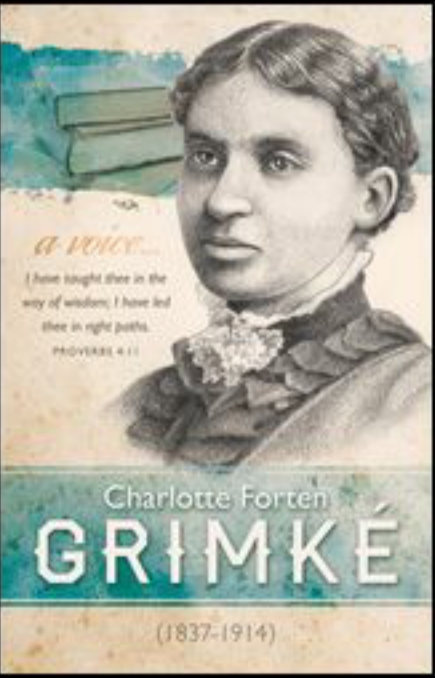
Charlotte Forten was the first northern African-American schoolteacher to go south to teach former slaves. A sensitive and genteel young woman, she brought intense idealism and fierce abolitionist zeal to her work. As a black woman, she hoped to find kinship with the freedmen, though her own education set her apart from the former slaves. She stayed on St. Helena Island for two years, then succumbed to ill health and had to return north. In 1864, she published “Life on the Sea Islands” in The Atlantic Monthly, which brought the work of the Port Royal Experiment to the attention of Northern readers.

Charlotte Forten was born in Philadelphia in 1837 into an influential and affluent family. Her grandfather had been an enormously successful businessman and significant voice in the abolitionist movement. The family moved in the same circles as William Lloyd Garrison and John Greenleaf Whittier: intellectual and political activity were part of the air Charlotte Forten breathed.

She attended Normal School in Salem, Massachusetts and began her teaching career in the Salem schools, the first African-American ever hired. But she longed to be part of a larger cause, and with the coming of the Civil War Forten found a way to act on her deepest beliefs. In 1862, she arrived on St. Helena Island, South Carolina, where she worked with Laura Towne. As she began teaching, she found that many of her pupils spoke only Gullah and were unfamiliar with the routines of school. Though she yearned to feel a bond with the islanders, her temperament, upbringing and education set her apart, and she found she had more in common with the white abolitionists there. Under physical and emotional stress, Forten, who was always frail, grew ill and left St. Helena after two years.

Today, Forten is best remembered for her diaries. From 1854-64 and 1885-92, she recorded the life of an intelligent, cultured, romantic woman who read and wrote poetry, attended lectures, worked, and took part in the largest social movement of her time. She was determined to embody the intellectual potential of all black people. She set a course of philosophical exploration, social sophistication, cultural achievement and spiritual improvement. She was, above all, dedicated to social justice.

image

Voices.cla.umn.edu

In her later life, she lived in Washington D.C. and continued to support equal rights for African-Americans. She married the minister Francis Grimke, nephew of the crusading Grimke sisters. After many years as an invalid, she died in 1914, having been a voice for equality throughout her life.

In Her Own Words

“Monday, October 23, 1854: I will spare no effort to prepare myself well for the responsible duties of a teacher, and to live for the good I can do my oppressed and suffering fellow creatures.” — Diary entry

“Sunday, January 18, 1856: But oh, how inexpressibly bitter and agonizing it is to feel oneself an outcast from the rest of mankind, as we are in this country! To me it is dreadful, dreadful. Oh, that I could de much towards bettering our condition. I will do all, all the very little that lies in my power, while life and strength last!” — Diary entry

“Wednesday, November 5, 1862: Had my first regular teaching experience, and to you and you only friend beloved, will I acknowledge that it was not a very pleasant one.” — Diary entry

“Thursday, November 13, 1862: Talked to the children a little while to-day about the noble Toussaint [L’Ouverture]. They listened very attentively. It is well that they should know what one of their own color could do for his race. I long to inspire them with courage and ambition (of a noble sort), and high purpose.” — Diary entry

“The first day of school was rather trying. Most of my children are very small, and consequently restless. But after some days of positive, though not severe, treatment, order was brought out of chaos. I never before saw children so eager to learn.” — Life on the Sea Islands

“The long, dark night of the Past, with all its sorrows and its fears, was forgotten; and for the Future — the eyes of these freed children see no clouds in it. It is full of sunlight, they think, and they trust in it, perfectly.” — Life on the Sea Islands

“I shall dwell again among ‘mine own people.'” I shall gather my scholars about me, and see smiles of greeting break over their dusky faces. My heart sings a song of thanksgiving, at the thought that even I am permitted to do something for a long-abused race, and aid in promoting a higher, holier, and happier life on the Sea Islands.” — Life on the Sea Islands

 
1 Comment

Posted by on February 14, 2015 in Inspirational Sips


Tags: ,

Morning Inspiration

Morning Inspiration

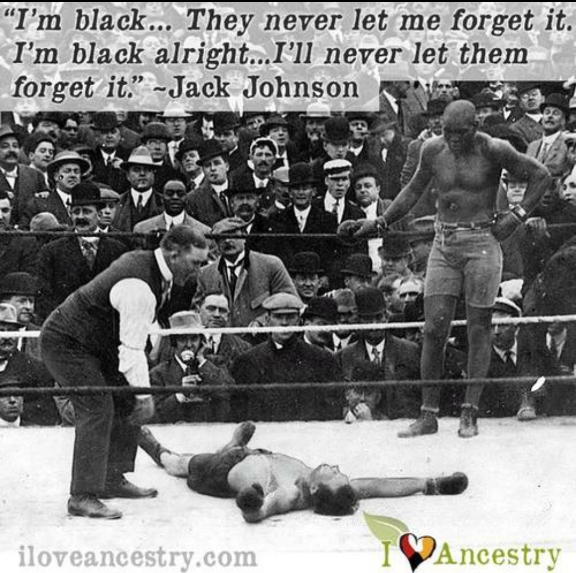
Jack Johnson is one of the most interesting inventors ever, not simply because of his invention but more so because of his celebrated and controversial life. Johnson was born on March 31, 1878 in Galveston, Texas under the name John Arthur Johnson and spent much of his teenage life working on boats and along the city’s docks. He began boxing in 1897 and quickly became an accomplished and feared fighter. Standing 6′ 1″ and weighing 192 lbs., Johnson captured the “Colored Heavyweight Championship of the World” on February 3, 1903 in Los Angeles, California and became the World Heavyweight Champion in 1908. He defeated Tommy Burns for the title and thereby became the first Black man to hold the World Heavyweight Title, a fact that did not endear him to the hearts of white boxing fans.

image

Johnson was extremely confident about his capabilities, and defeated everyone he faced with ease. He also bucked many of the social “rules” of the day and openly dated White women. This eventually got him into trouble in 1912 when he was arrested for violation of the Mann Act, a law often used to prevent Black men from traveling with white women. He was charged with taking his White girlfriend, Lucille Cameron, across state lines across state lines for “immoral purposes.” Although he and Lucille married later in the year, he was convicted of the crime by Judge Kenesaw Mountain Landis (who would later become the Commissioner of Major League Baseball) and was sentenced to Federal prison for one year. Before he could be imprisoned, he and Lucille fled to Europe.
Johnson eventually returned to the United States and was sent to Leavenworth Federal Prison in Kansas. While in prison, Johnson found need for a tool which would help tighten of loosening fastening devices. He therefore crafted a tool and eventually patented it on April 18, 1922, calling it a wrench.

Jack Johnson died on June 10, 1946 in an automobile accident in Raleigh, North Carolina and was elected to the Boxing Hall of Fame in 1954. Although many boxing fans are unaware of the life of the first Black Heavyweight Boxing Champion, they probably utilize his invention routinely around their homes.

image

Pixels.com

 
Leave a comment

Posted by on February 13, 2015 in Inspirational Sips


Tags: ,

Image

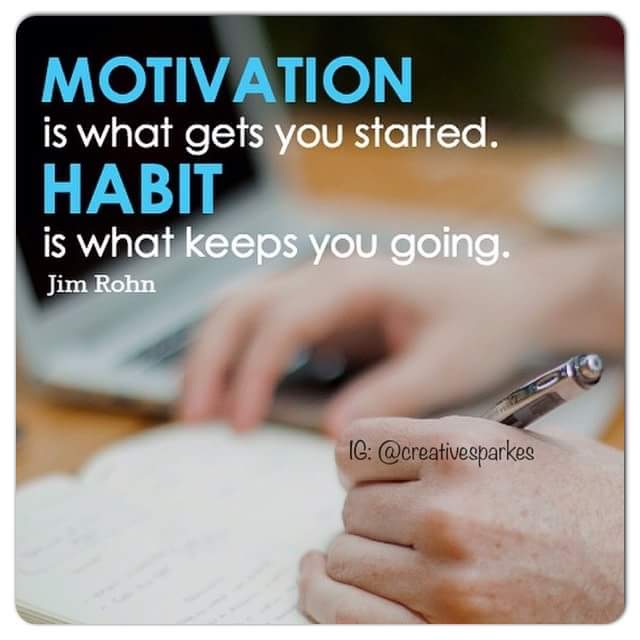
Start today and keep it up!

Start today and keep it up!

image

 
Leave a comment

Posted by on February 12, 2015 in Inspirational Sips, Random Sips


Tags:

Morning Inspiration

Morning Inspiration

Dred Scott was born in sometime around the turn of the century, often fixed at 1795, in Southampton County, Virginia. Legend has it that his name was Sam, but when his elder brother died, he adopted his name instead. His parents were slaves, but it is uncertain whether the Blow family owned them at his birth or thereafter. Peter Blow and his family relocated first to Huntsville, Alabama, and then to St. Louis Missouri. After Peter Blow’s death, in the early 1830s, Scott was sold to a U.S. Army doctor, John Emerson.

In 1836, Scott fell in love with a slave of another army doctor, 19-year-old Harriett Robinson, and her ownership was transferred over to Dr. Emerson when they were wed.

In the ensuing years, Dr. Emerson traveled to Illinois and the Wisconsin Territories, both of which prohibited slavery. When Emerson died in 1846, Scott tried to buy freedom for himself and his family from Emerson’s widow, but she refused.

Dred Scott made history by launching a legal battle to gain his freedom. That he had lived with Dr. Emerson in free territories become the basis for his case.

The process began in 1846: Scott lost in his initial suit in a local St. Louis district court, but he won in a second trial, only to have that decision overturned by the Missouri State Supreme Court. With support from local abolitionists, Scott filed another suit in federal court in 1854, against John Sanford, the widow Emerson’s brother and executor of his estate. When that case was decided in favor of Sanford, that Scott turned to the U.S. Supreme Court.

In December 1856, Abraham Lincoln delivered a speech, foreshadowing the Emancipation Proclamation of 1863, examining the constitutional implications of the Dred Scott Case.

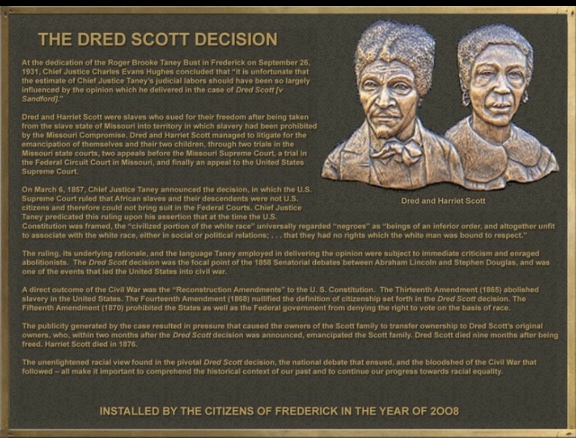
On March 6, 1857, the Supreme Court decision in Dred Scott v. Sandford was issued, 11 long years after the initial suits. Seven of the nine judges agreed with the outcome delivered by Chief Justice Roger Taney, who announced that slaves were not citizens of the United States and therefore had no rights to sue in Federal courts: “… They had no rights which the white man was bound to respect.”

The decision also declared that the Missouri Compromise (which had allowed Scott to sample freedom in Illinois and Wisconsin) was unconstitutional, and that Congress did not have the authority to prohibit slavery.

The Dred Scott decision sparked outrage in the northern states and glee in the south—the growing schism made civil war inevitable.

Too controversial to retain the Scotts as slaves after the trial, Mrs. Emerson remarried and returned Dred Scott and his family to the Blows who granted them their freedom in May 1857. That same month, Frederick Douglass delivered a speech discussing the Dred Scott decision on the anniversary of the American Abolition Society.

Eventually, the 13th and 14th amendments to the Constitution overrode this Supreme Court ruling.

Dred Scott and his family stayed in St. Louis after his emancipation, and he found work as a porter in a local hotel. But after only a little more than a year of true freedom, Scott died from tuberculosis on September 17, 1858.

Dred Scott is buried in the Calvary Cemetery in St. Louis (Harriet survived him by 18 years and is buried in Hillsdale, Missouri). Putting pennies (displaying the face of President Lincoln) on Scott’s headstone has become a local tradition over the decades. The commemorative marker next to the headstone reads: “In Memory Of A Simple Man Who Wanted To Be Free.”

In 1997, Dred Scott and his wife Harriet were admitted to the St. Louis Walk of Fame.

image

Lawprofessors.typepad.com

 
1 Comment

Posted by on February 12, 2015 in Inspirational Sips


Tags: ,

Morning Inspiration

Morning Inspiration

image

Bio courtesy of biography.yourdictionary.com

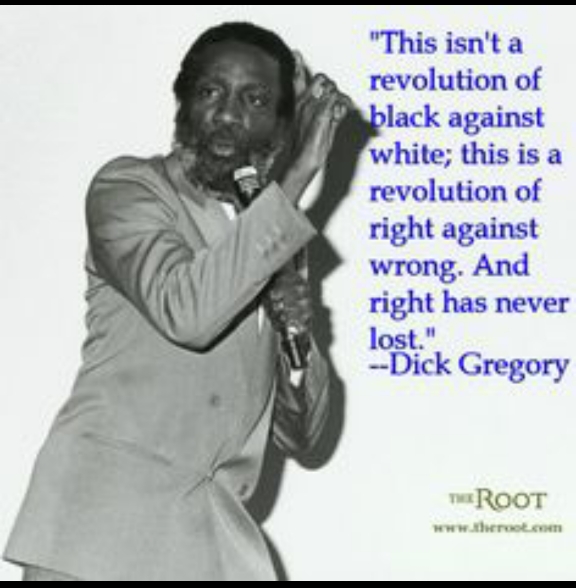
Dick Gregory was born Richard Claxton Gregory on October 12, 1932, into poverty and deprivation in St. Louis, Missouri. In some ways his humble beginnings fueled the topical racial comedy which catapulted him into fame in the 1960s. He attended Southern Illinois University in Carbondale from 1951 to 1956. In 1953 he received the school’s Outstanding Athlete Award.

By 1958 Gregory was making his debut in show business by appearing at the Esquire and Roberts show clubs in Chicago and at the Club Apex in nearby Robbins, Illinois. His regular appearances on television included the Jack Paar and Mike Douglas shows which made him one of the best known Blacks in America. The radicalization which transformed many Americans during the 1960s led Gregory to see things in a global perspective. Many of his public appearances started to combine comedy with political commentary. He became an outspoken opponent of American involvement in Vietnam and of racial as well as ethnic discrimination in America and elsewhere.

In the United States Gregory was one of the first modern spokespersons to suggest that the Census Bureau undercounts minorities, particularly in large cities. In 1966, through a series of fund-raisers, he shipped 10,000 pounds of navy beans to Marks, Mississippi, to feed hungry people. In addition, he advocated large families as a way to both counter and protest racism.

Internationally, Gregory was a major leader of the antiwar movement. He traveled to France to protest French involvement in Indo-China and to Northern Ireland to advise Irish Republican Army (IRA) political protesters on techniques for fasting. In his campaign against hunger he traveled to Ethiopia more than ten times. In 1968 the Peace and Freedom Party nominated him as its presidential candidate in recognition of his efforts to make the world a better place.

In 1981 Gregory—who formerly weighed 350 pounds, smoked four packs of cigarettes and drank a fifth of Scotch a day—put his dietary knowledge to the test. In the planning stages for more than six years, he conducted “the longest medically supervised scientific fast in the history of the planet.” During this “Dick Gregory’s Zero Nutrition Fasting Experiment” he lived on a gallon of water and prayer for 70 days at Dillard University’s Flint-Goodridge Hospital. Upon its completion, he demonstrated his good health by walking and jogging the 100 miles between New Orleans and Baton Rouge, Louisiana. From this experiment he created his “4-X Fasting Formula,” which included a “Life-Centric Monitor” and an emphasis on colonetics. The fast also indicated that the body can prolong the time it can go without food.

Gregory announced a vow of celibacy in 1981. As the father of ten children and a former performer of a risqué night club act, this news was somewhat surprising. It was a part of a philosophy of life which sought to switch from the animal to the divine nature of man.

In his concern for health and nutrition, he came to believe that agricultural resources exist to assure each man, woman, and child a chemically safe, nutritionally sound, and physiologically efficient diet. Multi-level distribution rights to his nutrition formula—Dick Gregory’s Slim-safe Bahamian Diet—were sold for a reported $100 million when the special formulation became commercially available in August of 1984. Articles in People and USA Today made the diet a favorite among the general public. Gregory lamented the lack of health food stores in Black communities and sought to promote an awareness of the importance of natural foods and the dangers of the traditional soul food diet. He believes because their diets and lifestyles tend to include higher than average amounts of salt, sugar, cholesterol, alcohol and drugs that Blacks have a shorter life expectancy.

A large percentage of the profits from the sales of products developed by the Dick Gregory Health Enterprise in Chicago was earmarked for the poor and for Black civil rights groups such as the National Association for the Advancement of Colored People (NAACP), the Southern Christian Leadership Conference (SCLC), the United Negro College Fund, and the Rosa Parks Foundation. In addition, Gregory acquired a major interest in the Frankie Jennings Cosmetics Company to fulfill his dream of marketing products such as vitamins, shampoo, juices, and cookies. Howard and Xavier universities were researching and testing sites for his products. Another campaign was to inform the public about the ills of alcohol, caffeine, and drug consumption.

Dick Gregory was a deeply spiritual man but was not limited to any traditional religion or formulized dogma. Instead, he advocated the attainment of oneness with a “Godself,” which he believed was the most complete state of being. He advocated a holistic approach to life through diet, fitness, and spiritual awareness.

Even at 64 Gregory was still doing his one-man stand up comedy show, Dick Gregory, LIVE! As late as 1996 he was opening in Chicago. In March of 1997 he was the fifth annual Dr. Martin Luther King, Jr., Guestship speaker at Elmhurst College. He credited much of his success to the support and trust of his wife Lillian (Lil), whom he married in 1959.

 
Leave a comment

Posted by on February 11, 2015 in Inspirational Sips


Tags: ,

Morning Inspiration

Morning Inspiration

Bio courtesy of biography.com

image

Pinterest

Born Eunice Kathleen Waymon on February 21, 1933, in Tryon, North Carolina, Nina Simone took to music at an early age, learning to play piano at the age of 4 and singing in her church’s choir. The sixth of seven children, Simone grew up poor. Her music teacher helped establish a special fund to pay for Simone’s education and, after finishing high school, Simone won a scholarship to New York City’s famed Juilliard School of Music to train as a classical pianist.

Simone taught piano and worked as a accompanist for other performers while at Juilliard, but she eventually had to leave school after she ran out of funds. Moving to Philadelphia, Simone lived with her family there in order to save money and go to a more affordable music program. Her career took an unexpected turn, however, when she was rejected from the Curtis Institute of Music in Philadelphia; she later claimed the school denied her admittance because she was African-American. Turning away from classical music, she started playing American standards, jazz and blues in clubs in the 1950s. Before long, she also started singing along with her music at the behest of one bar owner. She took the stage name Nina Simone—”Nina” came from a nickname meaning “little one” and “Simone” after the actress Simone Signoret. She won over such fans as Harlem Renaissance writers Langston Hughes, Lorraine Hansberry, and James Baldwin.

Simone began recording her music in the late 1950s under the Bethlehem label, releasing her first full album in 1958, which featured “Plain Gold Ring” and “Little Girl Blue.” It also included her one and only top 40 pop hit with her version of “I Loves You Porgy” from the George Gershwin musical Porgy and Bess.

In many ways, Simone’s music defied standard definitions. Her classical training showed through, no matter what genre of song she played, and she drew from many sources including gospel, pop and folk. She was often called the “High Priestess of Soul,” but she hated that nickname. She didn’t like the label of “jazz singer”, either. “If I had to be called something, it should have been a folk singer because there was more folk and blues than jazz in my playing,” she later wrote.

By the mid-1960s, Simone became known as the voice of the civil rights movement. She wrote “Mississippi Goddam” in response to the 1963 assassination of Medgar Evers and the Birmingham church bombing that killed four young African-American girls. After the assassination of Reverend Martin Luther King, Jr. in 1968, Simone penned “Why (The King of Love Is Dead).” She also wrote “Young, Gifted and Black,” borrowing the title of a play by Hansberry, which became a popular anthem at the time.
As the 1960s drew to a close, Simone tired of the American music scene and the country’s deeply divided racial politics. She lived in several different countries, including Liberia, Switzerland, England and Barbados before eventually settling down in the South of France. For years, Simone also struggled with her finances, and clashed with managers, record labels, and the Internal Revenue Service.

Around this time, Simone recorded cover songs of popular music, putting her own spin on such songs as Bob Dylan’s “The Times They Are A-Changin'” and the Beatles’ “Here Comes the Sun.” She also showed her sensual side with the song “I Want a Little Sugar in My Bowl.” She then took a break from recording, returning in 1978 with the album Baltimore. The title track was a cover version of a Randy Newman song. Critics gave the album a warm reception, but it did not do well commercially.

Simone went through a career renaissance in the late 1980s when her song “My Baby Just Cares For Me” was used in a perfume commercial in the United Kingdom. The song became a Top 10 hit in Britain. She also penned her autobiography, I Put a Spell on You, which was published in 1992. Her next recording, A Single Woman, came out in 1993. To support these works, Simone gave some performances in the United States.

Touring periodically, Simone maintained a strong fan base that filled concert halls whenever she performed. She appeared in New York City in 1998, her first trip there in five years. The New York Times critic Jon Paneles reviewed the concert, saying that “there is still power in her voice” and the show featured “a beloved sound, a celebrated personality, and a repertory that magnifies them both.” That same year, Simone attended South African leader Nelson Mandela’s 80th birthday celebration.
In 1999, Simone performed at the Guinness Blues Festival in Dublin, Ireland. She was joined on stage by her daughter Lisa for a few songs. Lisa, from Simone’s second marriage to manager Andrew Stroud, followed in her mother’s footsteps. She has appeared on Broadway in Aida, using the stage name “Simone.”

In her final years, Simone battled with health problems. Some reports indicate she was battling breast cancer, but that claim has not been officially confirmed. She died on April 21, 2003, at her home in Carry-le-Rouet, France.

While she may be gone, Simone left a lasting impression on the world of music. She sang to share her truth, and her music still resonates with great emotion and power. Simone has inspired an array of performers, from Aretha Franklin to Joni Mitchell. Her deep, distinctive voice continues to be a popular choice for television and film soundtracks, from documentaries to comedies to dramas.

 
Leave a comment

Posted by on February 10, 2015 in Inspirational Sips


Tags: , ,

Morning Inspiration

Morning Inspiration

Bio courtesy of marvacollins.com

Marva Collins grew up in Atmore, Alabama at a time when segregation was the rule. Black people were not permitted to use the public library, and her schools had few books, and no indoor plumbing. Nonetheless, her family instilled in her an awareness of the family’s historical excellence and helped develop her strong desire for learning, achievement and independence. After graduating from Clark College in Atlanta, Georgia, she taught school in Alabama for two years. She moved to Chicago and taught in Chicago’s public school system for fourteen years.

Her experiences in that system, coupled with her dissatisfaction with the quality of education that her two youngest children were receiving in prestigious private schools, convinced her that children deserved better than what was passing for acceptable education. That conviction led to her decision to open her own school on the second floor of her home. She took the $5,000 balance in her school pension fund and began her educational program with an enrollment of her own two children and four other neighborhood youngsters.

Thus, Westside Preparatory School was founded in 1975 in Garfield Park, a Chicago inner-city area. During the first year, Marva took in learning disabled, problem children and even one child who had been labeled by Chicago public school authorities as borderline retarded. At the end of the first year, every child scored at least five grades higher proving that the previous labels placed on these children were misguided. The CBS program, 60 Minutes, visited her school for the second time in 1996. That little girl who had been labeled as border line retarded, graduated in 1976 from college Summa Cum Laude. It was documented on the 60 Minutes programs in 1996. Marva’s graduates have entered some of the nation’s finest colleges and universities, such as Harvard, Yale, and Stanford, to mention just a few. And, they have become physicians, lawyers, engineers, educators, and entered other professions.

Ms. Collins has received many accolades in recognition of her outstanding work with children. She was featured on Good Morning, America, 20/20, Fox News, and many more programs too numerous to list. A made-for-television movie titled, The Marva Collins Story starred Cicely Tyson and Morgan Freeman first aired in1 1982, and is still presented on television. Some of her awards include:

– The Jefferson Award for Benefiting the Disadvantaged
– The Humanitarian Award for Excellence
– Legendary Women of the World Award
– Many honorary doctoral degrees from universities such as
Amherst, Dartmouth, Notre Dame, and Clark University
– The prestigious National Humanities Medal from President Bush in 2004

She has turned the responsibilities of running her school over to her daughter, Cynthia B. Collins, who was one of the first students in the Westside Preparatory School. Today, Marva Collins trains teachers in her educational program and methodology. Her curriculum is based on classical literature, and other subject material that contain ideas, lofty thoughts, and abstract concepts. The purpose is to teach children the values that hold societies together and that present to students thoughts that may be interpreted differently. Fourth graders in her school, for example, read Plato’s dialogue, The Republic. In it, Plato asks, “What is justice?” Justice has different meaning, according to one’s viewpoint or interpretations. The students are encouraged to express their own opinion. And, as any observer of Ms. Collins classes will attest, the children are eager to participate in classroom discussions, and their verbal skills are outstanding as are their reasoning abilities. Her students are taught to appreciate the nuances of language, how to analyze and challenge what they read, and to express their opinions. They learn to contrast their own ideas with the differing ones as expressed by the other students.

Ms. Collins has spoken to many major corporations including The National Girl Scouts, The National Retailers Association, The National Dairy Association, The European Division of IBM, Xerox Corporation, The Million Dollar Roundtable, The Young President’s Organization (YPO), The National Bankers’ Association, Anheuser-Busch, Coors, and she has trained executives of Long John Silvers. Corporations have accurately discerned that the same skills Ms. Collins develops in her students are applicable in successful business entities.

 
Leave a comment

Posted by on February 9, 2015 in Inspirational Sips


Tags: , ,

Image

What a wonderful change!

image


Tags: ,

Image

Thrive on Cocoa Drops!

image


Tags: ,

Image

Lesson learned

image


Tags: